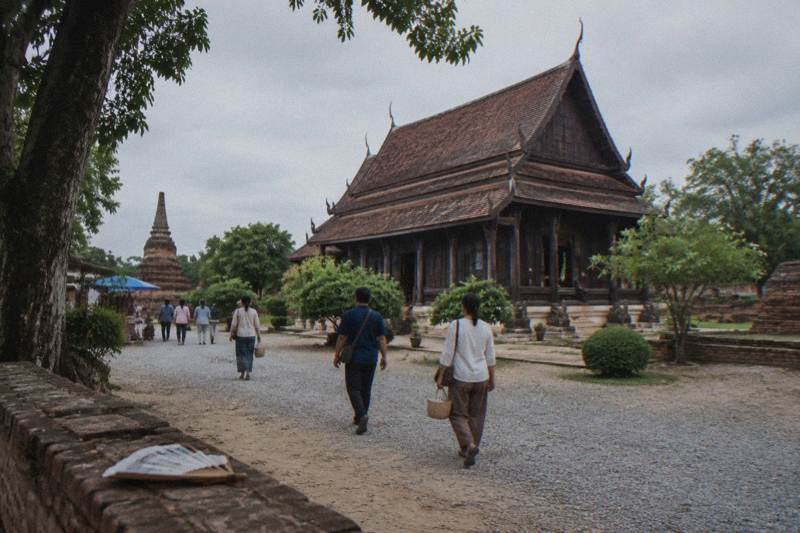
How Much Does A Taxi Cost From Bangkok To Ayutthaya?
A taxi or ride app from Bangkok to Ayutthaya runs roughly 900 to 1,500 baht one way. This guide compares that against the train, minivan and a private tour with driver, with verified fares and arrival costs.
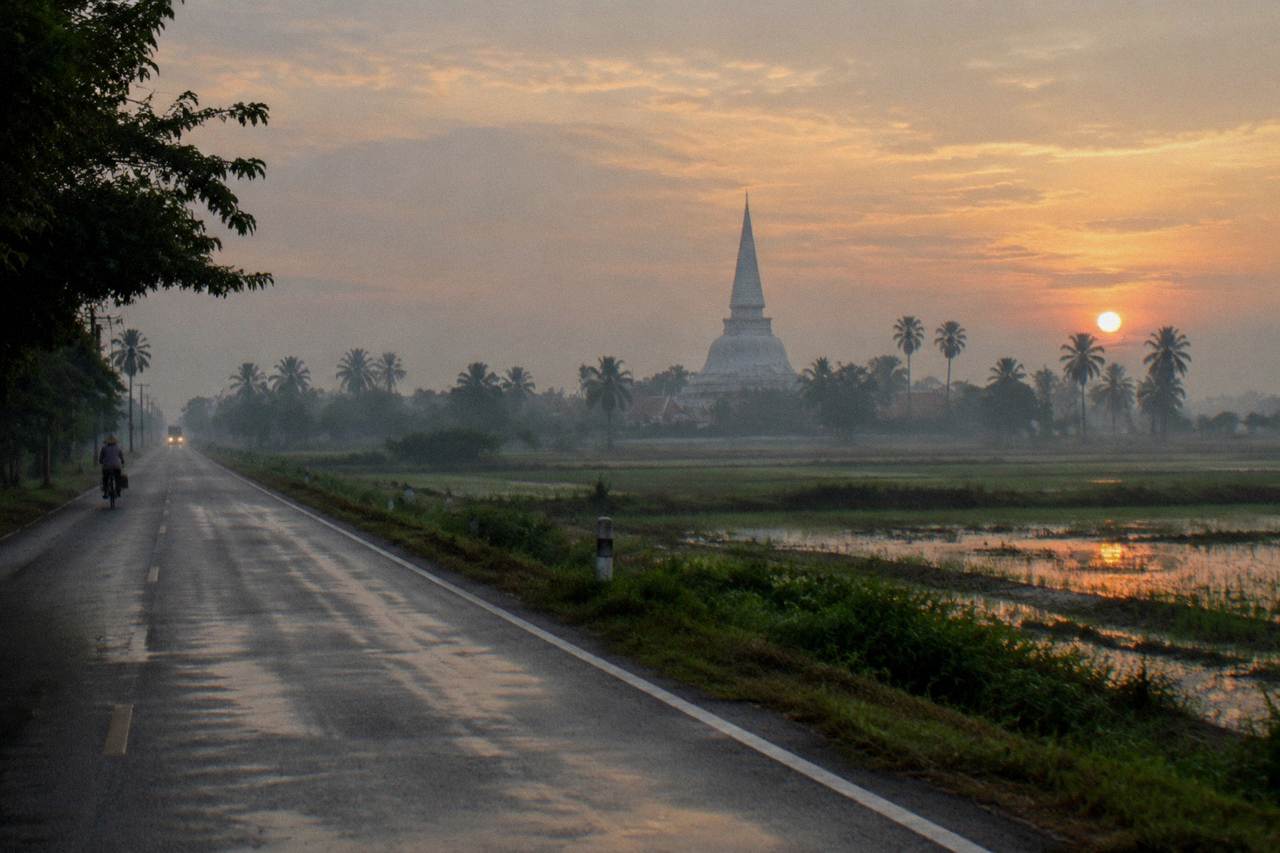
Ayutthaya sits about 76 kilometres north of Bangkok, close enough that the city's taxi fleet makes the run every day, and far enough that the fare is a real line in a travel budget. According to 2026 guides, a taxi or a ride-app car from Bangkok to Ayutthaya costs roughly 900 to 1,500 baht one way, a wide band because the price moves with traffic, tolls, the type of car and how you book. That band is also the exact territory where the decision gets interesting, because the train makes the same trip for less than a plate of boat noodles, while a private tour with a driver lands in the same spending tier as the taxi but adds a guide, temple routing and, on some listings, lunch. Before you commit any baht to the ride, it helps to ask whether the ruins repay the effort at all, and the full verdict on whether Ayutthaya justifies the trip from Bangkok answers that with honest numbers and practical temple tips.
This guide works through the numbers in order: what the taxi actually costs and why it varies, how a ride app compares with a curbside cab, what the train and minivan charge for the same 76 kilometres, and when a listed private tour beats a bare taxi on value rather than just on comfort. Fares below are hedged planning figures from 2026 guides and verified sources, and the taxi band in particular should always be confirmed with a quote in the app before you commit, since app pricing shifts with demand.
How Much Does A Taxi Cost From Bangkok To Ayutthaya?
A one-way taxi or ride-app car from Bangkok to Ayutthaya typically costs 900 to 1,500 baht, with no fixed meter rate for this intercity run, so treat that band as a planning range rather than a tariff. The trip covers roughly 76 kilometres by road and usually takes one to one and a half hours when traffic is flowing, and confirming a quote in the app before booking is always a smart move. Once you've sorted the ride up, our verdict on the Ayutthaya sunset boat tour can help you decide how to cap off the day on the river.
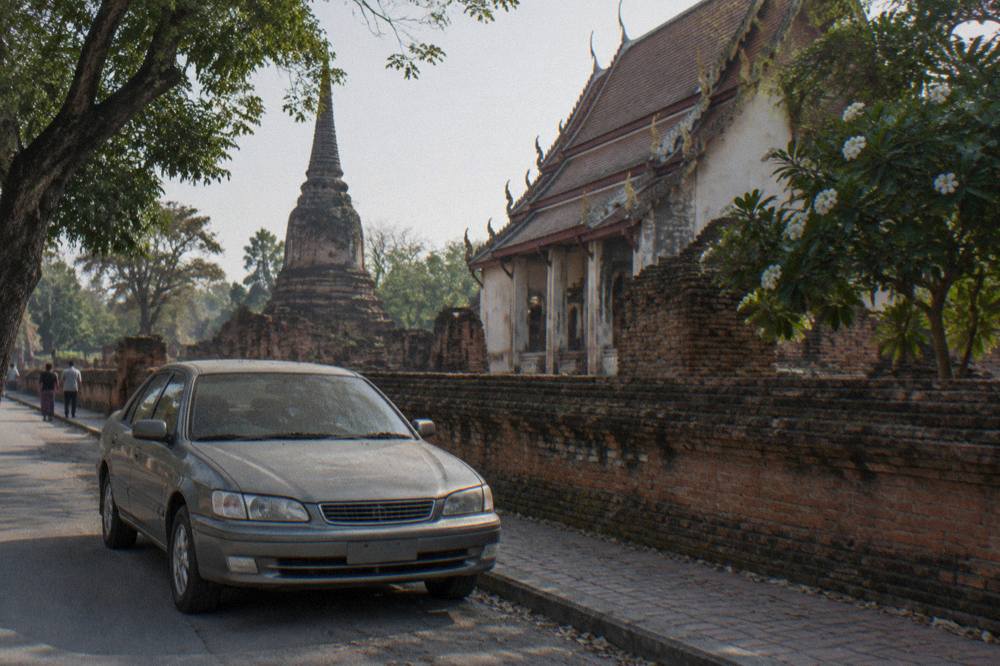
The 900 to 1,500 baht band deserves unpacking, because the difference between its floor and its ceiling is more than a night in a mid-range Ayutthaya guesthouse. At the low end you get a standard sedan booked at a quiet hour, often through a ride app with a fixed upfront quote. At the high end you are paying for peak-hour demand, a larger vehicle, or a driver quoting a return-leg premium, since a car that drives you to Ayutthaya often has to drive back to Bangkok empty unless another fare is waiting. Some drivers will negotiate the return trip as part of the price, waiting while you tour, and that arrangement pushes the total up but removes the return-leg problem entirely. If that waiting-driver arrangement appeals to you, a private Ayutthaya tour with a driver and guide prices out the full day so you can see exactly what the convenience costs.
Where you start in Bangkok matters as much as where you finish. A pickup from Sukhumvit or the riverside adds kilometres and toll charges compared with a departure from the northern suburbs, and the tollways themselves are a genuine cost component on this route rather than a rounding error. When a driver quotes a flat price for the intercity run, ask whether tolls are inside the quote or added at the gate; the answer changes the real cost by a meaningful margin on a 76-kilometre drive.
The practical advice is simple. Get the quote in the app first, as the 2026 guides consistently recommend, and treat any curbside counter-quote against that number. If a driver at a hotel rank quotes far above the app price, the app price is the reference point, not an insult. And if you are travelling as three or four people, divide the fare by heads before judging it, because a mid-band fare split four ways starts to look like a different proposition than the same figure paid by one person.
For travellers who would rather not manage any of this, the private tour tier exists precisely for that decision, and the difference in what you get is worth understanding before you pay either way.
Those three listings span the whole decision this article is about: a private car day tour with hotel pickup, a second private guided option covering four ancient temples, and a train-and-bus day trip that reaches Ayutthaya by rail instead of road. Each one replaces the taxi question with a different question, namely what you want the car or the carriage to do for you beyond the drive itself.
What Changes The Price Of The Bangkok To Ayutthaya Taxi Ride?
Four things move the fare: traffic and departure time, tolls and route, vehicle type, and whether the driver prices a return leg. Peak-hour departures and larger cars push the quote toward the top of the 900 to 1,500 baht band, while an off-peak sedan booked in an app with a fixed quote sits near the bottom. Only one of these shows up before you ride.
Traffic is the biggest single variable on this route. The drive north out of Bangkok crosses some of the most congested road in the country during morning and evening peaks, and a run that takes just over an hour at midday can stretch well beyond that when the city is gridlocked. Drivers know this, and quotes reflect it: a car that will spend an extra forty minutes crawling to the expressway prices that time in. Leaving before the morning peak or after it clears is the cheapest single adjustment you can make to the fare, and it costs nothing but an alarm clock.
Tolls are the second component. The expressway network between Bangkok and Ayutthaya is the fast route, and toll plazas sit along it. On a metered city ride the passenger pays tolls as they occur, but on a quoted intercity run the practice varies by driver, which is why the question belongs in the conversation before the door closes. The route itself is rarely a choice, the driver will take the expressway unless you ask otherwise, but a pickup point that adds surface-street kilometres before the expressway entrance adds both time and meter money.
The third and fourth factors, vehicle and return leg, are commercial rather than mechanical. An SUV or a larger car for a family with luggage quotes higher than a sedan, and a driver asked to wait in Ayutthaya for the return trip quotes a day rate rather than two one-way fares. A waiting arrangement can make sense for a tight day trip, since a driver who knows your itinerary can park near Wat Mahathat while you tour, but it should be priced as what it is: a half-day hire, not a second taxi fare.
If reading those four variables already feels like work, that is the honest signal. A listed private day tour with hotel pickup removes all four from your plate, and the operator's live listing carries the free-cancellation terms and pay-later options that let you lock the plan before you commit to the day.
Is A Ride App Cheaper Than A Curbside Taxi For Ayutthaya?
A ride app is usually the safer and often the cheaper route, because it gives a fixed upfront quote before you commit, while a curbside or hotel-rank taxi opens with a negotiated price. Both land inside the same rough 900 to 1,500 baht one-way band for 2026. The app's real advantage is not the price, it is that the price is known in advance and the payment does not depend on a negotiation at a kerb.
The comparison is less about money than about information. When you request a car in an app for an intercity run, the platform quotes a fare for the trip as a whole, and that quote holds unless the pickup or destination changes. A curbside taxi, by contrast, starts the conversation at zero: the driver names a figure, you counter, and the gap between the opening quote and the app price is where the negotiation happens. Some drivers quote fairly from the start, and some open high expecting a counter, and a visitor has no way to tell which is which from the kerb.
Hotel ranks sit in between. The doorman or the rank's attendant often brokers the fare, which adds a layer of accountability a street hail lacks, but the quoted price still needs to be tested against the app before you accept it. The consistent advice from 2026 guides is to get the app quote first and use it as the benchmark, whichever way you ultimately ride.
One practical wrinkle deserves a mention: signal and app coverage are fine in central Bangkok, but if you are requesting a car for a return leg from Ayutthaya, do it from somewhere with a solid connection, and consider booking the return while you still have wifi at your hotel or a cafe near the temples. A car requested from a quiet riverside road may take longer to arrive than one requested from the station area.
| Booking method | How the price is set | Main advantage | Main risk |
|---|---|---|---|
| Ride app | Fixed upfront quote before booking | Price known in advance, card payment | Surge pricing at peak times |
| Curbside taxi | Negotiated before departure | Immediate, no app needed | Opening quote can be well above the going rate |
| Hotel rank | Quoted via the rank attendant | Accountable middleman | Still worth testing against an app quote |
| Arranged return with waiting driver | Day rate negotiated upfront | No return-leg uncertainty | Costs more than two one-way fares |
Whichever door you choose, the fare gets you to Ayutthaya, not through it. The temple circuit is where the day's real logistics live, and a small-group tour solves those for a different kind of price, which is why the option belongs in the same conversation as the taxi fare.
That listing, run by TripGuru Thailand, carries a 4.7 rating from 1,728 reviews and caps its groups at nine travellers for an eleven-and-a-half-hour day with hotel pickup from central Bangkok. For a solo traveller comparing it against a taxi at the top of the band, the arithmetic is not even close once the guide and the routing are counted.
How Does The Taxi Compare To The Train Or Minivan From Bangkok?
The train is dramatically cheaper: ordinary third class runs about fifteen to twenty baht and the new air-conditioned commuter service is capped at fifty baht on its promotional fare through 31 October 2026. Minivans run roughly 60 to 150 baht and take about one to one and a half hours. The taxi's advantage is door-to-door timing and comfort, not cost, and on price it loses to every public option by an order of magnitude.
The train deserves the first look, because the gap is almost comic. Ordinary third-class trains from Krung Thep Aphiwat, the city's main long-distance terminal, cover the run for about fifteen to twenty baht, a fare that would not buy a coffee in the departure hall. Since 1 August 2026 there is also the SRT Bangkok Connex air-conditioned commuter service, which makes the trip in about an hour and fifteen minutes and, on its promotional fare running through 31 October 2026, is capped at fifty baht to Ayutthaya, with tickets sold at the counter and seats unreserved. What the fare costs after the promotion ends has not been published, so treat the fifty-baht cap as a 2026 promotional figure rather than a permanent tariff. The wider set of guides lives on Ayutthaya Historical Park Tours.
Minivans are the middle option. They leave from Bangkok's northern bus terminals on a frequent daytime schedule, take about one to one and a half hours, and charge roughly 60 to 150 baht depending on the operator and the class of vehicle. Buses take about one and a half to two hours on the same corridor. Both drop you in Ayutthaya town rather than at the temples, so the last mile, a short tuk-tuk or songthaew hop, still needs to be priced in, and 2026 guides quote tuk-tuk charters for temple circuits at roughly 400 to 600 baht for a half day if you decide to hire one for the full circuit.
| Mode | Rough one-way fare | Typical time | Notes for 2026 |
|---|---|---|---|
| Taxi or ride app | 900 to 1,500 baht | 1 to 1.5 hours | Door to door, quote in the app first |
| Air-con commuter train | Capped at fifty baht on promo | About 1 hour 15 minutes | Counter tickets, unreserved, promo runs to 31 October 2026 |
| Ordinary third-class train | About fifteen to twenty baht | 80 minutes to 2 hours | Cheapest option by far |
| Minivan | Roughly 60 to 150 baht | 1 to 1.5 hours | Frequent daytime departures |
| Bus | Similar bracket, confirm at the terminal | 1.5 to 2 hours | Departs from the northern terminals |
The pattern in that table is stark: every public mode reaches the same city for a fraction of the taxi fare, and the taxi's premium buys time, comfort and a door-to-door path. For a family of four, the premium divided by heads might buy a private car's worth of convenience for a modest per-person cost. For a solo traveller on a day trip, the train at twenty baht makes the taxi look like a luxury decision, because it is one.
The official park map page from the Fine Arts Department is the reference for what waits at the far end of every one of these rides, including the ticketed monuments and their fees, and Wikivoyage's Ayutthaya page carries the practical transport detail that independent travellers have accumulated over years.
If comparing fares line by line is the part of trip planning you enjoy, the deeper breakdowns live in the train-versus-tour decision guide and the general getting-there guide, and both go further than a single fare table can.
When Does A Private Tour Cost Less Than A Taxi Day?
A listed private tour is in the same spending tier as a taxi day with a waiting driver, but it converts that money into a car, a guide, temple routing and sometimes lunch, rather than into drive time alone. For two or more travellers the per-head gap narrows to the point where the tour often wins on value. For a solo traveller doing a short stop, the bare taxi or the train remains the cheaper frame.
The comparison only works in tier words, because listed tour prices appear on the live listings rather than in prose, and the honest way to frame it is this: a taxi hired for a round trip with waiting sits in the private tier of spending, and so does a listed private day tour. What differs is what the money buys. The taxi buys kilometres and a clock. The tour buys kilometres plus a guide who explains what the ruins are, a route that has already been sequenced around opening hours and light, and, on listings that state it, lunch and hotel pickup.
Consider what the Private Ayutthaya Day Tour from Bangkok, run by Mam Holidays Thailand, states on its listing: a nine-hour private day, hotel pickup, lunch included, a private air-conditioned car, and a circuit taking in Wat Mahathat, Wat Phra Sri Sanphet, Wat Yai Chaya Mongkol, the reclining Buddha at Wat Lokayasutharam and Bang Pa-In Palace, with a 4.7 rating from 120 reviews and free cancellation. A taxi with a waiting driver covers the kilometres of that day but none of the rest, and the driver's waiting time is priced like a half-day hire, as covered earlier. The private tour with driver and guide guide works through that trade in more depth, and the tour's own page carries the full inclusions: the private day tour listing, where the live price and the current cancellation terms are shown, or Check availability for the date you have in mind.
The same arithmetic applies to the small-group tier. A group tour with lunch spreads its fixed costs across a bus full of travellers, which is why the mid-tier listings undercut any private arrangement on a per-head basis while giving up the flexibility. The trade is always the same shape: pay for exclusivity and door-to-door timing, or pay less and travel on someone else's schedule.
That listing, run by Bigcountry Experience, states a seven-and-a-half-hour small-group day for up to 25 travellers with hotel pickup, lunch and an air-conditioned bus, holding a 4.7 rating from 867 reviews. Set beside a taxi quote at the top of the band, the comparison stops being about transport and becomes about what the day itself should be.
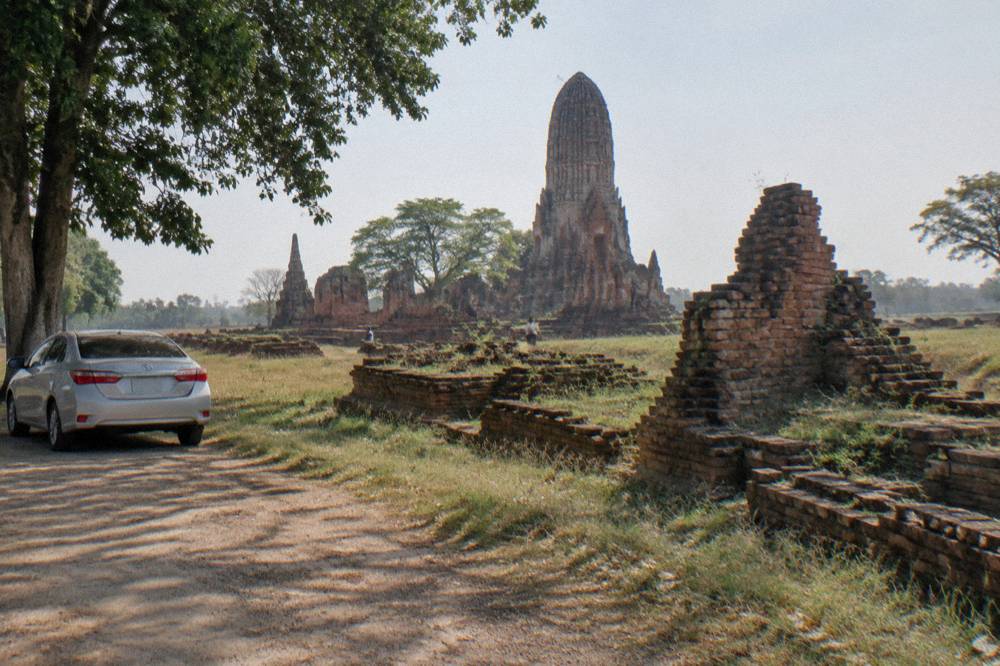
There is also a middle path that keeps the car but drops the guide, and it is worth naming because many travellers assume it does not exist. Some listings pair a boat leg with the drive, mixing road transport out with a river return, which turns the transfer itself into part of the day rather than a cost to be minimised.
That experience, run by TRIPZA sightseeing, states an eight-hour day with hotel pickup in Bangkok, an air-conditioned vehicle plus a river boat, and a 4.9 rating from 861 reviews, with a private-group option available. It is the clearest example on the roster of a listing where the journey is a feature, not a fare.
What Will You Pay Once The Taxi Drops You At The Temples?
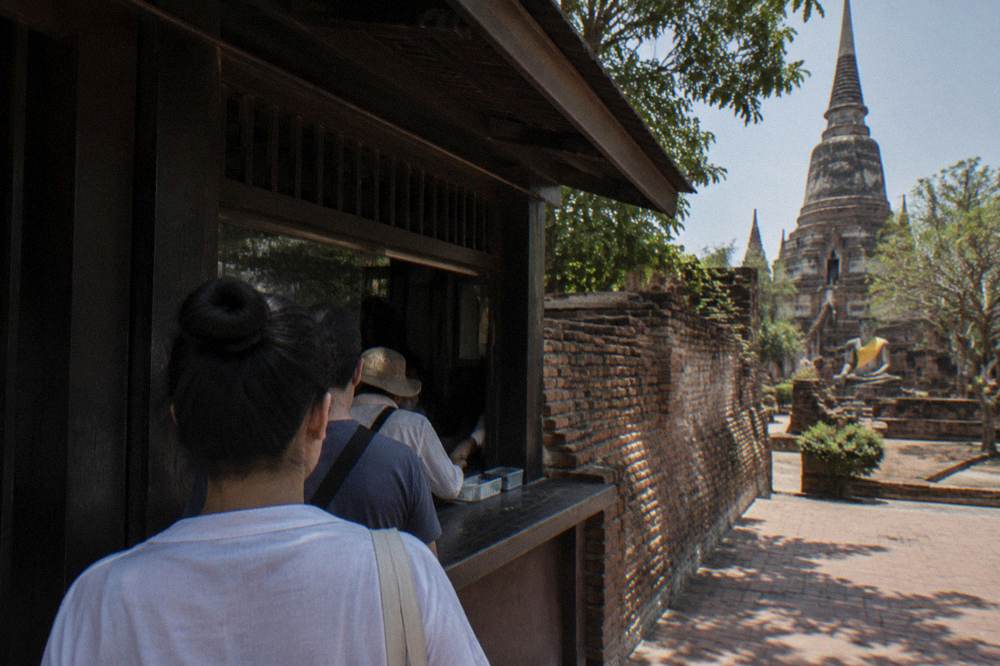
The Historical Park grounds themselves are free to enter, and fees apply only at ticketed monuments: 80 baht per site for foreign visitors, or 300 baht for the official seven-site ticket. Tickets are sold in cash at the gates, with no advance online booking through official channels. Smaller active temples charge around 20 baht, and the reclining Buddha at Wat Lokayasutharam is free.
This is the part of the budget that the taxi conversation usually skips. The ride gets priced for weeks and the arrival costs get discovered at the gate, which is backwards, because the temple fees are the fixed, official numbers and the taxi fare is the negotiable one. The Fine Arts Department's official figures are 80 baht per ticketed monument for foreign visitors or a 300 baht flat-rate ticket covering seven sites: Wat Phra Si Sanphet, Wat Phra Ram, Wat Mahathat, Wat Ratchaburana, Wat Chaiwatthanaram, Wat Maheyong and Wat Kudi Dao. The park's daily hours are 8am to 6pm, and there is no general admission fee for the park grounds themselves, only for the ticketed monuments.
Cash is the operative word. Gates take cash, there is no official online booking system for temple tickets, and the combination ticket is bought at the first ticketed site you visit. Whether the seven-site ticket beats seven individual purchases is simple arithmetic: the flat rate wins the moment you will enter more than three or four of the covered sites, and loses if your day only touches two. A day built around Wat Mahathat and Wat Chaiwatthanaram alone is cheaper on individual tickets; a full circuit of the ticketed monuments is cheaper on the flat rate.
| Arrival cost | Amount | Notes |
|---|---|---|
| Park grounds | Free | Walk or cycle between sites at no charge |
| Ticketed monument, per site | 80 baht | Foreign visitors, cash at the gate |
| Seven-site flat-rate ticket | 300 baht | Covers seven named monuments, cash at first site |
| Smaller active temples | About 20 baht | Wat Yai Chai Mongkhon, secondary 2026 guides |
| Wat Lokayasutharam | Free | The reclining Buddha, open-air site |
| Chao Sam Phraya National Museum | 150 baht | Foreign visitors, museum entry |
Two arrival details matter beyond the fees. Dress code is enforced at the active temples: shoulders and knees covered, the same rule as anywhere in Thailand. And at Wat Mahathat's famous Buddha head wrapped in tree roots, the etiquette is to crouch or kneel so your head sits lower than the Buddha's, a small physical instruction that every guide on the site repeats because it is both a respect convention and the angle that makes the photograph work.
Is A Taxi To Ayutthaya Actually Worth It For A Day Trip?
For three or four travellers on a tight schedule, a taxi or a private car day is a defensible spend, because the per-head cost lands close to a group tour while keeping the schedule entirely yours. For one or two travellers with a full day, the train at about fifteen to twenty baht makes the taxi a comfort purchase rather than a rational one. The fare band is real, but so is the alternative.
The honest framing is that nobody needs a taxi to reach Ayutthaya. The city is one of the best-served day-trip destinations in Thailand precisely because the public options are cheap, frequent and fast, and the 2026 additions, the commuter rail service above all, have widened the gap between public and private transport further. A traveller who takes the train, hires a bicycle at roughly 50 to 100 baht for the day per 2026 guides, and buys the 300-baht seven-site ticket has assembled a full independent day for less than the bottom of the taxi band, and the park is flat and compact enough that a bicycle is genuinely the right tool for the circuit.
What the taxi and the private tour tier sell is not access, it is the removal of decisions. No terminal to find, no timetable to catch, no bicycle to hire, no route to sequence, no return leg to arrange from a riverside road with patchy signal. Whether that is worth roughly 900 to 1,500 baht one way, or the private-tier day-tour price on a listing, depends entirely on how much your travelling party values its time and how many heads are splitting the bill. Families and small groups with a fixed window, a cruise-port deadline or a single free day usually land on the private side. Backpackers with a loose plan almost never do.
The one warning worth repeating is the quote-first rule. The band is wide, the app price is the benchmark, and any curbside or rank quote should be tested against it before the door closes. Beyond that, the decision is genuinely low-risk: every option on this page, from the fifteen-baht train to the private car with a guide, reaches the same extraordinary city of ruins, and the temples charge their 80 baht at the gate whichever way you arrived.
For the broader decision between booking a guided day and going independently, the guided tour versus exploring on your own guide works through the trade in full, and the time needed in Ayutthaya blog post helps with how much of the day to budget once you are there.
Common Questions About Taxi Costs From Bangkok To Ayutthaya
How Much Does A Taxi Cost From Bangkok To Ayutthaya?
Roughly 900 to 1,500 baht one way, according to 2026 guides, for a trip of about 76 kilometres. Always get a quote in the ride app before booking, since the fare moves with traffic, tolls, vehicle type and whether the driver prices a return leg.
Is Grab cheaper than a regular taxi to Ayutthaya?
Usually comparable or slightly cheaper, and always more predictable. The app gives a fixed upfront quote for the whole intercity run, while a curbside or hotel-rank taxi opens with a negotiated price that should be tested against the app quote before you accept it.
How much is the train from Bangkok to Ayutthaya?
Ordinary third-class trains run about fifteen to twenty baht, and the air-conditioned commuter service launched in August 2026 is capped at fifty baht to Ayutthaya on its promotional fare through 31 October 2026, with counter tickets and unreserved seats. The trip takes about an hour and fifteen minutes on the commuter service.
Does the taxi fare include the temple entry fees?
No. The Historical Park grounds are free, but ticketed monuments charge foreign visitors 80 baht per site or 300 baht for the official seven-site ticket, sold in cash at the gates. No listed tour or taxi fare covers those fees unless the listing states it.
Is a private tour better value than a taxi for a day trip?
For two or more travellers, often yes. A private day tour sits in the same spending tier as a taxi hired for a round trip with a waiting driver, but adds a guide, sequenced temple routing, hotel pickup and sometimes lunch. A solo traveller on a budget is usually better served by the train plus a bicycle.
How long does the drive take?
Typically one to one and a half hours in light traffic, over about 76 kilometres by road. Bangkok's peak hours can stretch the run considerably, which is one reason off-peak departures quote at the lower end of the fare band.