Bangkok To Ayutthaya By Train Or Tour
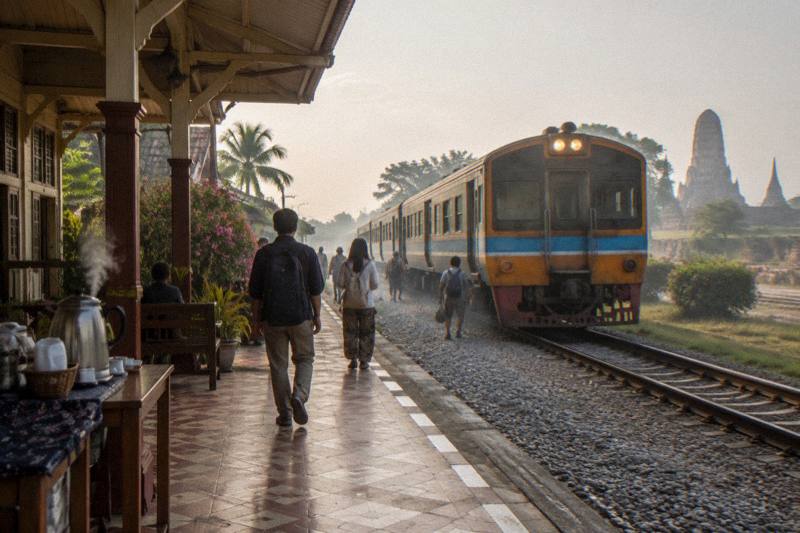
The train from Bangkok to Ayutthaya takes as little as 75 minutes and costs less than a bowl of boat noodles, but it leaves you to arrange everything at the other end. Here is how the rail options stack up against the tours that bundle the transfer.
Short answer
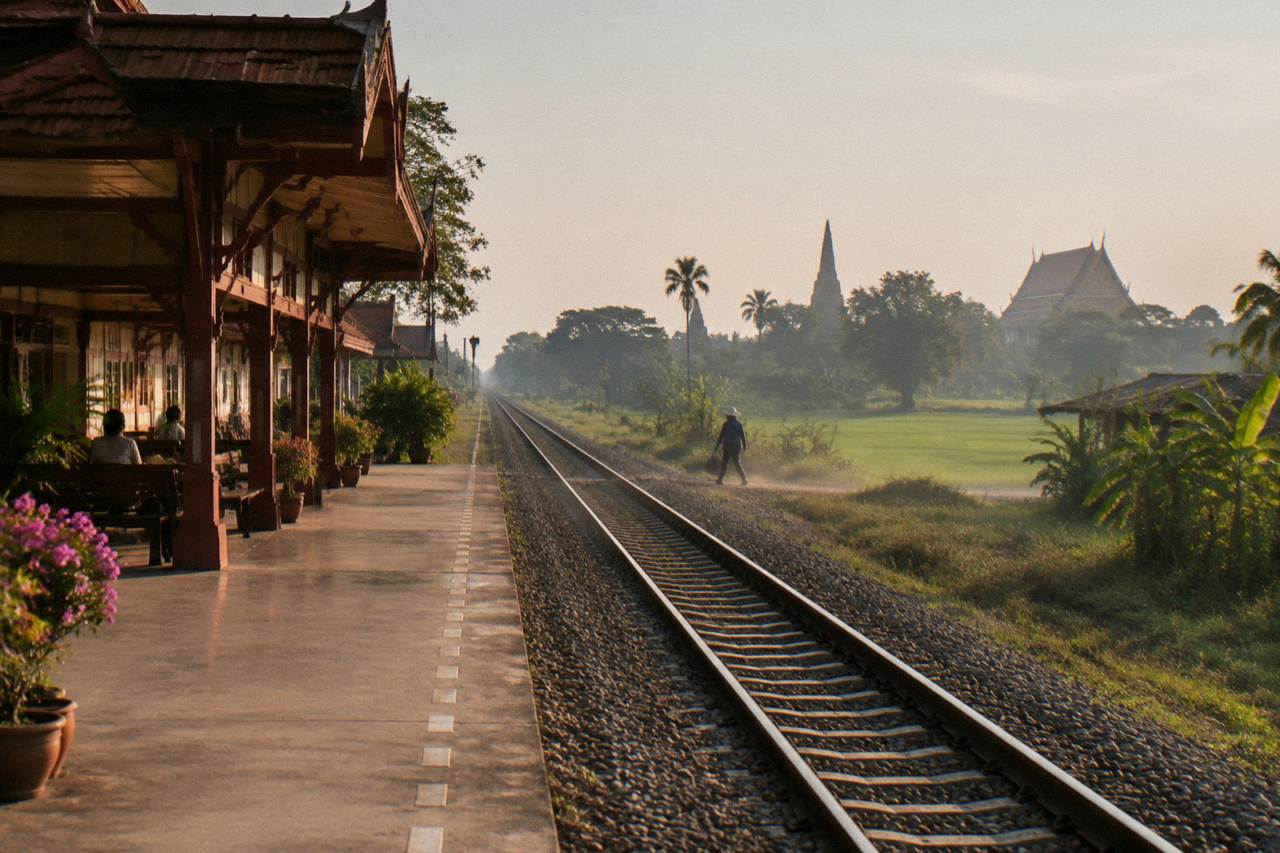
The train from Bangkok to Ayutthaya covers roughly 76 km in about 75 minutes to 2 hours depending on the service, with ordinary third class from about 15 to 20 baht and the new BNEX air-conditioned commuter train capped at fifty baht under a promotion running to 31 October 2026. A guided tour costs more but folds in pickup, transport between temples and a guide.
The railway out of Bangkok crosses the Chao Phraya plain through rice country and pulls into Ayutthaya station roughly 76 km up the line, and for the price of a bowl of boat noodles it is one of the best-value rail rides in Thailand. What the train does not do is meet you at your hotel, carry you between the ruins, or explain what you are looking at once you arrive. That gap is exactly where the tour market lives, and this guide compares the two honestly: the train options with their real times and fares, and the guided day trips, including the new heritage-express train and bus day trip, that build the transfer into the price. If you would rather skip timetables altogether, our guide to taxi and Grab fares from Bangkok to Ayutthaya shows what a door-to-door ride costs compared with the train and minivan.
The choice is not really about money. Ordinary third class costs about 15 to 20 baht, and even the newest air-conditioned service is capped at fifty baht for the first months of operation, so no tour competes on price. The choice is about what happens after the train stops: a station-to-temple plan you arrange yourself, or a day where a small-group full-day tour, a private day tour or a boat-and-temple experience has already solved the getting-around problem. Both routes work. The sections below lay out the numbers so you can pick in five minutes.
How Long Is The Train Ride From Bangkok To Ayutthaya?
The fastest trains cover the roughly 76 km from Bangkok to Ayutthaya in about 75 minutes, while ordinary third-class services take 80 minutes to 2 hours via Don Mueang, and the new BNEX air-conditioned commuter service is timed at about 1 hour 15 minutes. About 16 regular trains run the route daily from Krung Thep Aphiwat, so the frequency, not the distance, is what makes the train practical for a day trip.
The headline number surprises people who expect a provincial branch line. Ayutthaya sits close enough to Bangkok that a well-timed express can beat a minivan in the morning traffic window, and the rail corridor avoids the road congestion north of the city entirely. The slower services stop more, but they cost almost nothing and run often enough that a missed train is a 40-minute problem rather than a ruined morning.
Timing your return matters more than the outbound leg. Park hours run 8am to 6pm, and ticketed monuments stop selling tickets before closing, so a day tripper wants to be back at Ayutthaya station by late afternoon to catch a comfortable evening train. Check the day's timetable at the station or on official railway channels before committing to a specific return service, because the last comfortable departures fill the same window as everyone else's.
The practical detail that catches most first-timers is the station's location. Ayutthaya station sits across the river from the old city island, so the walk out of the station is a bridge crossing, and then the ruins spread flat and wide beyond it. Nothing about the arrival is difficult, but it is a real transfer, and the getting around Ayutthaya options start the moment you step off the train.
What Train Options Run From Bangkok To Ayutthaya?
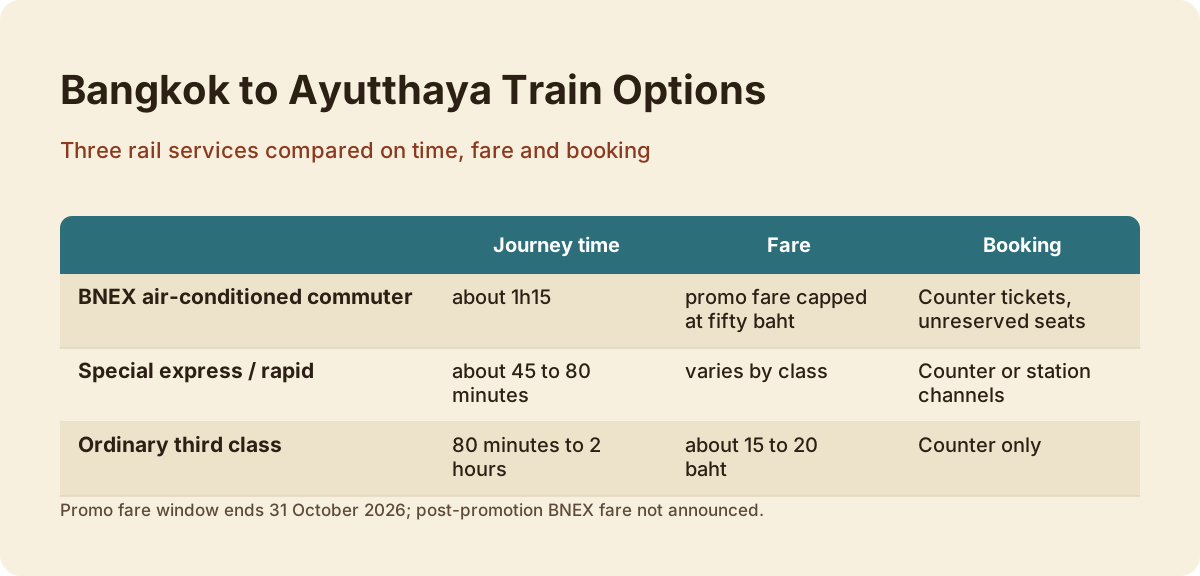
Three rail options serve the route: the new BNEX air-conditioned commuter service launched 1 August 2026 from Krung Thep Aphiwat at about 1 hour 15 minutes with counter tickets and unreserved seats, roughly 16 regular daily trains including expresses and rapids, and ordinary third-class services from about 15 to 20 baht taking 80 minutes to 2 hours. All fares are bought at the counter, not online.
The BNEX service is the newest and most comfortable option. It runs air-conditioned commuter stock from Krung Thep Aphiwat Central Terminal, the main long-distance station on Bangkok's north side, and the promotional fare is capped at fifty baht to Ayutthaya under the launch promotion running to 31 October 2026; the post-promotion fare has not been announced. Seats are unreserved and tickets are sold at the counter only, so you cannot book ahead, which cuts both ways: no advance planning needed, but no guaranteed seat on a busy Sunday. The launch was reported as a deliberate play for exactly this day-trip traffic, and the service announcement confirms the daily schedule and the fare cap.
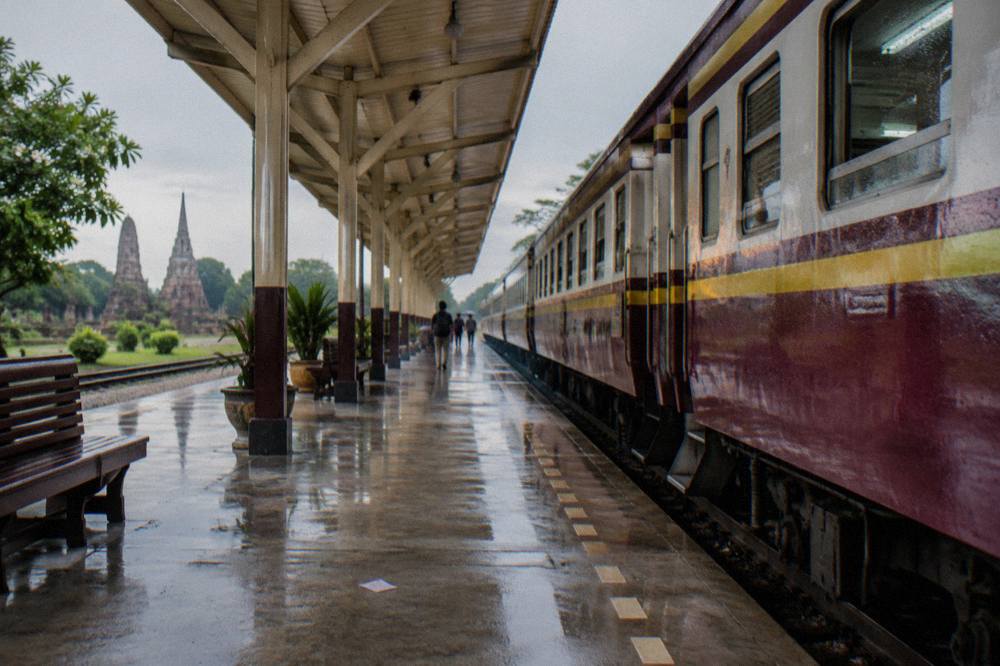
The regular timetable is the backbone of the route. Around 16 trains a day connect Krung Thep Aphiwat with Ayutthaya across several classes, from special expresses that do the run in under an hour to ordinary locals that stop at every platform. Fares scale with class, and the ordinary third-class option, about 15 to 20 baht, is the one budget guides mean when they call the train almost free. Third class is bench seats and fans, and in March heat that is a real consideration, which is a topic the best time to visit guide covers in depth.
| Train option | Where from | Journey time | Fare | Booking |
|---|---|---|---|---|
| BNEX air-conditioned commuter | Krung Thep Aphiwat | about 1h15 | promo fare capped at fifty baht to 31 Oct 2026, then unknown | Counter tickets, unreserved seats |
| Special express / rapid | Krung Thep Aphiwat | about 45 to 80 minutes | varies by class, check at the counter | Counter or station channels |
| Ordinary third class | Krung Thep Aphiwat or Hua Lamphong | 80 minutes to 2 hours | about 15 to 20 baht | Counter only |
Two practical warnings. First, Krung Thep Aphiwat is the main terminal for most Ayutthaya trains, but some ordinary and commuter services still use Hua Lamphong, so confirm the station before you travel. Second, the promo fare window ends 31 October 2026 and no source has published what BNEX will charge afterwards; anyone planning a November trip should treat the fare as unknown rather than assume the cap persists.
If the self-managed rail day sounds like more logistics than you want, the tour side of this comparison has a rail-flavoured option too. The heritage-express train and bus day trip rides a train out of a central Bangkok station, about 75 minutes to Ayutthaya, and brings you back by bus, with a guide handling the in-between. It is a brand-new listing with no reviews yet, so there is no track record to report, only the itinerary as the listing states it.
The trio above spans the range. The heritage-express product is the train-lover's pick, the railway-and-floating-markets full-day tour is a three-stop combo that also fits the Maeklong railway market and Damnoen Saduak into an 11-hour day, and the temples tour with lunch is a straightforward 7 hour 30 minute coach day for travellers who just want the ruins. All three carry free cancellation.
Train Or Tour: Which Saves More Time And Effort?
The train saves money and often matches a tour's door-to-door time on the outbound leg, but it leaves hotel transfer, temple-to-temple transport and guidance unsolved; a tour costs more and takes 6 to 11 and a half hours door to door, but folds pickup, movement and explanation into one booking. The honest answer is that the train wins on price and flexibility, and the tour wins on total effort.
Count the whole day, not the rail segment. A train traveller's clock starts at the hotel door: get to Krung Thep Aphiwat by MRT or taxi, buy the counter ticket, ride 75 minutes or more, cross the river, hire a bike or tuk-tuk, route between four or five temple sites, and reverse the whole chain before the evening trains thin out. A tour traveller's clock starts at the hotel lobby, where most of the day-trip listings on this site state hotel pickup from central Bangkok.
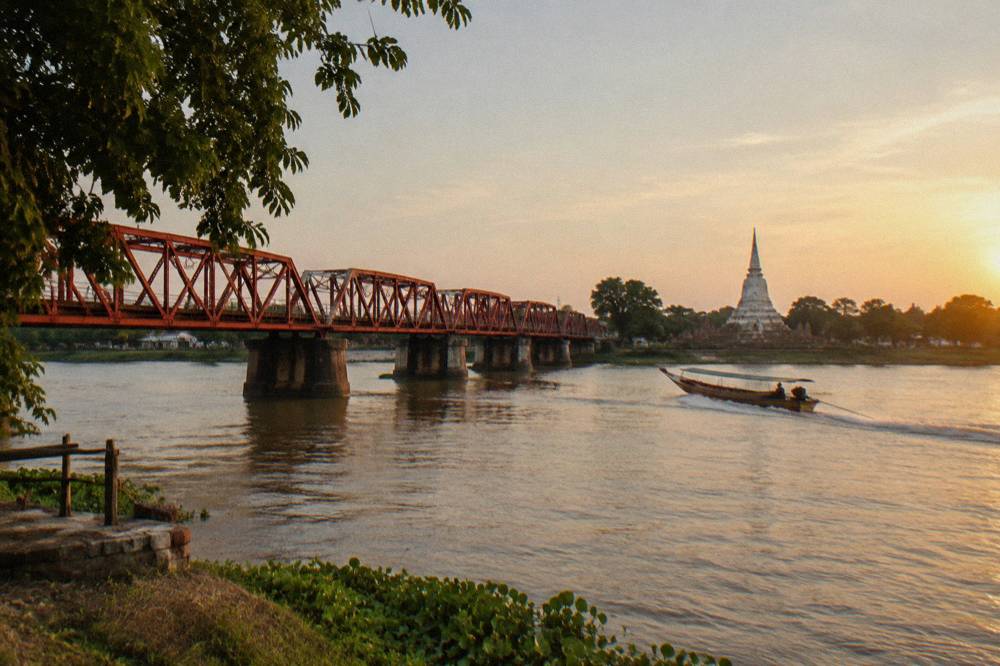
The time math is closer than the price math. A special express can put you in Ayutthaya about as fast as a tour van clears Bangkok's northern suburbs, and the train is immune to road congestion. What the train cannot do is compress the afternoon: once you are on the island, the ruins are spread out, and moving between Wat Mahathat, Wat Phra Sri Sanphet and Wat Chaiwatthanaram under your own steam takes planning that a tour has already done. The comparison table below makes the trade-off concrete.
| Factor | Train, self-managed | Guided day tour |
|---|---|---|
| Door-to-door time | 9 to 11 hours, self-routed | 6 to 11.5 hours depending on the listing |
| Outbound cost | about 15 to 20 baht third class, up to fifty baht BNEX promo | included in the tour price |
| Getting to the station | your own MRT or taxi leg | hotel pickup stated on most listings |
| Between temples | bike, tuk-tuk or boat, arranged by you | included transport, air-conditioned on most listings |
| Guidance | none, unless hired separately | guide included |
| Flexibility | leave when you like | fixed itinerary and return time |
| Cancellation | nothing to cancel | free cancellation on the listings reviewed here |
Effort is the real currency. The train day is not hard, but it is a series of small decisions, and in October heat or a sudden downpour those decisions get heavier. The guided day is one decision, made once, at a laptop. Travellers who enjoy the mechanics of local transport should take the train without hesitation; travellers who want to think about the ruins instead of the timetable should read the guided tour or on your own comparison and then pick from the day-trip roster.
What Does A Guided Tour Add Over The Train?
A guided tour adds hotel pickup, transport between temple sites, a guide's context at each ruin and, on several listings, lunch and a boat leg, in exchange for a fixed itinerary and a higher price. On this site's roster those extras range from a 6 hour 30 minute large-group bus day to an 11 hour 30 minute small-group tour capped at nine travellers.
The roster's day trips divide cleanly by format. The UNESCO's Ayutthaya Historical Park full-day tour, run by TripGuru Thailand, is the small-group end: 11 hours 30 minutes, a maximum of nine travellers, hotel pickup from central Bangkok, air-conditioned van or coach, and a 4.7 rating from 1,728 reviews, the deepest review pool on the roster. It names Wat Mahathat, Wat Phra Sri Sanphet, Wat Chaiwatthanaram and Bang Pa-In Palace on its itinerary.
At the group end, the Ayutthaya Temples Tour from Bangkok with Lunch runs 7 hours 30 minutes on an air-conditioned bus with up to 25 travellers, lunch included per the listing, and a 4.7 rating from 867 reviews. It covers Wat Lokayasutharam's reclining Buddha, Wat Phra Sri Sanphet, Wat Mahathat and Wat Chaiwatthanaram. The three-stop railway-and-floating-markets combo mentioned earlier suits travellers who want Maeklong's railway market and the floating markets in the same day, with the trade-off that Ayutthaya gets only a fraction of its 11 hours; it carries a 4.8 rating from 2,319 reviews and the listing flags that it often sells out fast.
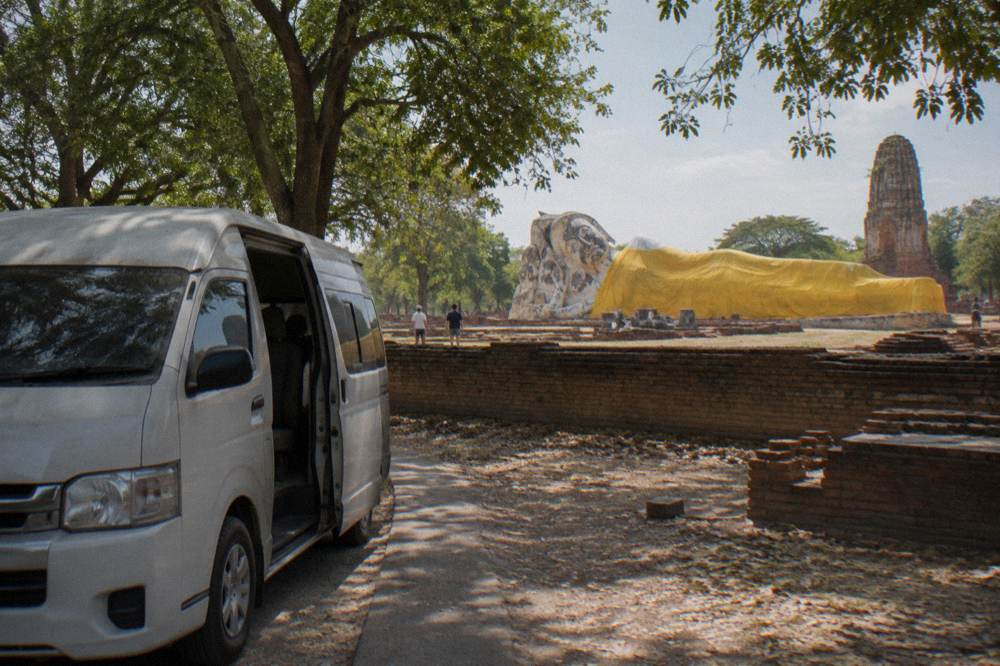
What no tour can add is spontaneity. A fixed itinerary means a fixed clock, and the return departure time is not yours to move. Some travellers split the difference: take the train out in the morning, see two or three ruins on a rented bike, and join a shorter activity in the afternoon. The Bangkok: Ayutthaya Experience with Boat Ride and Tickets fits that pattern, an 8-hour group day with hotel pickup, an air-conditioned vehicle plus a river boat, and a 4.9 rating from 861 reviews.
The private tier removes the last friction. The Private Ayutthaya Day Tour from Bangkok, run by Mam Holidays Thailand, runs 9 hours in a private air-conditioned car with hotel pickup and lunch included per the listing, covering Wat Mahathat, Wat Phra Sri Sanphet, Wat Yai Chai Mongkhon, the reclining Buddha and Bang Pa-In Palace, with a 4.7 rating from 120 reviews.
| What a tour adds | Which listings state it |
|---|---|
| Hotel pickup in Bangkok | most day trips, including the small-group, lunch and private listings |
| Lunch | the temples tour with lunch, the UNESCO group tour, the private day tour |
| Boat or cruise leg | the boat-ride experience, the river cruise and sunset listings |
| Small group cap | nine travellers on the full-day UNESCO tour, 25 on the lunch tour |
| Guide throughout | all guided listings reviewed here |
How Do You Get Around Once The Train Arrives?
Ayutthaya station sits across the river from the old city island, and from there the practical options are bike hire at roughly 50 to 100 baht a day, tuk-tuk charters at roughly 400 to 600 baht for a half day, or joining a local boat or bike activity; the park itself is flat, compact and free to enter, with fees only at the ticketed monuments.
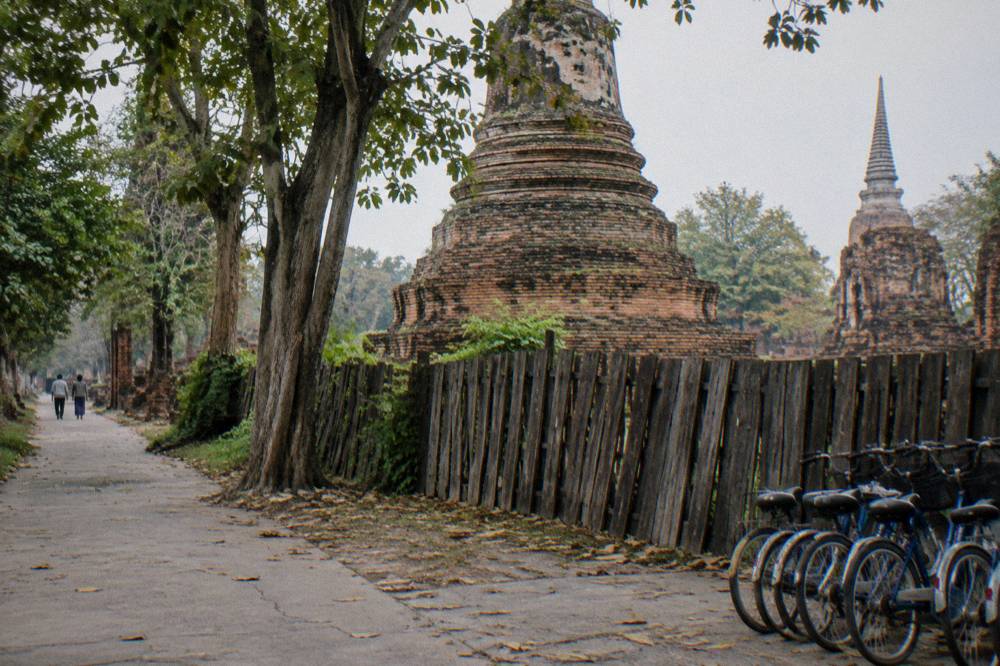
Bikes are the local favourite for good reason. The island is flat, distances between the major ruins are short, and 2026 guides quote bike hire at roughly 50 to 100 baht a day, with guesthouses sometimes lending them free or cheap. The ride from the station across the bridge and onto the island is straightforward, and once there the temple circuit is a series of ten-minute hops rather than a trek. The dedicated Ayutthaya bike tour guide covers the guided versions, including a 5.0-rated small-group option with hotel pickup and lunch.
Tuk-tuks are the fallback for anyone who arrives in the hot season and does not want to pedal in 34 to 36 degree heat. Charters run roughly 400 to 600 baht for a half-day circuit, negotiated before you set off, with the itinerary agreed at the same time. Boat options round out the set: shared longtail circuits run roughly 200 to 300 baht per person and private boats roughly 1,000 to 2,000 baht per group, per hedged 2026 guide figures, and a private longtail tour listing on this site covers Wat Chaiwatthanaram, Wat Phanan Choeng and two more riverside temples from a pier departure.
The fee structure is simple and worth knowing before you go. The park grounds cost nothing; only ticketed monuments charge, at 80 baht per site for foreign visitors or 300 baht for the official ticket covering seven sites, sold in cash at the gates with no online booking through official channels. The official Fine Arts Department park page lists the covered sites and rates. Smaller active temples such as Wat Yai Chai Mongkhon charge about 20 baht, and Wat Lokayasutharam, home of the reclining Buddha, is free.
What Does The Trip Cost In Total?
A self-managed train day costs about 30 to 40 baht return in ordinary third class or up to a hundred baht return on the BNEX promo fare, plus 80 baht per ticketed temple or 300 baht for the seven-site ticket, plus roughly 50 to 100 baht for a bike, landing the whole day under 500 baht before food; a guided tour costs more, and its price appears on the live listing.
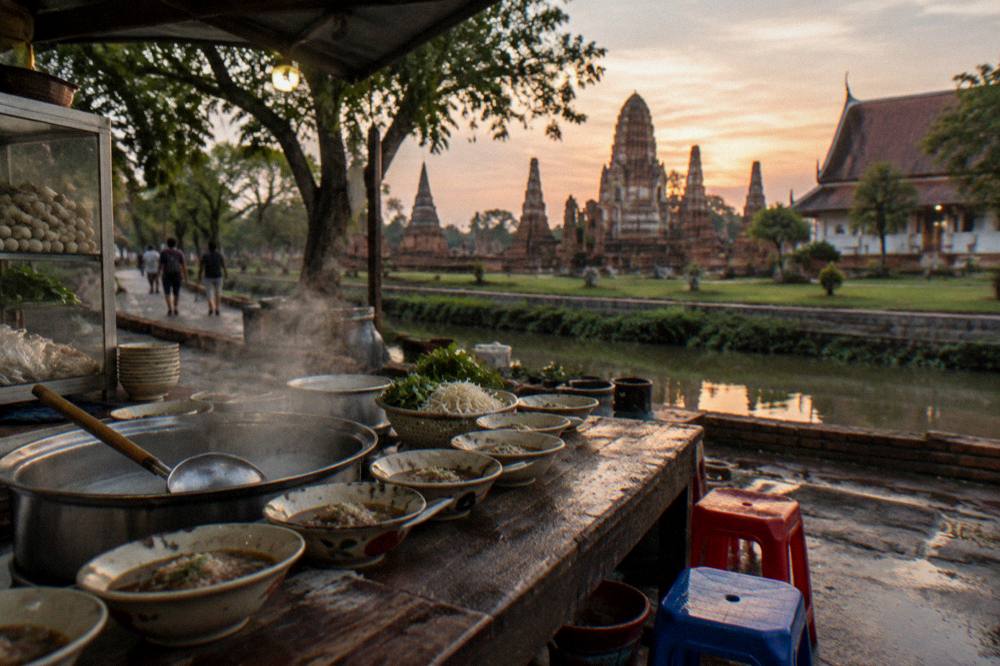
Run the arithmetic on the independent day. Third class both ways runs about 30 to 40 baht total. The seven-site ticket at 300 baht covers the major ruins a first-time visitor will actually enter, and many travellers see only three or four sites, paying 80 baht each. A bike adds roughly 50 to 100 baht. Boat noodles from about 20 baht a bowl keep lunch in the loose-change bracket. The whole day sits comfortably under 500 baht excluding drinks, which is why every budget guide starts with the train; the free and budget things to do guide stretches the same logic further.
The tour day trades that arithmetic for a single number on the listing. Tour prices on this site appear through the live listings rather than in prose, and the honest comparison is not baht-for-baht but value-for-effort: the tour price buys the transfer, the between-temple movement, the guide and usually lunch, none of which the 30-baht train ticket includes. Two listings also add a boat leg, which independently costs the shared-boat money noted above.
| Cost item | Train day | Tour day |
|---|---|---|
| Bangkok to Ayutthaya transfer | about 15 to 20 baht each way third class, up to fifty baht BNEX promo | included |
| Getting around the island | bike roughly 50 to 100 baht, tuk-tuk roughly 400 to 600 baht half day | included |
| Temple entry | 80 baht per site or 300 baht for seven sites, cash at gates | buy at the gates unless the listing states otherwise |
| Lunch | about 20 baht a bowl and up | included on the listings that state it |
| Guidance | not included | included |
One caution on the fee line: no listing on this roster states that temple entry is included unless the roster says so, and tickets are sold on site in cash with no advance online booking through official channels. Bring notes, not assumptions. And for the flood-season months, the September 2026 flood-barrier report is a reminder that riverside sites can restrict access when the Chao Phraya rises, worth a quick local check before any riverside sunset plan.
By now the decision should be plain. Take the train if you enjoy the mechanics of travel, are watching baht, or want an open-ended day; take a tour if you want the ruins explained and the logistics invisible. If the train option tempts you but the planning does not, the middle path exists: Ayutthaya Historical Park Tours keeps the full roster, including the heritage-express train and bus day trip, whose live listing you can Check availability before the promo fare window closes.
Common Questions About The Bangkok To Ayutthaya Train Or Tour Choice
How long is the train ride from Bangkok to Ayutthaya?
The fastest services cover the roughly 76 km in about 75 minutes, ordinary third-class trains take 80 minutes to 2 hours, and the BNEX air-conditioned commuter service is timed at about 1 hour 15 minutes from Krung Thep Aphiwat.
How much does the train from Bangkok to Ayutthaya cost?
Ordinary third class runs about 15 to 20 baht. The BNEX promotional fare is capped at fifty baht to Ayutthaya through 31 October 2026, with the post-promotion fare not yet announced. Tickets are sold at the counter, not online.
Is the train cheaper than a tour to Ayutthaya?
Yes, by a wide margin. A full independent day, train both ways, bike hire and the 300 baht seven-site ticket, lands under 500 baht before food. Tour prices appear on each live listing and buy the transfer, guiding and between-temple transport instead.
Do the tours include temple entry fees?
Only if the listing states it. On this roster, inclusions are as printed: pickup, transport, lunch and boat legs where named. Temple tickets are sold on site in cash, 80 baht per site or 300 baht for the official seven-site ticket, with no advance online booking through official channels.
How do you get around once the train arrives?
Ayutthaya station sits across the river from the old city island. Bike hire runs roughly 50 to 100 baht a day, tuk-tuk charters roughly 400 to 600 baht for a half day, and the park itself is flat, free to enter and open 8am to 6pm.
Which is better, the train or a guided tour?
The train wins on price and flexibility; a tour wins on total effort, folding in hotel pickup, transport between temples and a guide. Travellers who enjoy local transport should take the train, and travellers who want a single decision should book a tour with free cancellation.