Best Time To Visit Ayutthaya For Heat And Light
Ayutthaya sits on a floodplain about 76 km north of Bangkok, and its weather runs in three broad seasons: a cool dry stretch from November to February, a hot season from March to May, and a rainy season from June to October. The ruins are open year-round, but heat, rain and river levels change which tour format works best.
Short answer
The best time to visit Ayutthaya is November to February, when highs sit near 31C, rain is minimal and morning light is clean. Start at 8am when the park opens, or book a sunset boat tour for golden-hour light. Avoid midday heat from March to May, and watch river levels in September and October, when flood barriers go up at riverside temples.
Ayutthaya's ruins stand in the open, mostly without shade, on a flat river island where the heat builds fast after mid-morning. That single fact shapes almost every planning decision on this page: when to come, what time of day to walk the prangs, and whether a van tour, a boat tour or a bike tour fits the season you have chosen. The park itself keeps daily hours of 8am to 6pm, per the official Fine Arts Department park page, and entry to the park grounds is free, with fees only at the ticketed monuments. If you're leaning toward exploring by bicycle, our guide on how tough an Ayutthaya bike tour gets in hot weather covers which months are kindest and when a van makes more sense.
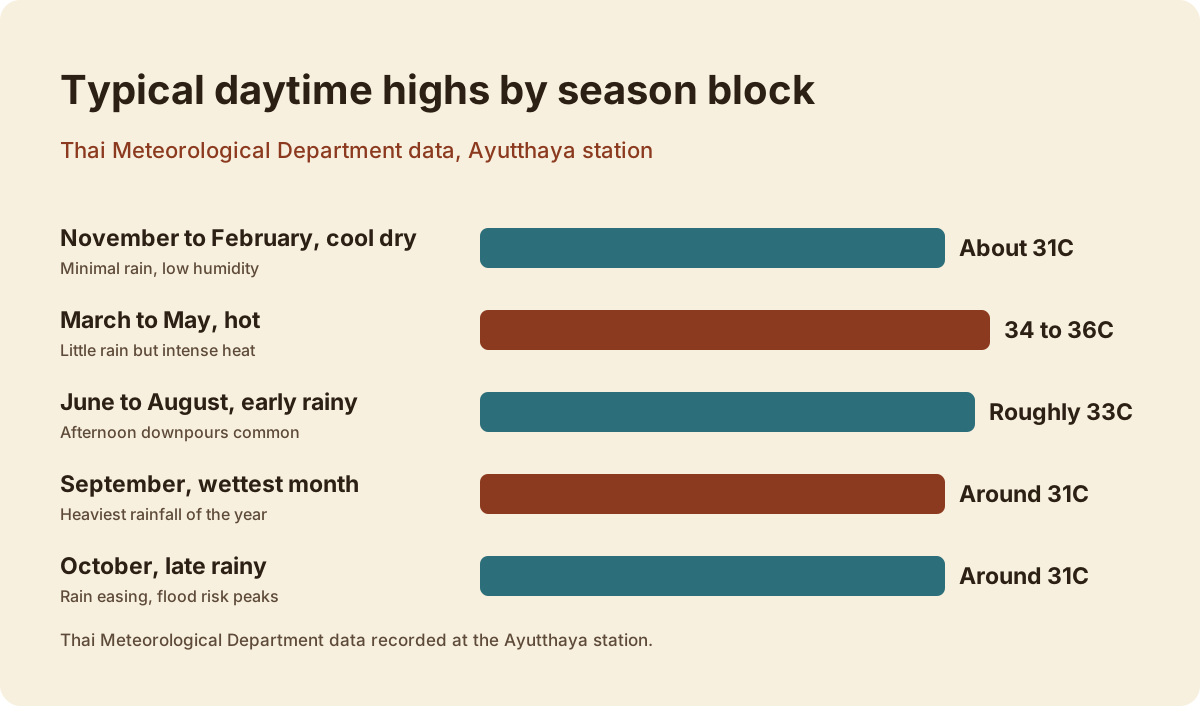
The three seasons here are broad rather than subtle. Cool dry weather runs November to February with daytime highs around 31C. The hot season, March to May, pushes highs to between 34 and 36C. The rainy season, June to October, brings afternoon downpours, with September the wettest month and October carrying flood risk as the Chao Phraya rises. None of these closes the park, but they change what a comfortable day looks like. This guide works through the calendar month by month, then maps each season and each part of the day to the tour formats on the market, from the small-group full-day tour to the three-hour sunset bike excursion.
Ayutthaya Weather Month By Month
The calendar splits cleanly into three blocks: November to February is cool and dry with highs near 31C, March to May is hot at 34 to 36C, and June to October is rainy with September the wettest month. Most visitors get the best combination of comfortable temperatures and clean light in the November to February window, with December and January the busiest months inside it.
The climate bands below come from Thai Meteorological Department data recorded at the Ayutthaya station. November deserves a special word: several 2026 guides flag it as a shoulder month, with post-monsoon clear skies, high river levels that suit boat rides, and smaller crowds than the December and January peak. If you want the best light of the year without the peak-season tour bus queues, November is the month to aim for. Once your timing is settled, the Ayutthaya versus Sukhothai comparison guide can help you choose which ancient capital deserves your days.
| Months | Season | Typical daytime high | Rain pattern | What it means on the ground |
|---|---|---|---|---|
| November to February | Cool dry | About 31C | Minimal rain, low humidity | Best walking and cycling conditions; December and January busiest |
| March to May | Hot | 34 to 36C | Little rain but intense heat | Early starts matter; midday ruins are punishing |
| June to August | Early rainy | Roughly 33C | Afternoon downpours common | Mornings usually dry; plan indoor or shaded stops after lunch |
| September | Wettest month | Around 31C | Heaviest rainfall of the year | Flexible plans needed; boat rides depend on river state |
| October | Late rainy | Around 31C | Rain easing, flood risk peaks | Riverside temples may restrict access; check local conditions |
Two practical notes sit behind the table. First, the park's own hours are 8am to 6pm daily, and tickets at the ticketed monuments are sold in cash at the gate, with no advance online booking through official channels. Foreign visitors pay 80 baht per ticketed temple or 300 baht for the seven-site ticket. Second, the rainy season is not a write-off: mornings are often dry, and the cloud cover can actually soften the light on the brickwork in a way the hot season never does.
If you are matching a booking to the calendar rather than travelling on fixed dates, the small-group full-day tour from Bangkok, the sunset heritage tour with its hour-long boat ride, and the full-day bike tour cover the three formats most affected by these numbers. Here is how the three compare for a first visit.
What Time Of Day Gives The Best Light
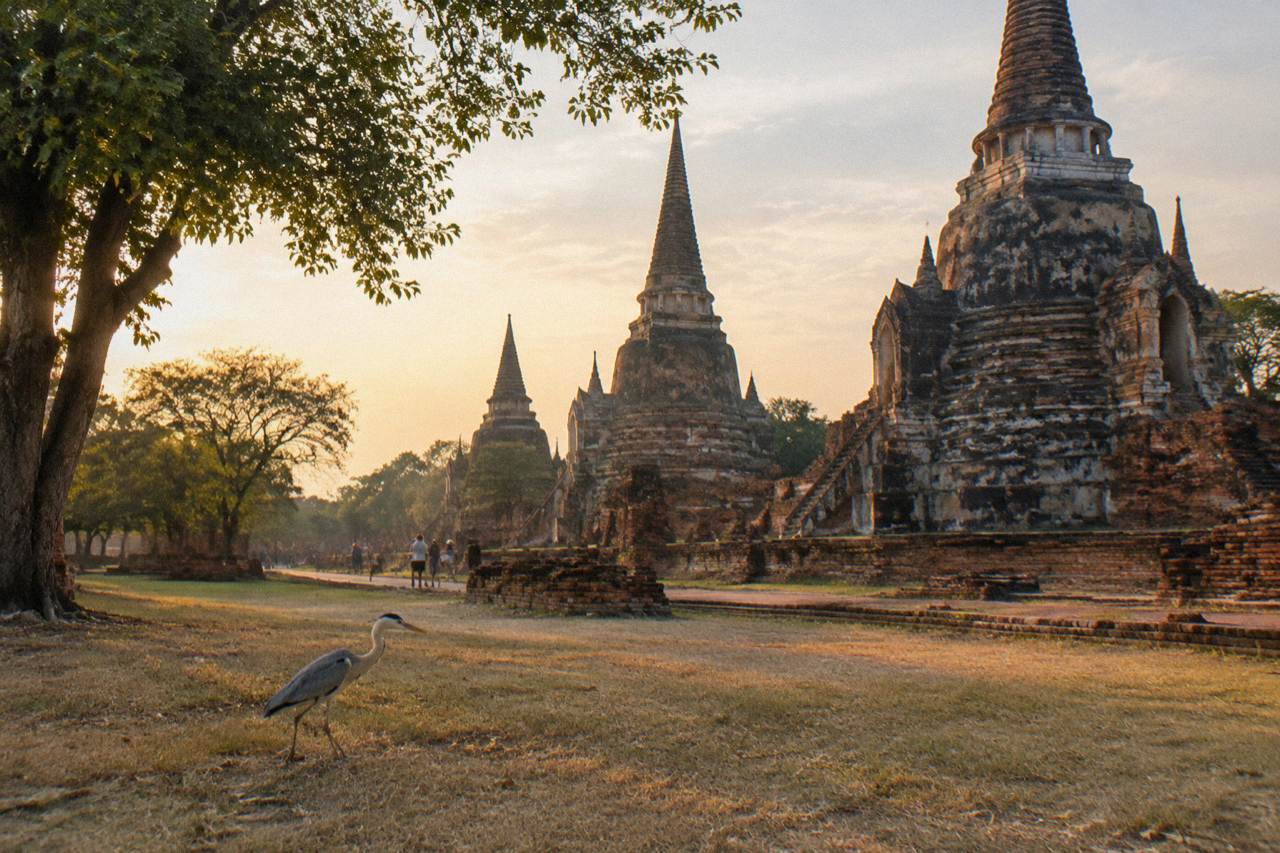
The two best light windows are 8am to 10am, when the park opens and the sun is still low, and the final hour before sunset, when the west-bank temples glow. Midday, roughly 11am to 3pm, gives harsh overhead light and the day's peak heat, and it is the weakest time both for photographs and for comfort on foot.
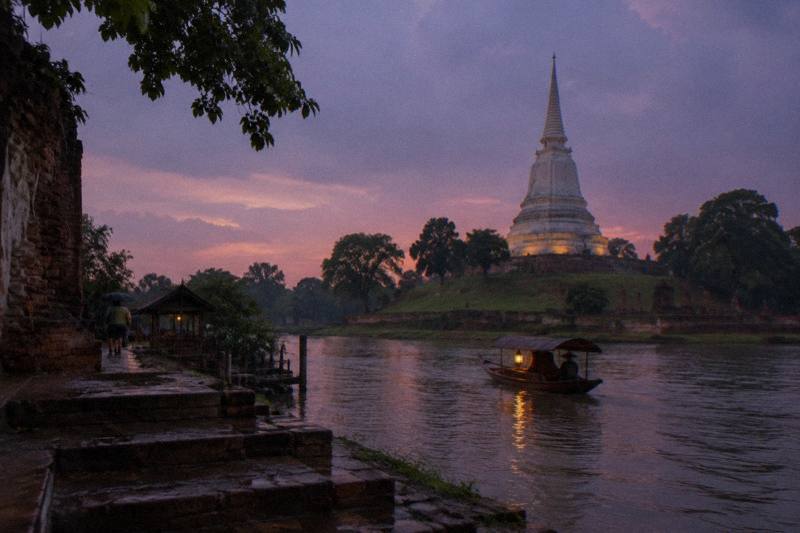
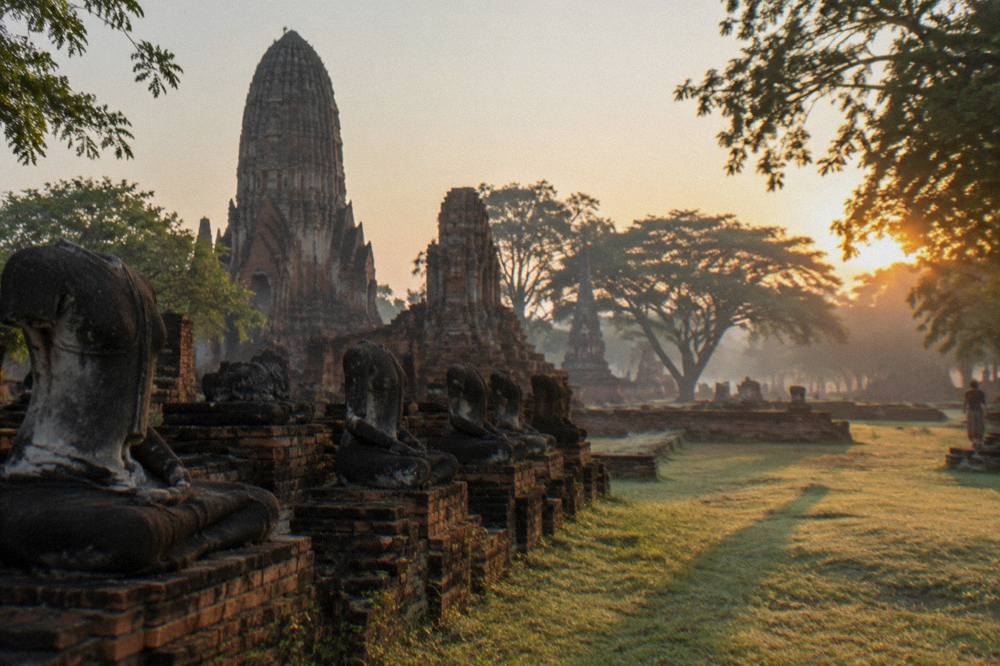
Morning light at Ayutthaya comes in clean and low from the east, which suits the big east-facing monuments such as Wat Phra Sri Sanphet and Wat Mahathat. The park opens at 8am, and the first two hours are cooler at every time of year, dramatically so from March to May. Photographers who want warm colour rather than sharp detail should aim at the other end of the day: Wat Chaiwatthanaram, on the west bank of the Chao Phraya, is the recognised riverside sunset spot, and its prangs catch the last of the golden hour across the water.
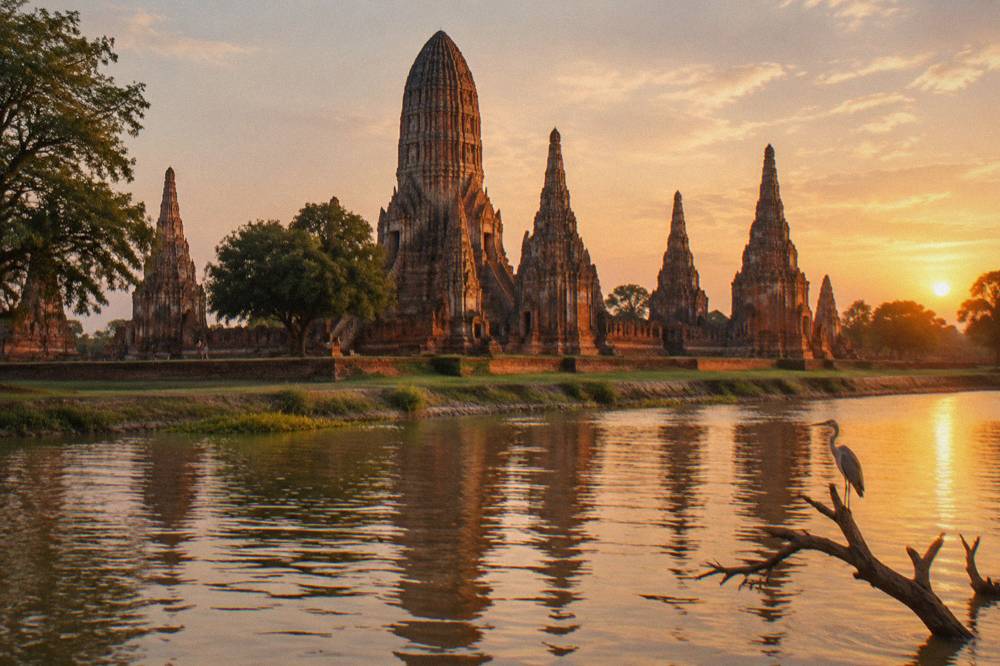
The time-of-day question interacts with format more than most visitors expect. A bike tour at 11am in April is a different proposition from the same route at 8am. A boat tour at 5pm sees light a morning departure never gets. The table below breaks the day into blocks and matches each to the format that handles it best.
| Time block | Light and heat | Best-suited format | Why |
|---|---|---|---|
| 8am to 10am | Low, clean light; coolest hours | Bike tour or walking-heavy van tour | Cover the exposed big ruins before heat builds |
| 10am to noon | Light hardening, heat rising | Van or bus tour with shade between stops | Air-conditioning between temples matters now |
| Noon to 3pm | Harsh overhead light, peak heat | Long lunch stop, museum, or boat ride on the water | The midday sun on open brick is the day's low point |
| 3pm to 5pm | Light warming, shadows lengthening | Van tour continuing, or transfer to the west bank | Good for Wat Chaiwatthanaram before the final hour |
| Final hour before sunset | Golden hour, warmest colour | Sunset boat tour or sunset bike excursion | The best photographic light of the whole day |
Evening illumination of the temples happens only during announced events, not nightly, so do not plan an after-dark visit expecting lit ruins; check announcements for any lighting periods during your dates. For the standard golden-hour experience, the tours that finish on the water or on the west bank are the reliable options. If you are weighing that against the daytime alternatives, the deeper comparison is in the best time of day to visit Ayutthaya, and the boat-based options are covered in the Ayutthaya sunset river cruise guide.
Which Tour Format Suits Each Season
Cool dry months suit every format, including bike tours and long walking days. Hot months favour air-conditioned van and private car tours with early starts and a midday lunch break. Rainy months favour flexible small-group and private tours over fixed large-group itineraries, since afternoon storms can cut a stop short.
The format question is where the weather data turns into a booking decision. The small-group full-day tour from Bangkok, run by TripGuru Thailand, carries a 4.7 rating from 1,728 reviews and caps groups at nine travellers, with hotel pickup from central Bangkok stated on the listing and free cancellation. Its 11-and-a-half-hour span works best when the day is comfortable end to end, which in practice means November to February, or a well-timed early start in the shoulder months. In the hot season its air-conditioned van becomes less a comfort and more a necessity between stops.
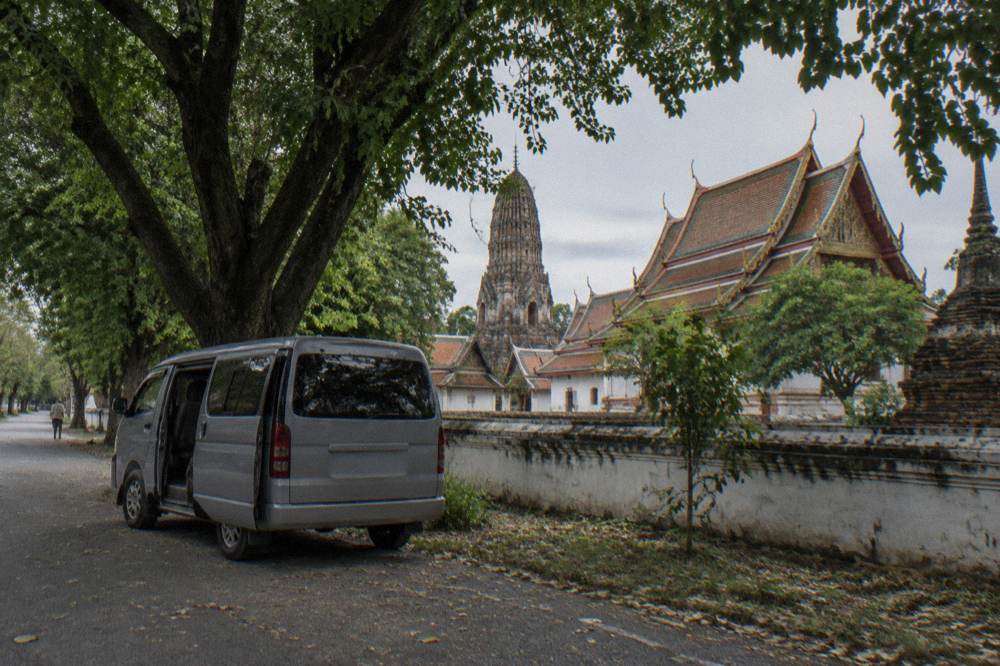
Bike tours are the format most sensitive to the calendar. The park is flat and compact, which makes it excellent cycling terrain, but there is little shade on the island, and 34 to 36C on open brick changes the experience completely. The Colors of Ayutthaya full-day bike tour, run by ThailandBiking's Ayutthaya branch, holds a 4.8 rating from 66 reviews and includes lunch, and its six-hour span is a very different product in December versus April. The shorter Ayutthaya bike tour options include a three-hour version that fits inside a cool morning.
Private tours buy flexibility, which is the single most valuable feature in the rainy season. The private Ayutthaya day tour from Bangkok, run by Mam Holidays Thailand with a 4.7 rating from 120 reviews, includes lunch and hotel pickup, and a private car can reorder the day around a downpour in a way a fixed group itinerary cannot. The trade-off is price: this is the private tier, above the small-group and group tours on cost.
| Season | Best format | Formats that work | Formats to reconsider |
|---|---|---|---|
| Cool dry (Nov to Feb) | Bike tour, or small-group full-day tour | Everything on the market, including long walking days | None; this is the season of maximum choice |
| Hot (Mar to May) | Air-conditioned van or private car tour with an early start | Boat tours, which catch any breeze | Full-day bike tours in midday heat |
| Early rainy (Jun to Aug) | Small-group or private tour with flexible stops | Morning bike tours, since mornings are often dry | Rigid large-group itineraries with fixed timings |
| September | Private tour, or a tour with a boat leg | Sunset boat tours when the river allows | Long cycling days in heavy rain |
| October | Van or private tour; check riverside access first | Sunset boat tours, subject to river levels | Anything assuming riverside temples are fully open |
Group size matters here as much as vehicle type. A large-group bus tour, such as the UNESCO temples group tour with lunch run by I Asia Thailand, 4.7 from 84 reviews, keeps you moving on a fixed clock regardless of weather. A nine-traveller small group can linger in shade or push on early. That difference is worth paying attention to in June through October, when the forecast can change between breakfast and lunch.
Early Start Or Late Afternoon
An early start wins in the hot season, because the 8am to 10am window is the only genuinely comfortable walking time from March to May. A late-afternoon plan wins for light at any time of year, and in the cool season the two can be combined into one long, well-paced day that covers both light windows.
The arithmetic is simple. The park opens at 8am and closes at 6pm, and the light windows sit at each end of that span. A visitor who starts at 8am gets two cool hours and then faces a choice: continue into the midday heat, or break for a long lunch and return for the late afternoon. Tours from Bangkok solve this differently depending on format. The full-day van tours simply schedule lunch inside the hot hours. The sunset tours start later and skip the morning entirely.
The lunch-included Ayutthaya temples tour from Bangkok, run by Bigcountry Experience with a 4.7 rating from 867 reviews, is built around exactly this pattern: temples in the cooler morning stretch, a lunch break in the middle of the day, and the remaining stops after it. In April that lunch break is doing real work. In December it is a pleasant pause.
For the late-afternoon plan, the three-hour sunset bike excursion run by Recreational Bangkok Biking, 4.8 from 37 reviews, is the most light-focused product on the roster: it exists to put you among the ruins during the final hour, at a pace slow enough to stop and shoot. It is a short tour, and it does not include pickup, so it suits visitors already staying in Ayutthaya or arriving independently. The fuller comparison of morning versus evening visits, including the light angle on specific temples, is in the time-of-day guide.
One caution on the late plan: sunset timing shifts through the year, and the final hour before park closing at 6pm is the reliable window to plan around. Do not build an itinerary that assumes the grounds stay open after dark; outside announced events, they do not.
Rainy Season And Flood Risk In September And October
September is Ayutthaya's wettest month and October carries the peak flood risk, as the Chao Phraya rises with upstream runoff and dam releases. In September and October 2026 the riverside temples stayed open behind temporary flood barriers, including a 165-metre barrier at Wat Chaiwatthanaram, but access to low-lying riverside sites can be restricted when the river is high.
The province sits on a floodplain, and the historical island is the low-lying part of it. The 2026 season illustrated the pattern without closing the core sites: news reporting in late September 2026 recorded the Fine Arts Department installing a 165-metre, 1.9-metre-high prefabricated flood barrier along the riverfront at Wat Chaiwatthanaram, and a 120-metre barrier at Wat Kasattrathirat, with the temples reported open to visitors. That is the typical outcome: barriers and pumps, not closures. The official park page and local announcements are the places to check if your trip falls in these months, and the Nation's report on the 2026 flood barriers shows what the measures actually look like on the ground.
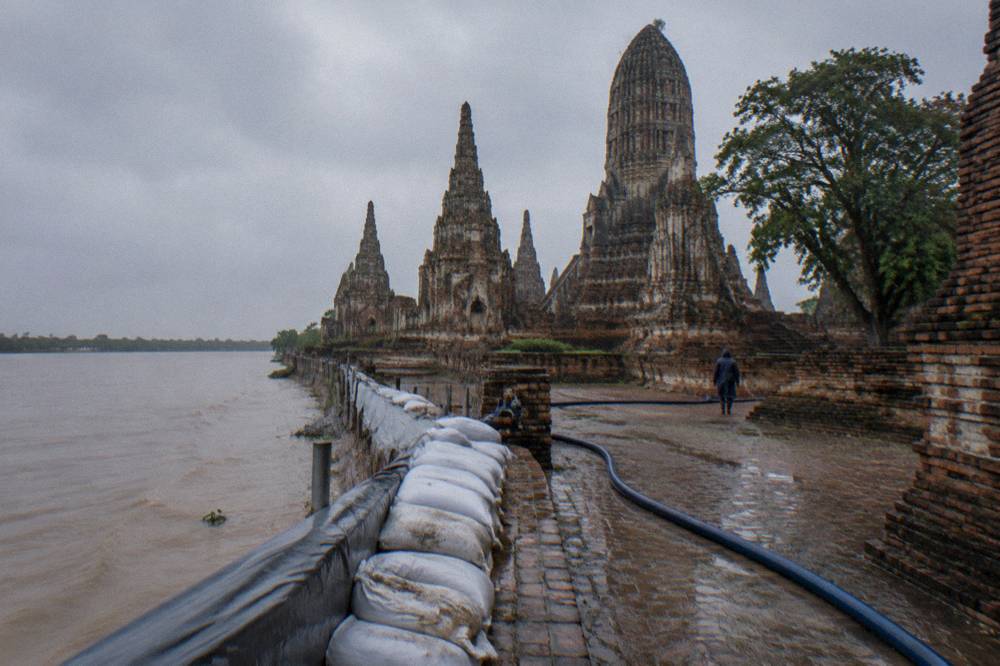
What does this mean for a booking? Three things. First, free cancellation, which every listing on this site's roster carries, is worth more in October than in January: if a riverside stop is restricted, you can adjust without losing the fare. Second, private and small-group formats can reroute toward the island's interior sites, while a fixed large-group itinerary may keep its schedule regardless. Third, the boat tours that make the sunset special in other months depend on river conditions, so check locally in the wettest weeks. The general seasonal picture, including which months to prefer if your dates are flexible, is covered in the Ayutthaya province climate record, and the practical budget angle on visiting cheaply in any season is in the free and budget things to do guide.
Rain outside the flood window is usually an afternoon affair. June through August days typically start dry, which is why the table above still rates morning bike tours as workable in those months. A morning plan with an indoor afternoon, the Chao Sam Phraya National Museum charges foreigners 150 baht, is a standard local move in the early rainy season.
Festivals That Change The Light And The Crowds
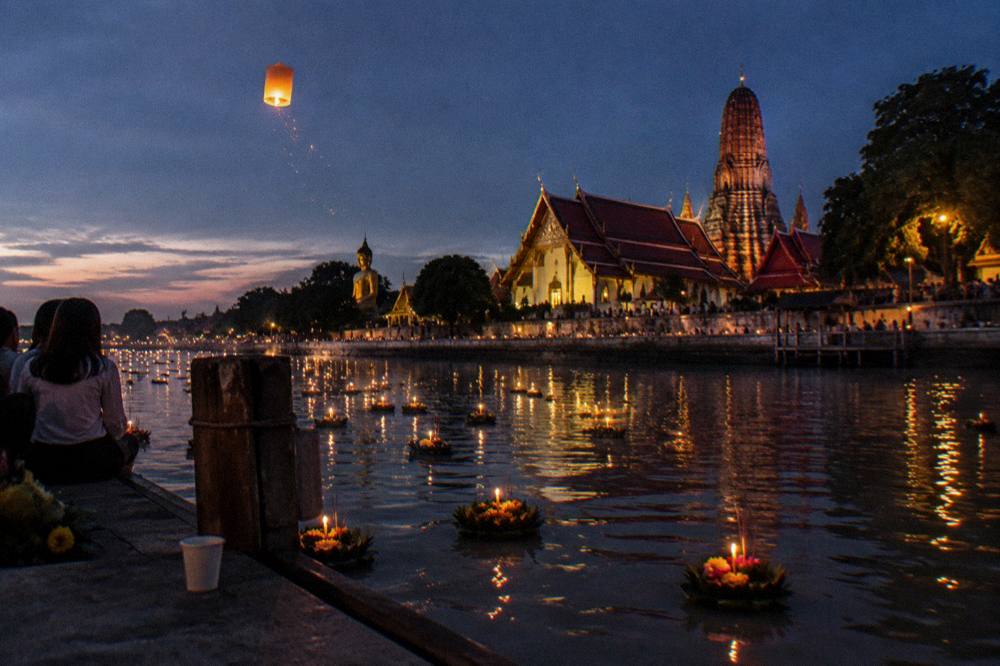
Two dated events reshape the park in the coming year: Loy Krathong falls on Tuesday 24 November 2026, bringing evening candlelight and crowds to the riverside, and Songkran runs 13 to 15 April 2027, the hottest week of the calendar. The February World Heritage Fair brings light shows and reenactments, but its 2027 dates are not announced, so do not plan around them yet.
Loy Krathong is the one evening in the year when the after-dark visit genuinely happens. The festival, on the full moon of the twelfth Thai lunar month, fills the river with floating krathong lanterns, and Ayutthaya's riverside temples become the centre of the celebration. It is also the most crowded night the city sees. If you are there for it, book early and expect the sunset spots, especially around the west bank, to be busy well before dark. The cool-season timing helps: late November sits at the start of the best weather window, so a trip built around Loy Krathong gets festival night plus several comfortable touring days around it.
Songkran is the opposite case. The Thai new year, 13 to 15 April 2027 as national holidays, lands in the hottest part of the hot season, when highs push toward 36C. It is a water festival, which means both celebration and practical cooling, but it also means the streets of any Thai town, Ayutthaya included, are wet and lively in a way that complicates a temple-focused itinerary. Some visitors love it. Others find that a ruined-city photography trip and a nationwide water fight do not mix. Plan around it deliberately either way.
The World Heritage Fair, held in February 2026 from the 13th to the 22nd, is the event most associated with temple illumination: light and sound shows, reenactments and evening openings that normally never happen. The 2027 dates have not been announced, so treat February illumination as a possibility rather than a plan, and check announcements closer to the time. The one thing not to do is assume lit temples are a nightly feature; outside announced events, the park runs on its 8am to 6pm hours.
For a trip timed to any of these, the practical move is pairing a festival evening with a standard daytime format: a small-group tour for the temples, then the festival on foot. The full range of options, including the private tours that can be timed around an event schedule, is on the Ayutthaya Historical Park Tours roster.
Common Questions About Visiting Ayutthaya
What is the best month to visit Ayutthaya?
November to February is the best window, with daytime highs around 31C and minimal rain. November is the standout shoulder month: clear post-monsoon skies, high river levels that suit boat rides, and fewer crowds than the December and January peak.
What is the hottest month in Ayutthaya?
March to May forms the hot season, with highs of 34 to 36C and April the peak. Midday on the open ruins is punishing in these months, so book an early-start tour and expect a long lunch break.
Does it rain all day in Ayutthaya's rainy season?
No. From June to August the rain usually arrives as afternoon downpours, and mornings are often dry. September is the wettest month, and October adds flood risk as the Chao Phraya rises, so mornings remain the safer part of the day throughout.
Is Ayutthaya open during flooding?
The core temples have stayed open during recent river rises. In September and October 2026 the Fine Arts Department installed a 165-metre flood barrier at Wat Chaiwatthanaram and a 120-metre barrier at Wat Kasattrathirat, and the sites were reported open. Riverside access can still be restricted when the river is high, so check local announcements.
What time of day has the best light at the temples?
Two windows: 8am to 10am for low, clean morning light on the east-facing monuments, and the final hour before the 6pm closing for golden-hour colour, best on the west bank at Wat Chaiwatthanaram. Midday gives harsh overhead light and peak heat.
When is Loy Krathong in Ayutthaya?
Loy Krathong falls on Tuesday 24 November 2026. It is the one evening when the riverside temples fill with candlelight and floating lanterns, and it is also the most crowded night of the year, so book early if your trip includes it.
Whether you land in the cool dry peak, a hot-season morning or a rainy-season gap in the clouds, the format you book matters as much as the date you choose. These three cover the main approaches.