Is An Ayutthaya Bike Tour Hard In The Heat?
An honest look at how hard an Ayutthaya bike tour really is when temperatures climb, which months are kindest, how flat the riding is, and who should choose an air-conditioned van tour instead.
Is An Ayutthaya Bike Tour Hard In The Heat?
Not as hard as the temperature suggests, and harder than the brochures admit. The riding itself is easy: the historical park is famously flat and compact, with short hops between ruins rather than long climbs. The difficulty is entirely thermal. From March to May daytime highs commonly reach 34 to 36C, and a few hours of slow pedalling in that will tire almost anyone. In the November to February cool season the same routes feel genuinely pleasant.
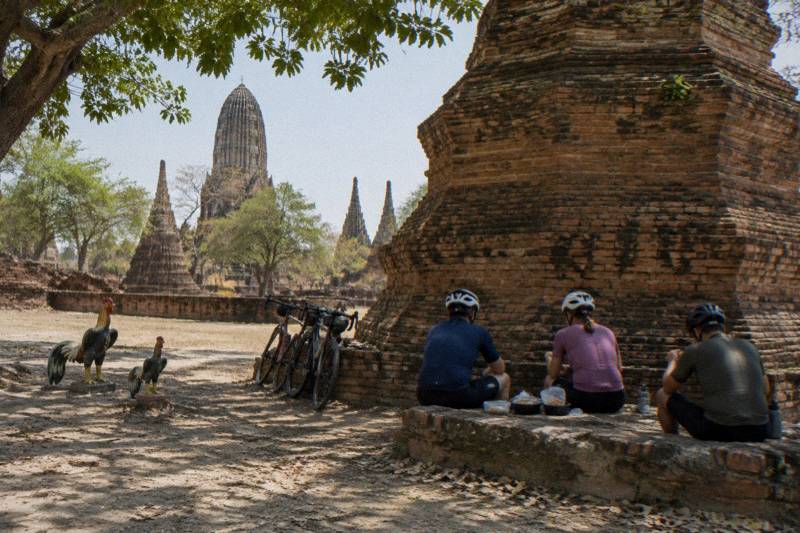
The question deserves a straight answer because the two halves of it pull in opposite directions. Ayutthaya's terrain is about as forgiving as cycling gets anywhere in Thailand. The old city sits on an island ringed by rivers, the ground is dead flat, and the distances between the headline temples are measured in hundreds of metres, not tens of kilometres. A reasonably fit adult who cycles occasionally at home will find the physical demands of an Ayutthaya bike tour close to trivial. Guides who run these trips describe a slow, stop-start rhythm: ride ten minutes, dismount, wander a ruin, drink water, ride on.
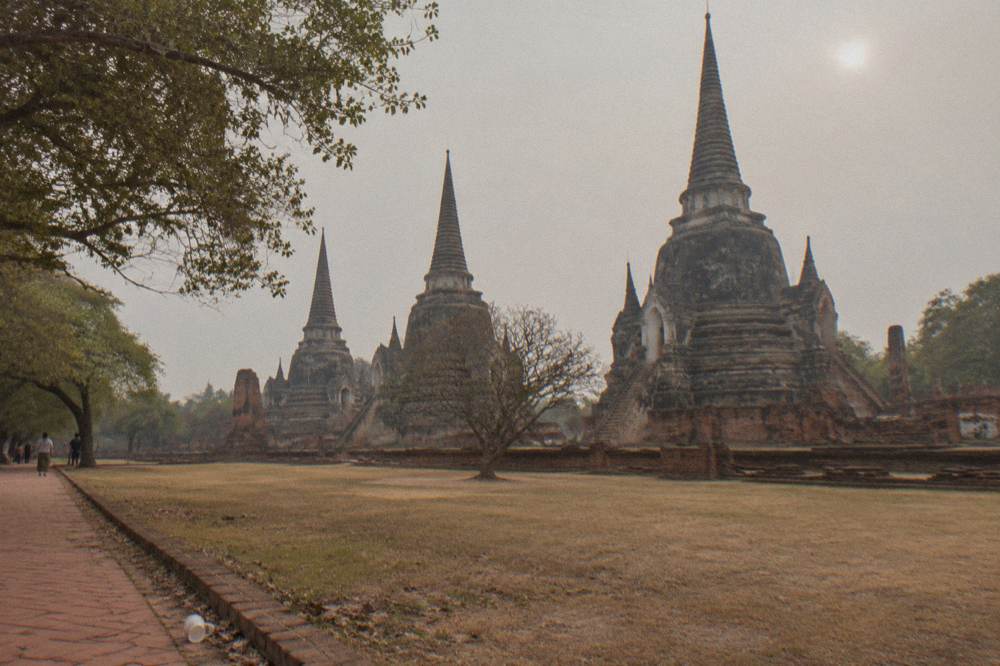
The heat is a different animal. Thailand's central plain gets genuinely hot, and Ayutthaya has almost no shade inside the temple compounds. The brick and laterite ruins radiate the day's sun back at you long after the peak has passed, and the official park hours run 8am to 6pm, which means midday touring is the norm for visitors arriving on day trips from Bangkok. Combine a hot afternoon with a schedule that puts you outdoors for three to six hours and the honest answer is: the tour is not hard on your legs, it is hard on your core temperature.
That is why the timing of your ride matters more than your fitness. The bike tours on this site run between three hours (the sunset ride excursion) and six hours (the full-day Colors of Ayutthaya tour), and the difference between a 7am start and a 11am start in April is the difference between a pleasant morning and a slog. If you are weighing the options, the trio below covers the three formats worth considering: a short guided park circuit, a small-group ride with hotel pickup and lunch included, and a full-day version for riders who want the complete set of ruins.
For readers planning the wider trip, the full guided bike tour planner breaks down every cycling option on the roster, and the best time to visit for heat and light goes deeper on the calendar than this piece does.
How Hot Does Ayutthaya Actually Get, Month By Month?
Ayutthaya runs on three seasons that shape any bike tour more than the route itself. From November to February, the cool dry season brings highs near 31C and little rain. March through May turns hot, hitting 34 to 36C, so cycle early and take real care. June to October is wetter but cooler, humid, with afternoon downpours and higher flood risk at riverside sites in September and October.
Those seasonal bands are broad by design; exact day-to-day figures shift every year. But they are reliable enough to plan around, and the pattern is consistent enough that guides adjust their schedules to it rather than fighting it. In the cool season the standard mid-morning departure works for everyone. In the hot season the same departure can put the middle of a three-hour ride at the worst possible hour, which is why experienced operators either start earlier or build a long shaded lunch stop into the middle of the day.
| Season | Months | Typical daytime highs | What it means for a bike tour |
|---|---|---|---|
| Cool dry | November to February | About 31C | The comfortable window; book any departure time |
| Hot | March to May | 34 to 36C | Ride early, finish by midday, carry more water than feels reasonable |
| Rainy | June to October | Highs in the low 30s | Humid but shaded skies; expect afternoon downpours and wet brick |
| Peak flood watch | September and October | As above | Riverside sites may restrict access when the Chao Phraya rises |
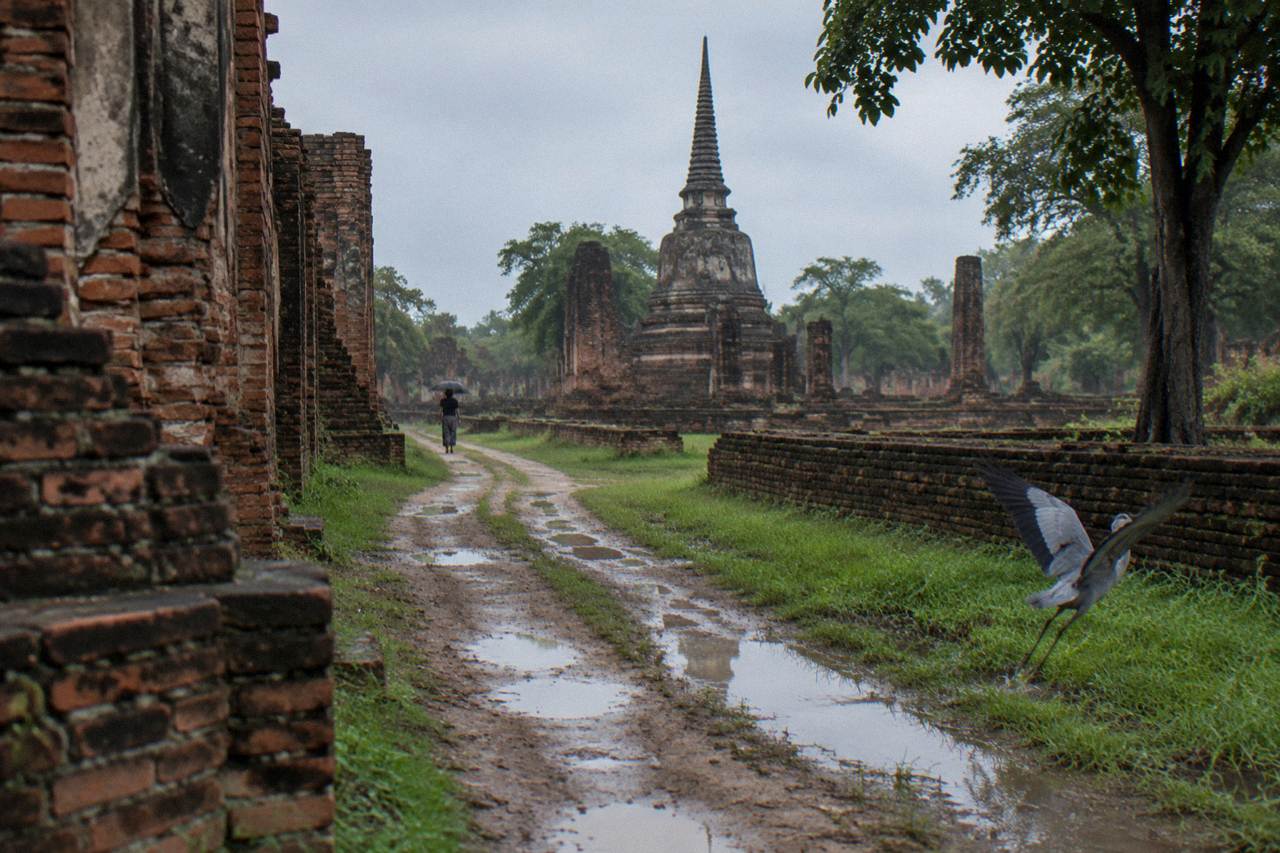
Two practical notes sit behind that table. First, the rainy season is not a write-off: mornings are often dry, the cloud cover takes the edge off the sun, and the ruins photograph beautifully under it. The trade-off is traction and puddles on the park's lanes, plus the possibility that a riverside stop gets cut. Second, the September to October window deserves a specific caveat. In 2026 the Chao Phraya basin saw river rises and dam releases that put flood barriers up at riverside monuments, including a 165-metre barrier standing 1.9 metres high along the waterfront at Wat Chaiwatthanaram, and the site stayed open throughout. The park generally operates year-round, but if you are riding in that window, check locally the day before about access to the west-bank temples.
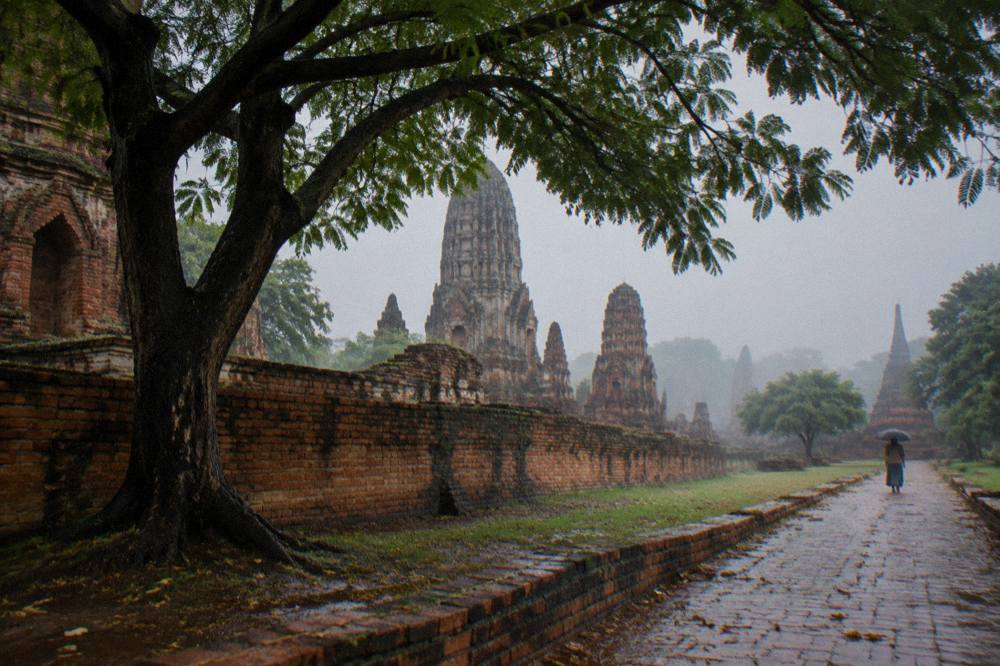
The heat question also has a time-of-day answer that costs nothing. The park opens at 8am and closes at 6pm, per the official Fine Arts Department hours, and the two hours from opening are the kindest of the day in every season. A rider who starts at 8am in April finishes a three-hour loop before the worst of the afternoon. The same rider starting at 11am rides the same distance in meaningfully harder conditions.
How Much Riding Is Actually Involved?
Less than most people fear. The historical park is flat and compact, and the standard guided circuits cover a handful of nearby ruins with frequent stops, not endurance mileage. The short park bike tour runs about three hours, the small-group Hidden Treasure ride runs four hours with pickup and lunch included, and the full-day Colors of Ayutthaya tour runs six hours with a lunch break built in. None of these is a distance event.
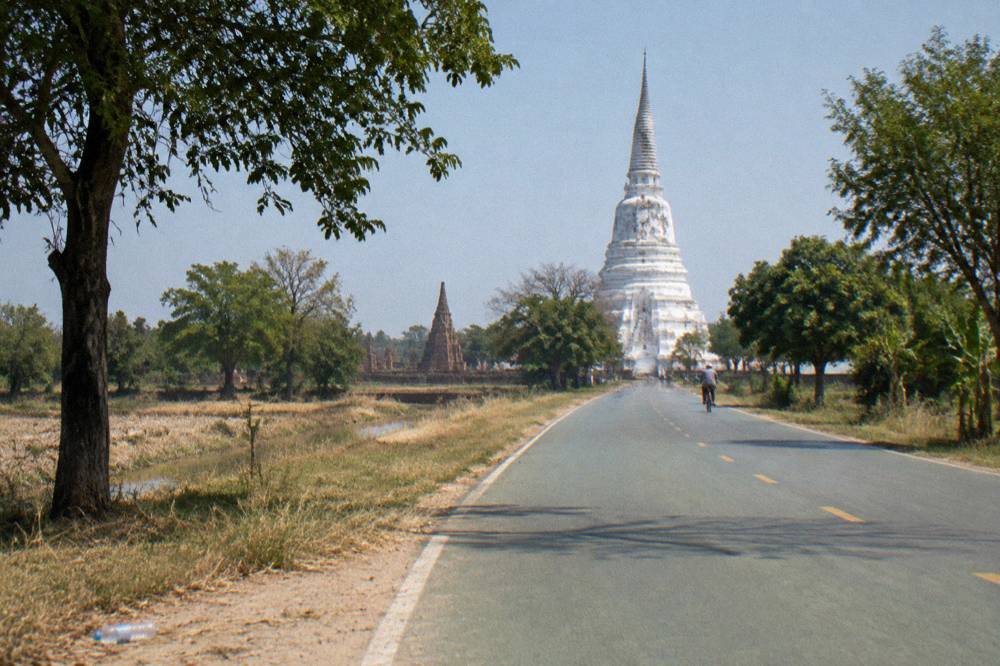
The terrain deserves the emphasis. The old city is an island, and centuries of settlement have left it laced with quiet lanes, canal paths, and small roads between the monument zones. There are no hills of any consequence. The physical skill required is the ability to balance a bicycle and pedal gently, which is why these tours accommodate casual riders, families, and travellers who have not sat on a bike in years.
What surprises first-time visitors is not the pedalling but the dismounting. A guided bike tour is a walking tour with wheels: you lock or lean the bike at each temple, walk the compound in the sun, then remount. At the major sites that means 20 to 40 minutes on your feet on hot brick and sand, repeated several times. If anything tires you out, it will be that cycle of walking, standing, and rehydrating rather than the riding itself.
Bike hire for independent riders is cheap, with 2026 guides quoting roughly 50 to 100 baht a day for standard bikes, and some guesthouses lend them free or nearly free. That low cost is exactly why the guided tours earn their price: the route, the temple entries, the pacing, and the water stops are the product, not the bicycle. The Ayutthaya City and Historical Park Bike Tour, rated 4.8 from 188 reviews, compresses the park's highlights into three to three and a half hours with a private group option, which makes it the natural test case for whether cycling in this heat suits you at all.
Which Bike Tour Matches Your Fitness And Heat Tolerance?
If you wilt in heat, take the three-hour park circuit, which covers the core ruins before the day peaks. If you want comfort with moderate effort, the four-hour Hidden Treasure ride adds hotel pickup and an included lunch, rated 5.0 from 150 reviews. If fitness and heat tolerance are both high, the six-hour full-day Colors of Ayutthaya tour, rated 4.8 from 66 reviews, is the commitment option.
The comparison is easiest to read side by side, because the differences are almost entirely about duration and what happens in the middle of the day.
| Tour | Duration | Rating and reviews | Group shape | Midday provision |
|---|---|---|---|---|
| Ayutthaya City and Historical Park Bike Tour | 3 to 3.5 hours | 4.8 from 188 reviews | Private group available | Short enough to finish before peak heat |
| Hidden Treasure by Bike (Pickup & Lunch) | 4 hours | 5.0 from 150 reviews | Small group | Hotel pickup and lunch included |
| Colors of Ayutthaya Full-Day Bike Tour | 6 hours | 4.8 from 66 reviews | Small group, max 15 | Lunch included per the listing |
Read the durations against the seasons table higher up this page. In November to February, all three are comfortable for anyone who can ride a bike. In March to May, the six-hour full-day tour is the one that demands respect: six hours of outdoor temple time at 34 to 36C is a genuine heat exposure, even with the riding itself trivial. Riders who want the full-day experience in the hot season should ask the operator about the start time and the length of the shaded lunch stop before booking, and both answers are on the live listing. Everything else covered here is indexed on Ayutthaya Historical Park Tours.
The four-hour Hidden Treasure ride is the quiet middle option. Hotel pickup removes the logistics, the included lunch forces a proper midday break, and the 5.0 rating from 150 reviews reflects a product with a consistent record. The three-hour circuit is the safest first bet for anyone who is unsure about heat tolerance, because the worst case is a short morning, not a stranded afternoon.
Who Should Skip The Bike And Take A Van Tour Instead?
Be honest about skipping the bike if any of these fit: you are travelling with small children or older parents, you have a heart or blood-pressure condition that heat aggravates, you are visiting between March and May and cannot start early, or you simply do not enjoy cycling. The ruins do not care how you arrive. An air-conditioned small-group day tour from Bangkok covers the same headline temples with the heat managed in a vehicle between stops.
There is no prize for suffering. The bike-versus-van decision is a decision about how you want to spend your energy budget, and in the hot season that budget is real. A traveller who cycles six hours in April heat arrives back in Bangkok exhausted and possibly unwell; the same traveller in a van arrives tired but intact, having seen the same ruins. The bike buys intimacy, quiet lanes, and the pleasure of the island's back roads. The van buys air conditioning, and in April that is not a small thing.
The van alternatives on this site are strong. The small-group full-day UNESCO tour from Bangkok, rated 4.7 from 1,728 reviews, caps the group at nine travellers, includes hotel pickup, and covers Wat Mahathat, Wat Phra Sri Sanphet, Wat Chaiwatthanaram, and Bang Pa-In Palace over eleven and a half hours. That is the highest-review-count day trip on the roster, and its small-group format keeps the temple stops flexible.
For a shorter van day, the Ayutthaya Temples Tour from Bangkok with Lunch runs seven and a half hours, includes lunch per the listing, and covers the Reclining Buddha at Wat Lokayasutharam alongside the three headline ruins, rated 4.7 from 867 reviews. It is the mid-length option for families who want the temples without a pre-dawn start.
And for travellers who want the ruins without any group logistics at all, a private guided day tour of the four ancient temples, rated 4.5 from 68 reviews, runs in a private air-conditioned vehicle with hotel pickup and sets its own pace. That format is the natural choice for anyone whose heat tolerance is the deciding factor, because the itinerary bends around the hottest hours rather than the other way round.
What Should You Wear And Carry For Cycling In Hot Weather?
Dress for the sun, not for sport: lightweight, light-coloured clothing that covers your shoulders and knees, which the temples require anyway, plus sunscreen, a hat for the rides between stops, and more water than you think you need. The dress code at the temple sites is modest, shoulders and knees covered. Carry cash in small notes, because temple tickets are sold at the gates in cash and there is no official online booking.
The overlap between temple etiquette and heat management is a happy accident. Modest dress is expected at the sites, and long, loose, light-coloured clothing is also what keeps the sun off in a way that shorts and a tank top do not. A scarf or light long-sleeve layer you can pull on at temple entrances solves both problems at once. For the specifics of fabrics and footwear, the what to wear to the Ayutthaya temples guide goes into detail.
On fees: the park grounds themselves are free, and entry is charged only at the ticketed monuments. Foreigners pay 80 baht per site or 300 baht for the official seven-site ticket, cash at the gate. Wat Lokayasutharam and its giant reclining Buddha are free, and smaller active temples such as Wat Yai Chai Mongkhon charge about 20 baht. A cyclist moving between sites will hit several gates in a morning, which is exactly why the combo ticket exists; whether a guided bike tour's entries are covered varies by listing, so check what is included on the booking page before you assume.
Water discipline is the last piece. Guides on the bike tours carry and offer water, but in the hot season you should be drinking before you feel thirsty, every stop, without exception. Headache, dizziness, or a sudden lack of sweating are the signals to stop, find shade, and cool down, not to push on to the next ruin. The temples have stood for centuries and will wait; heat illness does not negotiate.
One etiquette note that costs nothing and matters: at Wat Mahathat, visitors crouch or kneel for photos at the famous Buddha head in the tree roots so their head sits lower than the Buddha's, and nobody touches the roots. It is a small thing, it is what the site asks, and it is the kind of detail a guide on a bike tour will brief you on before you arrive at the crowd.
The short version of all of this, the one worth repeating: an Ayutthaya bike tour is an easy ride wrapped around a real heat question. Pick the cool season or an early start, pick a duration that matches your tolerance, wear the right things, and carry cash and water. Do that, and the answer to the question in this article's title is a comfortable no. Skip the preparation, in April, at midday, and it can be a yes.
Common Questions About An Ayutthaya Bike Tour In The Heat
Is An Ayutthaya Bike Tour Hard In The Heat?
The riding is easy; the heat is the real variable. The park is flat and compact, with short hops between ruins. From November to February, highs around 31C make any of the bike tours comfortable. From March to May, highs of 34 to 36C mean you should start early, choose a shorter tour, or take an air-conditioned van tour instead.
How far do you actually cycle on an Ayutthaya bike tour?
The guided tours run three to six hours, but they are stop-start temple circuits, not distance rides. Expect short rides of ten minutes or so between ruins, with most of each hour spent walking the temple compounds on foot. A casual rider who cycles occasionally at home will find the physical demand minimal.
Which month is best for cycling the Ayutthaya ruins?
November to February is the comfortable window, with daytime highs around 31C and minimal rain. November is a particularly good pick: post-monsoon clear skies, fewer crowds than the December and January peak, and the Loy Krathong festival on 24 November 2026 falls in that month.
What should I wear on a bike tour of the temples?
Lightweight, light-coloured clothing that covers your shoulders and knees, which the temple dress code requires anyway. Add sunscreen, a hat for the rides between stops, and shoes you can walk hot brick in. Carry cash in small notes, since temple tickets are sold at the gates in cash and there is no official online booking.
Is a bike tour suitable for kids or older travellers?
It depends on the season and the tour length. In the cool season, the three to three and a half hour park circuit suits most families. In the hot season, or for travellers with heat-sensitive health conditions, an air-conditioned small-group van tour is the safer choice and covers the same headline temples.
Do the bike tours include temple entry fees?
It varies by listing, so check what is included on the live booking page before you assume. Officially, foreigners pay 80 baht per ticketed temple or 300 baht for the seven-site ticket, sold in cash at the gates. The park grounds themselves are free, and Wat Lokayasutharam's reclining Buddha is free to see.