What To Wear To Ayutthaya Temples
The Ayutthaya dress code is simple at its core, shoulders and knees covered, but a day among the ruins asks more of your clothing than modesty alone. This guide covers what to wear, what to pack by season, and what the tours on this site actually say about cover-ups.
Short answer
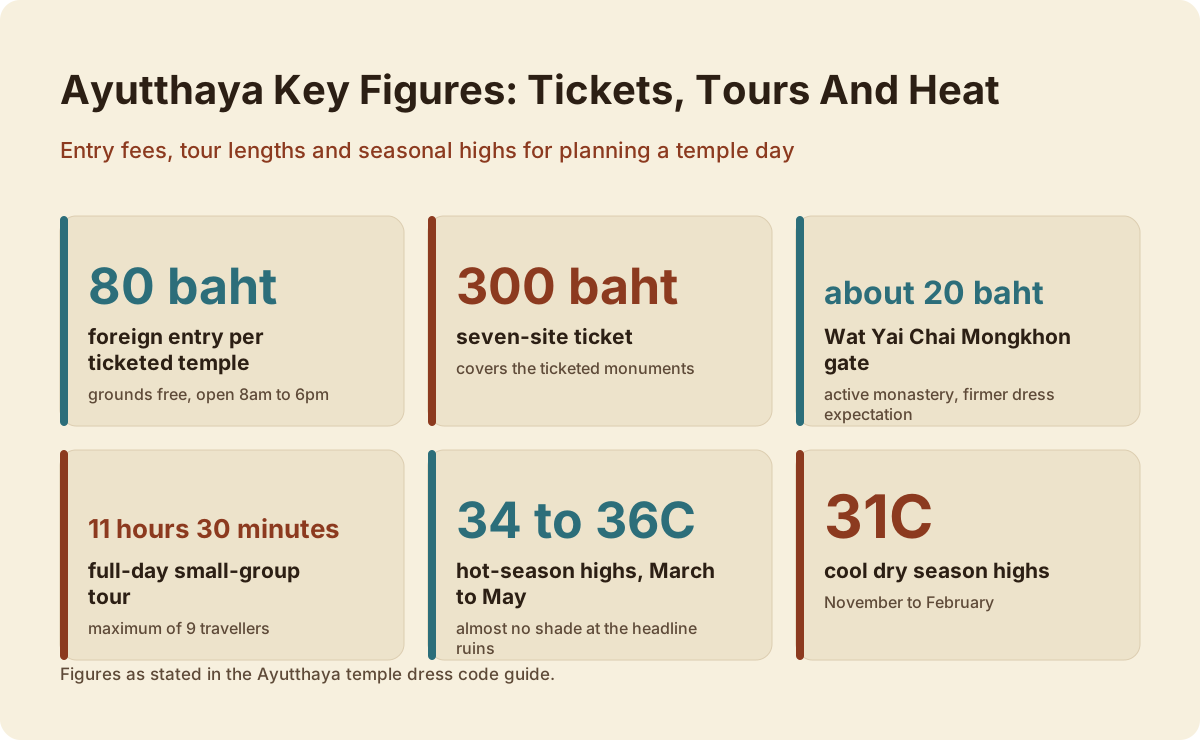
Cover your shoulders and knees at every temple in Ayutthaya Historical Park, the rule applies to men and women alike, and the park opens 8am to 6pm daily. Foreign visitors pay 80 baht per ticketed temple or 300 baht for the seven-site ticket. Wear breathable clothes, sturdy shoes, and real sun protection for a full day of walking.
Ayutthaya sits about 76 km by road north of Bangkok, and its ruins are walked, not viewed from a car window. The park grounds themselves are free to enter and open 8am to 6pm, with fees only at the ticketed monuments, and that shape matters for clothing: you will be on your feet for hours, on sand and brick and sun-baked stone, moving between sites that each ask for modest dress. The small-group full-day tour from Bangkok spends 11 hours 30 minutes on exactly that kind of day, so what you wear decides whether the ruins feel like a highlight or an ordeal.
The core rule is short. Shoulders and knees covered at every temple, for men and women alike. Everything else in this guide, the shoes, the hat, the rain layer, the bag you leave on the tuk-tuk, exists to serve that rule and the walking around it. If you want the wider picture of which sites you will actually be walking between, the temples the Ayutthaya tours visit guide maps the headline ruins, and this page handles what goes on your body while you see them.
What Is The Ayutthaya Dress Code At The Temples?
The dress code at Ayutthaya's temples is the standard Thai temple rule: shoulders and knees must be covered, for men and women alike, at active and ruined temple sites alike. The Historical Park grounds are free and open 8am to 6pm, with foreign visitors paying 80 baht per ticketed temple or 300 baht for the seven-site ticket. There is no formal dress inspection at most ruin gates, but the expectation is real.
The rule comes from temple etiquette rather than park regulation. Ayutthaya's ruins are religious sites first and photogenic bricks second, and the Fine Arts Department, which manages the park, its fees and its rules, treats them that way. The official park page lists the fees and hours, and the etiquette follows the same standard you would meet at any Thai temple: covered shoulders, covered knees, no swimwear, and modest behaviour. You can see the official fee and hours detail on the Fine Arts Department's park map page.
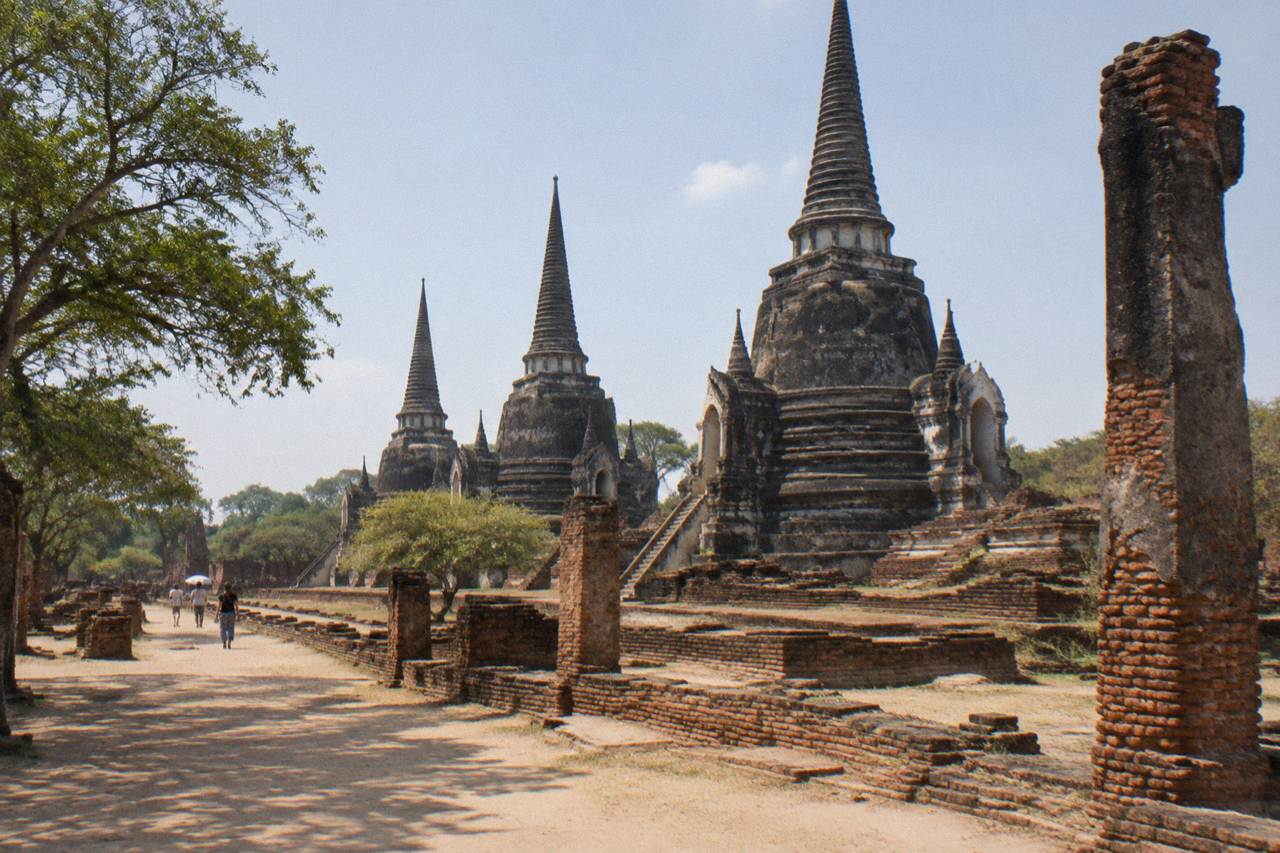
In practice the code is enforced unevenly. At the big ticketed ruins, Wat Mahathat, Wat Phra Si Sanphet, Wat Chaiwatthanaram, a ticket seller will rarely turn you away, but at active temples such as Wat Yai Chai Mongkhon, which charges about 20 baht at the gate, you are a guest of a working monastery and the expectation is firmer. Wat Lokayasutharam, home of the reclining Buddha, is free, and it is still a place of worship. The safest approach is to dress to the code all day rather than gamble site by site.
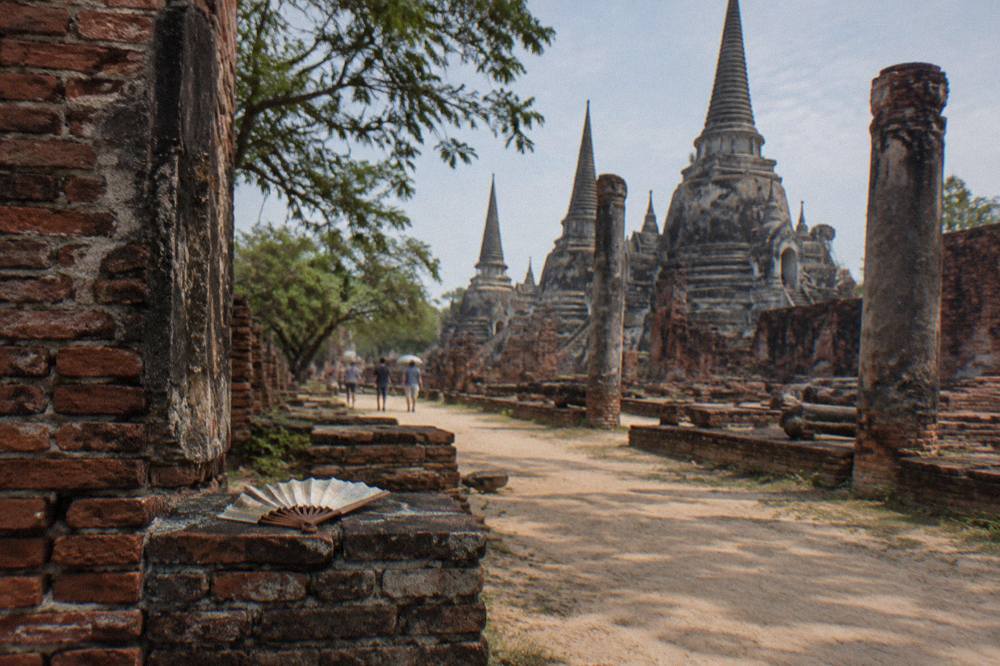
A useful way to think about it: the code has two layers. The modesty layer, shoulders and knees, is fixed. The comfort layer, fabric, footwear, sun protection, is where you make choices based on season and itinerary. The table below sets out the modesty layer against common situations.
| Situation | What passes | What does not |
|---|---|---|
| Ticketed ruin, e.g. Wat Mahathat | T-shirt and knee-length shorts or trousers | Tank top, very short shorts |
| Active temple, e.g. Wat Yai Chai Mongkhon | Shirt with sleeves, trousers or long skirt | Sleeveless top, ripped shorts |
| Reclining Buddha at Wat Lokayasutharam | Covered shoulders and knees, quiet demeanour | Swimwear, beach cover-ups |
| Riverside exterior view of Wat Chaiwatthanaram | Ordinary street clothes | No code, it is a public viewpoint |
| Between sites, cycling or tuk-tuk | Anything you can add a scarf or sarong to | Nothing, but carry the cover-up |
That last row is the practical heart of it. Many visitors wear light, shorter clothing for the heat and carry a scarf, a sarong or a light long-sleeved shirt to pull on at each gate. That works, as long as the cover-up actually covers: a thin scarf draped over one shoulder does not cover the shoulder, and a sarong that ends above the knee does not cover the knee.
What Should You Wear For A Full Day Of Walking The Ruins?
Dress for walking first and modesty second: breathable, loose, light-coloured clothing that already covers shoulders and knees, closed walking shoes or sturdy sandals, a wide-brim hat, and sunscreen applied before you leave. The headline ruins sit in open sun with little shade, and a full-day itinerary can mean five or more hours on your feet across sand, brick and uneven stone.
The full-day itineraries are the ones that punish bad clothing choices. The small-group full-day tour from Bangkok, run by TripGuru Thailand, runs 11 hours 30 minutes with a maximum of 9 travellers, covering Wat Mahathat, Wat Phra Sri Sanphet, Wat Chaiwatthanaram and Bang Pa-In Palace with hotel pickup from central Bangkok. A day that long, in air-conditioned transport between stops but full sun at each one, wants clothes that work in both settings. It carries a 4.7 rating from 1,728 reviews, and the listing states free cancellation.
For the walking itself, fabric matters more than style. Loose cotton or moisture-wicking synthetics in light colours reflect heat; dark, tight clothing holds it. Trousers or a long skirt that already meet the code remove the cover-up dance at every gate. A shirt with short sleeves, not a tank top, keeps you compliant at active temples without adding a layer. And shoes deserve real thought: the ground at the ruins is a mix of packed sand, broken brick and polished stone steps, sometimes in the same hundred metres.
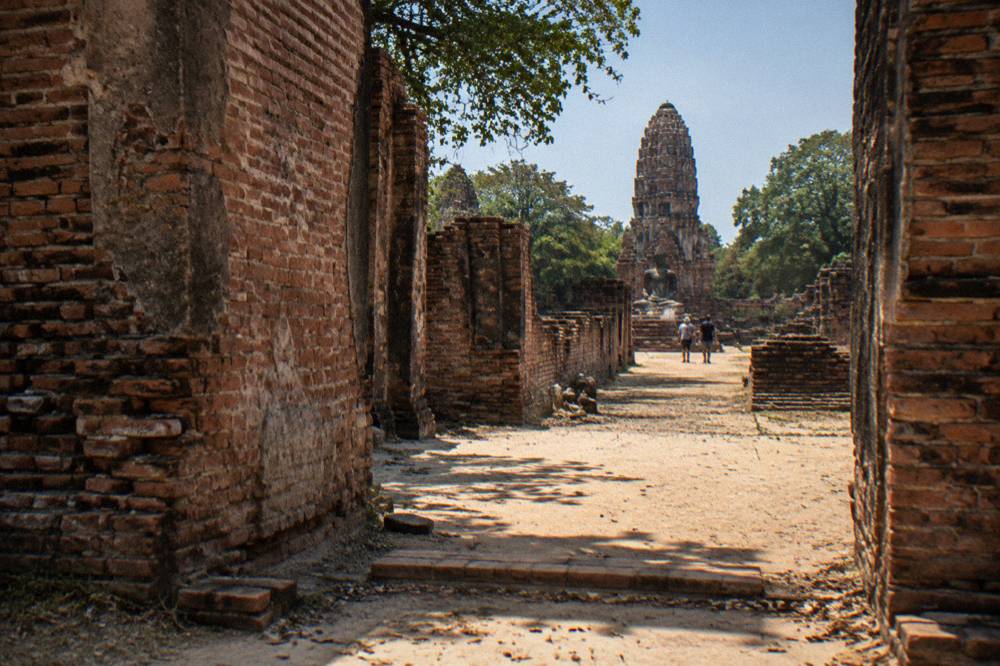
That band shows the three formats this site features for a dressed-for-walking day: the small-group full-day tour above, a bike tour for covering ground between sites, and a private day tour when you want to set your own pace. The bike option deserves a note here because clothing and cycling interact: the Ayutthaya City and Historical Park Bike Tour, run by Recreational Bangkok Biking, runs 3 to 3.5 hours with a private group option, and the park is flat and compact, which makes it the most efficient way to move between ruins in the heat. Long trousers or a long skirt still work on a bike; flowing scarves that can catch do not. If you are weighing the two formats against each other, the Ayutthaya bike tour guide goes deeper.
Do The Tours Provide Sarongs Or Cover-Ups?
None of the listings on this site's roster states that sarongs or cover-ups are provided, so plan to bring your own. The operators' pages describe temples, transport, lunch and pickup, not loan clothing. If you are counting on borrowing something at the gate, message the operator through the live listing before you book, and treat the answer as the only reliable one.
This is worth stating plainly because travellers often assume tropical temple tours keep a box of sarongs on the van. Some operators in Thailand do, but a policy that is not printed on a listing is not a policy you can rely on, and the roster here does not state one. The Ayutthaya Temples Tour from Bangkok with Lunch, run by Bigcountry Experience, states hotel pickup, lunch and an air-conditioned bus for its 7 hours 30 minutes itinerary, with a 4.7 rating from 867 reviews; nothing in the listing mentions clothing. That is the pattern across the roster.
The practical answer is to carry your own. A sarong weighs almost nothing, folds to the size of a paperback, and doubles as a picnic mat or a sun shade between stops. Two is better than one for a couple, since a single sarong passed back and forth at successive gates eats time. A light long-sleeved shirt does the same job for the shoulders and adds sun protection, which you want anyway.
One more angle on the same question: what the tour does about the heat shapes what you must carry yourself. The Bangkok: Ayutthaya Experience with Boat Ride and Tickets, run by TRIPZA sightseeing, includes hotel pickup, tickets and a river boat leg in its 8-hour day, and holds a 4.9 rating from 861 reviews. A boat leg means wind and reflected light off the water, so a hat that stays on your head, a cap with a strap or a tight wide brim, beats a loose sun hat that ends up in the river. The listing states free cancellation.
What Shoes And Sun Protection Do The Ruins Demand?
Wear closed walking shoes or sturdy strapped sandals with real grip, because the ruins mix packed sand, broken brick and polished stone, and you will remove your shoes at active temple buildings. For sun, a wide-brim hat, sunglasses and sunscreen matter as much as the clothes: the headline ruins offer almost no shade, and hot-season highs run 34 to 36C between March and May.
Footwear at Ayutthaya is a grip question and a slip-on question at the same time. The big ruined complexes, Wat Mahathat, Wat Phra Sri Sanphet, Wat Chaiwatthanaram, are open-air and you generally walk them shod. But active temples on most itineraries, Wat Yai Chai Mongkhon appears on several of the listings on this site, ask you to remove shoes before entering buildings, and you will do that repeatedly. Slip-on shoes or sandals with a back strap make that painless; a soaked lace-up boot does not. The wider set of guides lives on Ayutthaya Historical Park Tours.
Grip matters more than visitors expect. Stone steps at the ruins are worn smooth in places, and after any rain they are slick. Old flip-flops, the flat beach kind, are the worst choice on the roster: no grip, no protection from broken brick, and a toe stubbed on a chedi step will end your photography. Trail sandals with tread, or a light trainer with a decent sole, cover almost every surface you will meet. Bring socks if you go the trainer route, because barefoot crossings of hot courtyard stone at midday are their own small ordeal.
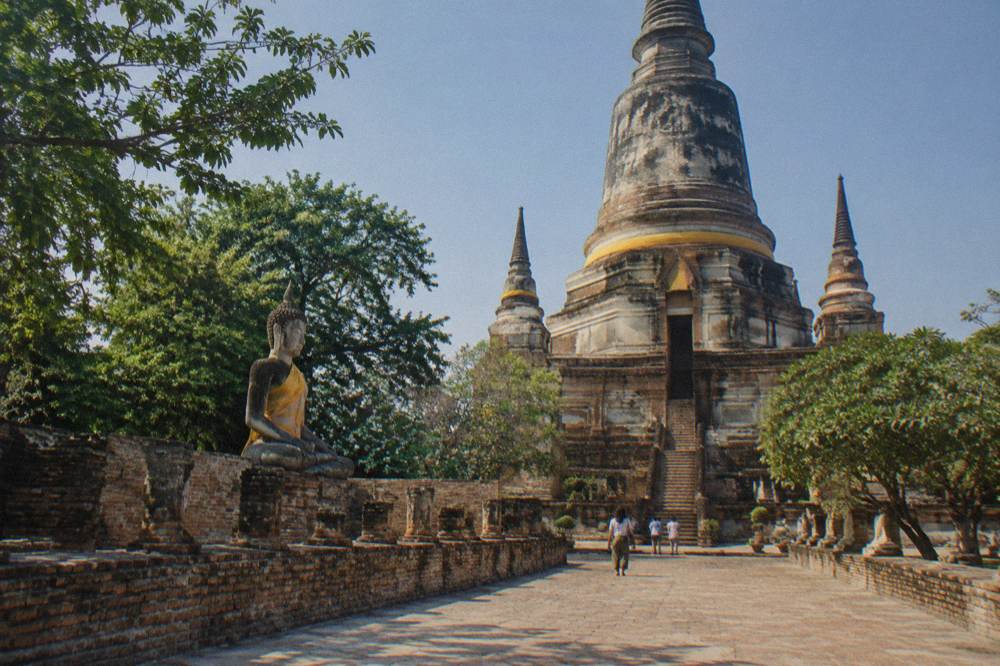
Sun protection is not optional in any season, and in the hot months it is the difference between a good day and a headache. The ruins stand in open ground; shade is a rare, welcomed sliver of wall. Highs in the cool dry season, November to February, sit around 31C, which is comfortable walking weather, but the sun is direct all the same. If you are planning around the calendar at all, the best time to visit for heat and light guide breaks the seasons down, and the packing table below builds on the same bands.
What Should You Pack By Season In Ayutthaya?
Pack for three different Ayutthayas: a cool dry season from November to February with highs around 31C, a hot season from March to May at 34 to 36C, and a rainy season from June to October with afternoon downpours and the wettest weather in September. The dress code never changes across them, only the layers: sun kit dominates the dry months, rain kit dominates the wet ones.
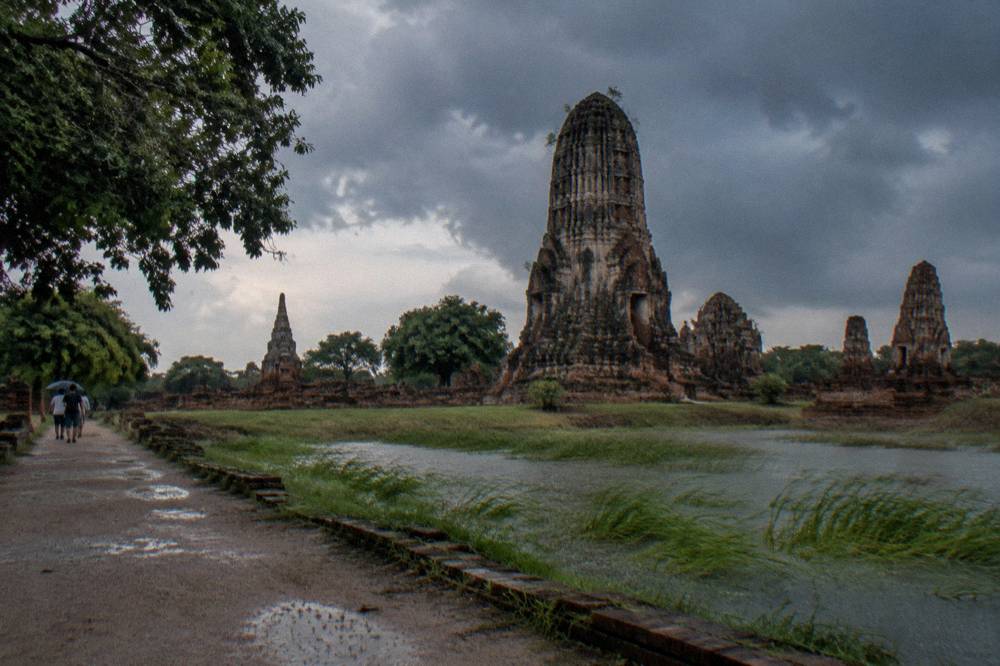
The seasonal bands come from Thai Meteorological Department data for the Ayutthaya area, and they translate directly into packing lists. The cool dry season is the walking season: light long clothing, a hat, sunscreen and a light layer for early mornings. The hot season wants the same plus more water, more sunscreen and a start early in the day. The rainy season wants all of that plus a poncho, because umbrellas and temple crowds do not mix well, and because a sudden downpour ends in soaked brick steps.
| Season | Clothing | Footwear | Extras |
|---|---|---|---|
| Cool dry, Nov to Feb | Light trousers or long skirt, short-sleeve shirt | Trainers or trail sandals | Hat, sunscreen, light morning layer |
| Hot, Mar to May | Loose light-coloured long clothing | Breathable walkers, socks for hot stone | High-SPF sunscreen, extra water, umbrella hat or brim |
| Rainy, Jun to Oct | Quick-dry long clothing | Grip sandals or trainers that can get wet | Poncho, dry bag for phone, spare shirt |
One seasonal footnote that belongs here rather than anywhere else: September and October carry flood risk on the Chao Phraya floodplain, and in the 2026 season riverside sites saw temporary protection works, including a 165 m barrier at Wat Chaiwatthanaram, while remaining open, as news reporting at the time recorded. Footwear that can handle wet ground is worth packing in those months, and checking local conditions before a riverside sunset stop is simply part of the routine.
A sunset itinerary changes the kit list slightly, and one listing on this site makes the point. The From Bangkok: Ayutthaya Heritage Tour with Sunset Boat Ride, run by Sun Leisure World Corporation, runs 6 to 7 hours with hotel pickup and a one-hour sunset boat ride, rated 4.6 from 687 reviews. Evening light on the water cools fast, so a light layer earns its place in the bag even after a hot day, and insect repellent is worth a pocket.
What Should You Leave Behind At The Temple Gates?
Leave behind anything that marks the site as a backdrop rather than a place of worship: selfie sticks used carelessly, drones flown without permission, loud speakers, and clothing that reads as beachwear. Also leave valuables in your hotel safe, because you will be removing shoes and setting bags down at active temples, and cash-only gate booths mean you carry baht but not much else.
The leave-behind list is partly etiquette and partly practicality. On the etiquette side, the dress code extends to behaviour: climbing on the ruins, touching restored surfaces and posing disrespectfully draw the same frowns as bare shoulders do. On the practical side, a day of shoe removals and bag drops is a bad day for anything you cannot afford to lose. Temple tickets are cash at the gate, there is no online booking through official channels, so plan baht in small notes: 80 baht per ticketed temple, or 300 baht for the seven-site ticket if you are visiting several.
| Item | Verdict | Why |
|---|---|---|
| Drone | Leave it | Permission and park rules make flying a problem, not a feature |
| Selfie stick | Use with care | Fine in open ground, disrespectful inside ordination halls |
| Big camera bag | Leave in transport | You will remove shoes and set bags down repeatedly |
| Valuables and passport | Hotel safe | Shoe piles and open courtyards invite mix-ups |
| Small notes in baht | Bring | Tickets are cash only at the gates |
| Sarong or scarf | Bring | The cover-up that solves the code at every gate |
The cash point deserves one expansion and no more, because fees are covered in full above: carry more small notes than you expect to need, since change at busy gates can run short. And if you are moving between sites by bike or tuk-tuk rather than tour van, the getting around Ayutthaya by bike, tuk-tuk or tour article explains how bags travel on each, which changes what you are willing to leave in the basket.
How Should You Behave At The Buddha Head At Wat Mahathat?
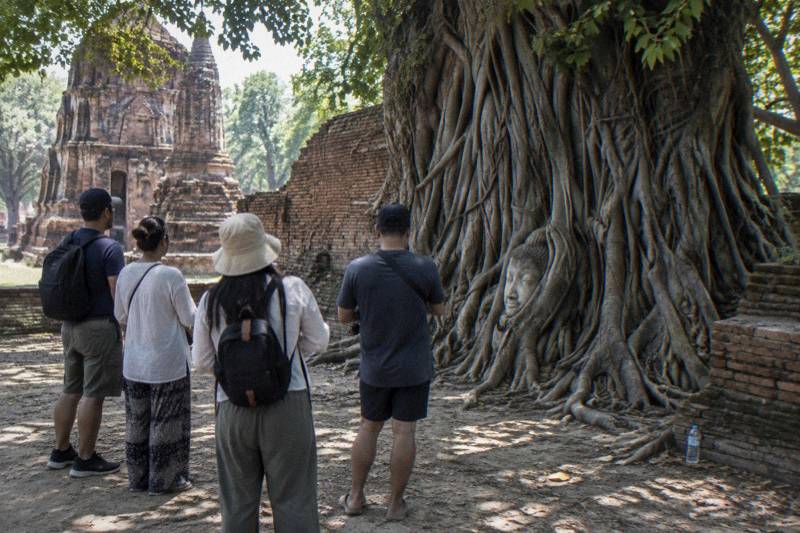
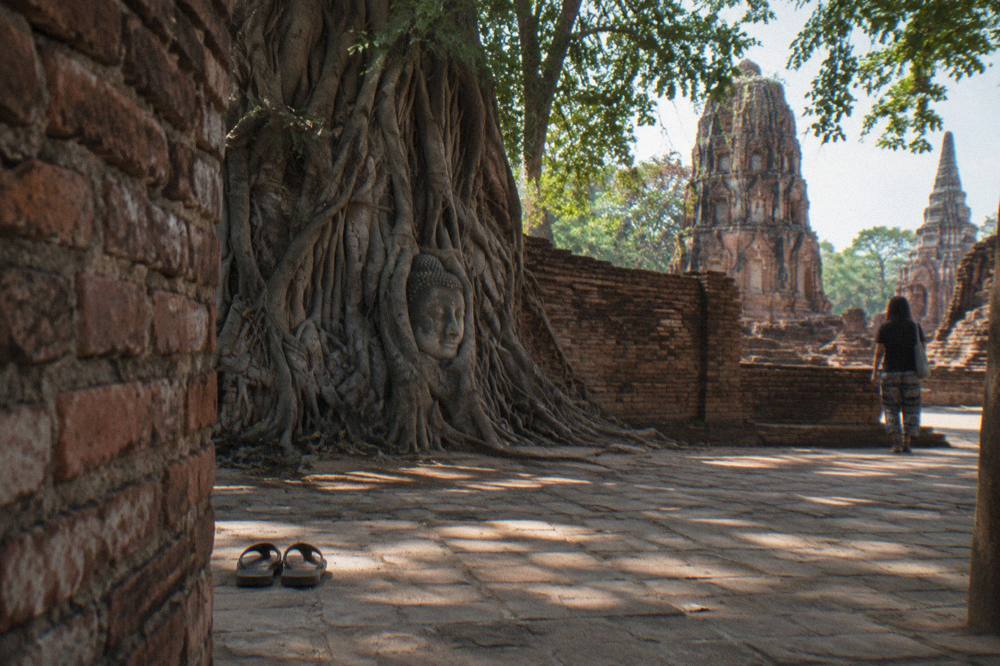
At the famous Buddha head wrapped in tree roots at Wat Mahathat, crouch or kneel so your own head sits lower than the Buddha's, and do not touch the roots. The site is the park's most photographed spot, and the etiquette is enforced socially by staff and by other visitors. Dress code applies as everywhere else, and the 80 baht foreign entry fee, or the 300 baht seven-site ticket, is paid in cash at the gate.
The Buddha head is where the dress code and the behaviour code meet most visibly. Everyone wants the photo, and the accepted way to take it is from below: crouching or kneeling, head lower than the image, no touching of the roots, no climbing for a better angle. Staff at the spot will say so, and the queue moves quickly when people follow it. Visitors are advised to keep shoulders and knees covered here as at every other gate, and a sarong in the bag covers the situation where the morning's cycling outfit does not.
Wat Mahathat appears on nearly every tour itinerary on this site, from the small-group full-day tour to the group tours with lunch, because it is the emotional centre of the park. The city was founded in 1351 and sacked in 1767, and the ruins carry that weight; the head in the roots is a pilgrimage photo as much as a tourist one, which is why the etiquette around it is firmer than anywhere else in the park. The park's UNESCO listing dates to 1991, and the standard of behaviour at its most famous image reflects that standing, as the park's history makes plain.
Kneeling has a clothing consequence worth naming: you will kneel or crouch on sandy ground, so light-coloured trousers show dust, and very tight clothing makes the posture awkward. Loose, darker, breathable fabrics solve both problems at once, which is why they dominate this guide's recommendations.
If you are still weighing whether a guided day or an independent one suits you better, the Ayutthaya guided tour or on your own comparison walks through the trade-offs, and the band below shows the formats again as the decision point approaches.
Common Questions About Ayutthaya Temple Dress
What is the Ayutthaya dress code at the temples?
Shoulders and knees must be covered at every temple, for men and women alike. The rule applies at the ticketed ruins and at active temples, and the park itself is free to enter, open 8am to 6pm, with foreign visitors paying 80 baht per ticketed temple or 300 baht for the seven-site ticket.
Can you wear shorts to Ayutthaya temples?
Shorts that end at or below the knee are generally fine; short shorts are not. The reliable approach is knee-length or longer, or a sarong pulled on at each gate. The code is enforced more firmly at active temples such as Wat Yai Chai Mongkhon than at open-air ruin complexes.
Do Ayutthaya tours provide sarongs or cover-ups?
No listing on this site's roster states that cover-ups are provided, so bring your own. If you want to rely on the operator, message them through the live listing before booking and treat the answer as the only reliable one.
What shoes are best for the Ayutthaya ruins?
Closed walking shoes or sturdy trail sandals with real grip. The ground mixes packed sand, broken brick and polished stone, and you will remove your shoes at active temple buildings, so slip-on styles or back-strap sandals save time. Avoid flat beach flip-flops.
What should you not wear to Ayutthaya temples?
Skip swimwear, tank tops, very short shorts, ripped clothing and anything that reads as beachwear. Also leave drones, big camera rigs and valuables behind: you will set bags down and remove shoes repeatedly through the day.
Does the dress code change with the season?
No. The modesty rule is fixed year-round; only the kit around it changes. Hot season, March to May at 34 to 36C, wants loose light-coloured long clothing and serious sun protection; the rainy season, June to October, adds a poncho and quick-dry fabrics.