How To Get Around Ayutthaya: Bike, Tuk Tuk Or Tour?
Bike, tuk tuk or guided tour: what each way of getting around Ayutthaya costs in baht, how it handles the heat, and which traveller each one suits.
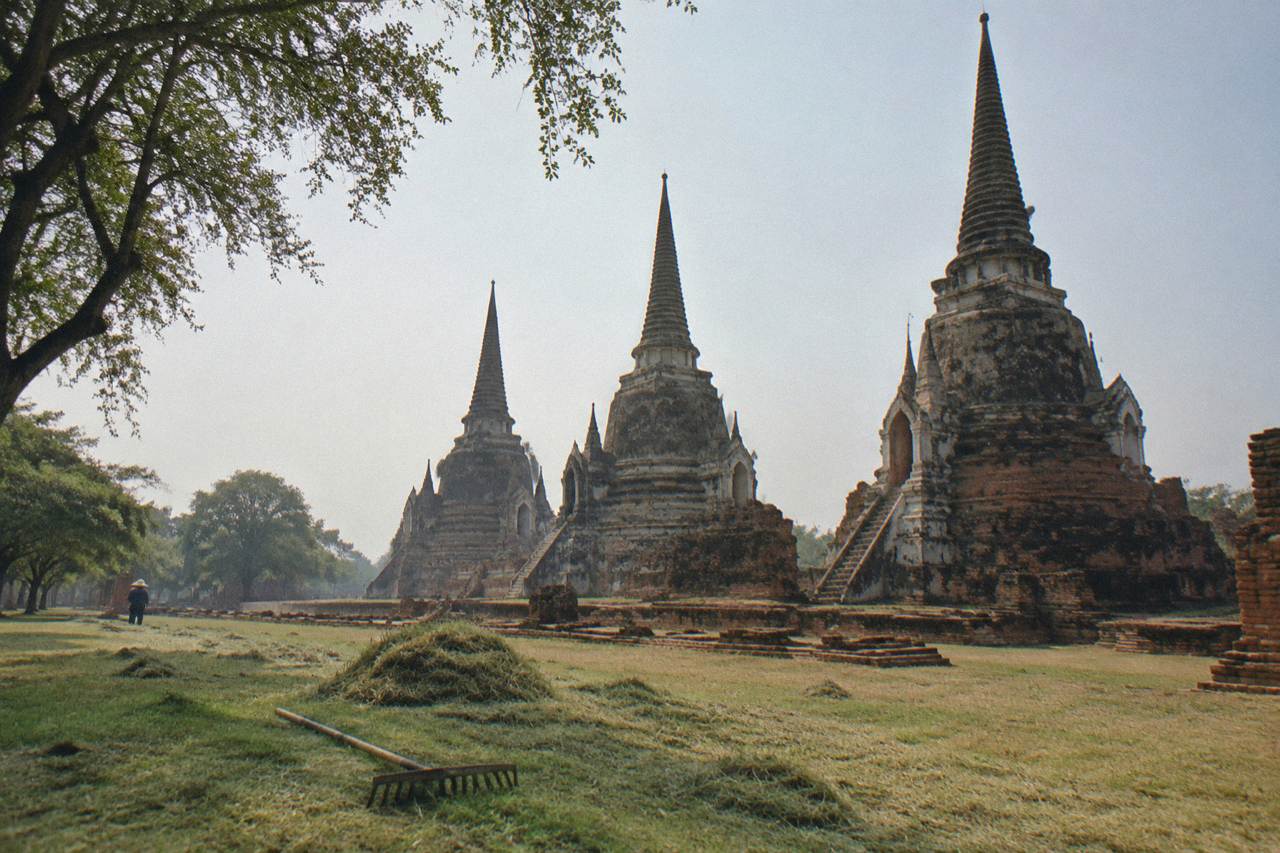
The Historical Park sits on an island roughly 80 km north of Bangkok, and almost nothing inside it is tall except the temples. The ground is flat, the distances between the big ruins are short by bicycle and long on foot, and the sun does the rest of the work of deciding how you travel. Three options dominate: a rented bicycle, a chartered tuk tuk, or a guided tour that folds transport, route and commentary into one booking. Each one suits a different traveller, and the differences show up fastest in baht, in sweat and in how much of the day you actually control.
How To Get Around Ayutthaya: Bike, Tuk Tuk Or Tour?
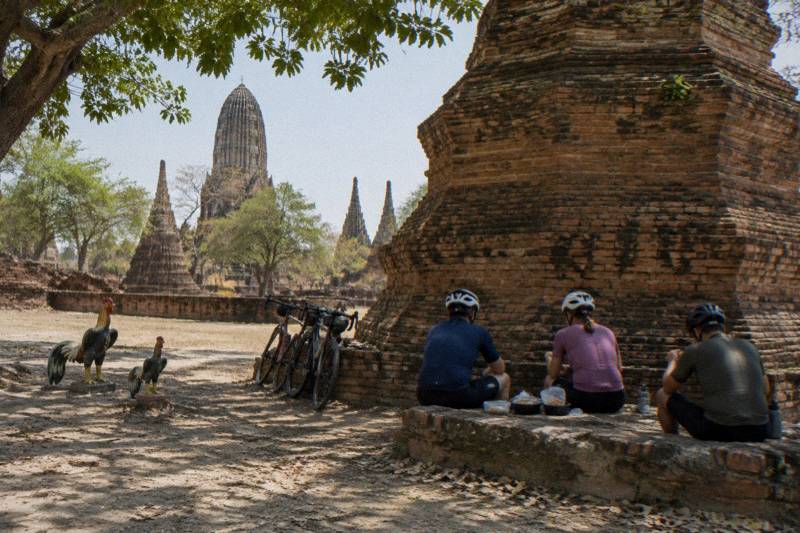
For most visitors a bicycle is the best way around the island: hire runs roughly 50 to 100 baht a day, the park is flat and compact, and bikes let you set your own pace between ruins. A tuk tuk charter, roughly 400 to 600 baht for a half day, suits families and midday heat. A guided tour suits anyone who wants temples explained and logistics handled.
The honest answer is that all three work, and the choice turns on three variables: how hot it is, how confident you feel on a bike in traffic, and whether you want a guide's commentary at Wat Mahathat or just a photo of the Buddha head in the tree roots. The park itself charges no general admission; you pay 80 baht at each ticketed monument or 300 baht for the seven-site ticket, sold in cash at the gates, so transport is the only real planning decision of the day.
If you would rather not decide at all, the middle path exists too: a guided bike tour gives you the bicycle and the guide at once. The Ayutthaya City and Historical Park Bike Tour run by Recreational Bangkok Biking covers the main island ruins in three to three and a half hours, rates 4.8 from 188 reviews, and offers a private group option, with Check availability on the live listing if that format appeals. This site's own comparison of the options, laid out below, starts with the geography that makes the decision easier than it looks.
How Much Ground Do You Actually Need To Cover?
The island's core sights sit within a few kilometres of each other, and the park is flat, so a full circuit of the main ruins by bike takes most people a leisurely half day. Wat Chaiwatthanaram sits across the river on the west bank, which adds a bridge crossing or a short boat hop. Nothing on the island involves a serious climb.
Geography drives everything here. The big ticketed monuments, Wat Mahathat, Wat Phra Si Sanphet, Wat Ratchaburana and Wat Phra Ram, cluster close together in the centre and north of the island, close enough that walking between two of them is normal even for visitors on wheels. Wat Lokayasutharam, home of the reclining Buddha, is free to enter and sits a short ride west. The one genuine outlier is Wat Chaiwatthanaram, the riverside sunset temple on the west bank of the Chao Phraya, which every traveller should budget extra time to reach, either by bridge or by boat.
That spread is why the bike works so well. 2026 guides consistently describe the park as flat and compact, and the distances that look intimidating on a map collapse to ten or fifteen minutes of easy pedalling. The same spread is why walking the whole island frustrates people: it is doable between the central ruins, then suddenly not, once you add the west bank. Flat and compact is one thing, but the Thai sun is another matter entirely, so check how hard an Ayutthaya bike tour actually gets in the heat before you commit to pedalling all afternoon.
| Route | Rough distance | On foot | By bike | By tuk tuk |
|---|---|---|---|---|
| Wat Mahathat to Wat Phra Si Sanphet | Under 1 km | 10 to 15 min | 3 to 5 min | 2 min |
| Central ruins to Wat Lokayasutharam | About 2 km | 25 to 30 min | 8 to 10 min | 5 min |
| Central ruins to Wat Chaiwatthanaram (west bank) | About 4 to 5 km | 50 to 60 min | 15 to 20 min | 10 min |
| Wat Yai Chai Mongkhon (south east) to centre | About 2 to 3 km | 30 min | 10 min | 5 to 7 min |
Distances between ruins are approximate and drawn from 2026 guides; treat them as planning ranges, not survey figures. The pattern they show is the point: the central cluster is walkable, the outliers are not, and anything with wheels erases the difference.
Cycling The Island: What Bike Hire Costs And Who It Suits
Bike hire in and around the park runs roughly 50 to 100 baht a day for a standard or geared bike, with guesthouses sometimes lending bikes free or cheap. Cycling suits confident riders, anyone visiting in the cooler morning, and travellers who want full control of the route. Once you have wheels, the free and budget things to do in Ayutthaya guide makes it easy to fill your day without spending much.
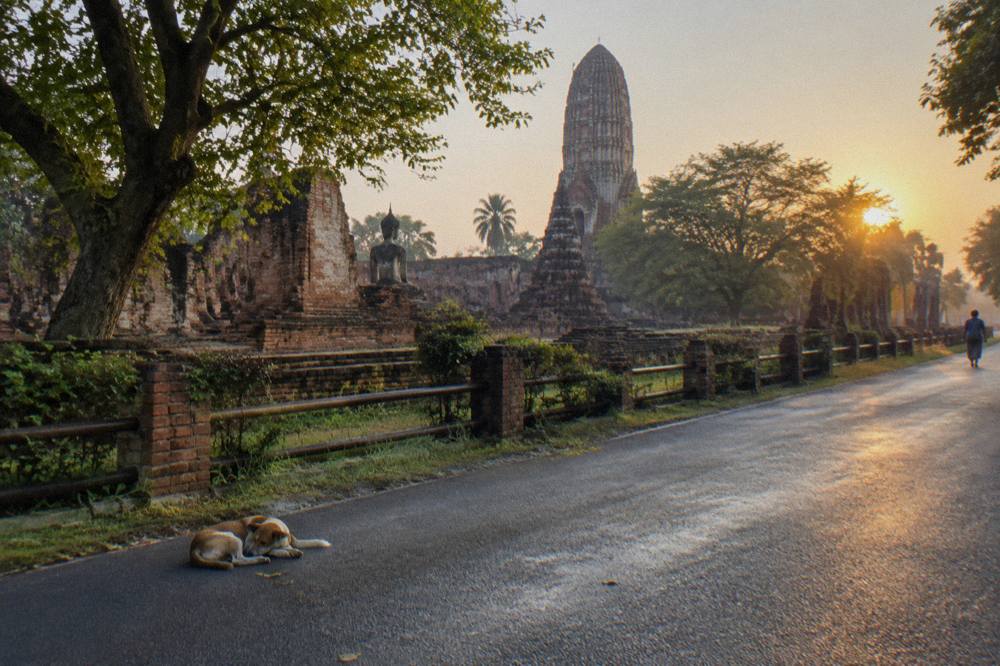
Hire shops cluster around the station, the guesthouse streets and the eastern edge of the park. The price band is modest by any standard, and the bikes are simple city machines rather than road racers, which matches the terrain: the island is pancake flat, and gears matter more for headwind than for hills. Check brakes and tyres before you ride off, carry water, and lock the bike at temple entrances where the attendants watch rows of them for a few baht.
The trade-offs are honest ones. Bikes put you in light traffic, mostly tuk tuks, scooters and songthaews rather than trucks, but the bridge crossings to the west bank carry real vehicles and deserve care. In the hot season, from March to May with highs around 34 to 36 degrees, a midday ride between ruins is genuinely punishing even over short distances, so cyclists should work the early morning and accept a long lunch. The Ayutthaya bike tour guide on this site breaks down guided versus self-guided cycling in more depth, including the heat question.
What cycling buys you, and what nothing else on this list does, is total flexibility. Stop where a gate looks interesting, skip what does not, linger at the Buddha head at Wat Mahathat as long as the etiquette allows, crouching so your head sits lower than the Buddha's, without a driver tapping his watch. For independent travellers in the cool season, that freedom plus the tiny cost makes the decision easy.
Tuk Tuk Charters: Prices, Negotiation And What To Expect
A tuk tuk charter runs roughly 400 to 600 baht for a half day and 800 to 1,500 baht for a full day, per 2026 guides, agreed before you set off. Tuk tuks suit families, groups sharing the cost, hot afternoons, and anyone who wants the route driven rather than pedalled.
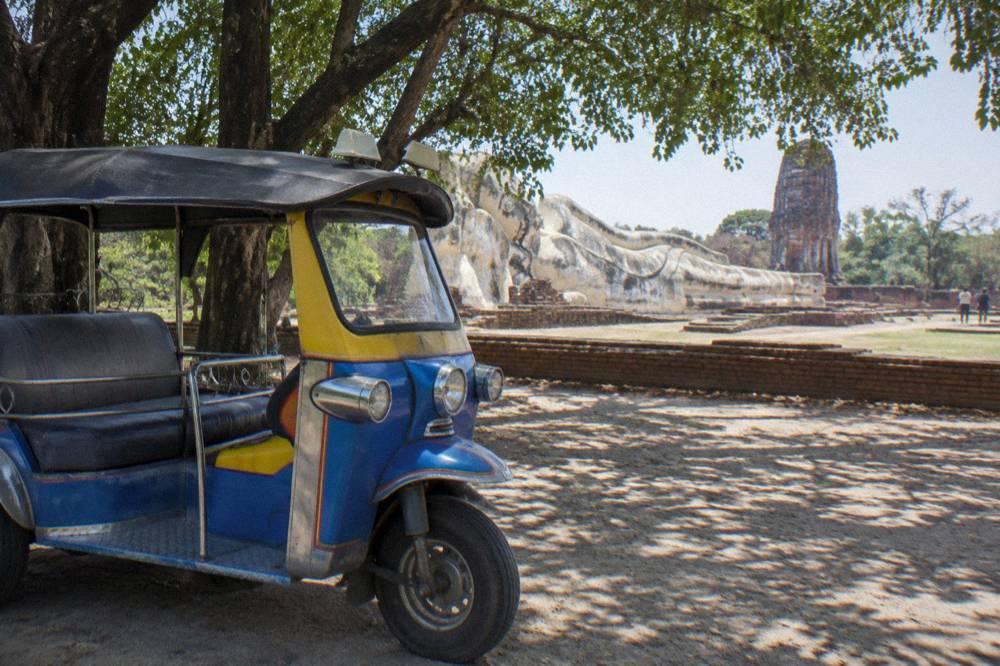
The charter system is simple and worth understanding before you negotiate. You are not hailing rides; you are hiring a driver and his vehicle for a block of time, and the driver becomes your de facto route planner. Agree the itinerary and the price first, in the way every 2026 guide repeats, because the fare and the temple list are both negotiable. A typical half-day circuit covers the central cluster plus the reclining Buddha; a full day adds the west bank and often Wat Yai Chai Mongkhon on the south east side.
The comfort case for the tuk tuk is real. It carries children and older parents without complaint, it moves between ruins in minutes with a breeze that cycling generates by effort, and it parks you at each gate. The cost case depends entirely on headcount: split four ways, a full-day charter is competitive with almost anything; solo, it is the most expensive way to move on this list. The flexibility case is weaker than the bike's, since the driver may steer you toward shops and stops that suit him, so state your temple list clearly.
One thing a tuk tuk cannot do is explain what you are looking at. Drivers often have a few English phrases and genuine local pride, but this is transport plus route knowledge, not a guided tour. If commentary is what you are actually buying, the guided-tour section below is where your money is better spent.
Guided Tours: When Paying For A Driver And Guide Wins
A guided tour wins when you want the ruins explained, the logistics handled and the ticketing rhythm sorted by someone else. The roster's day trips from Bangkok run 6.5 to 11.5 hours with hotel pickup, free cancellation, and ratings from 4.3 to 4.9, and they fold transport, guide and route into one price.
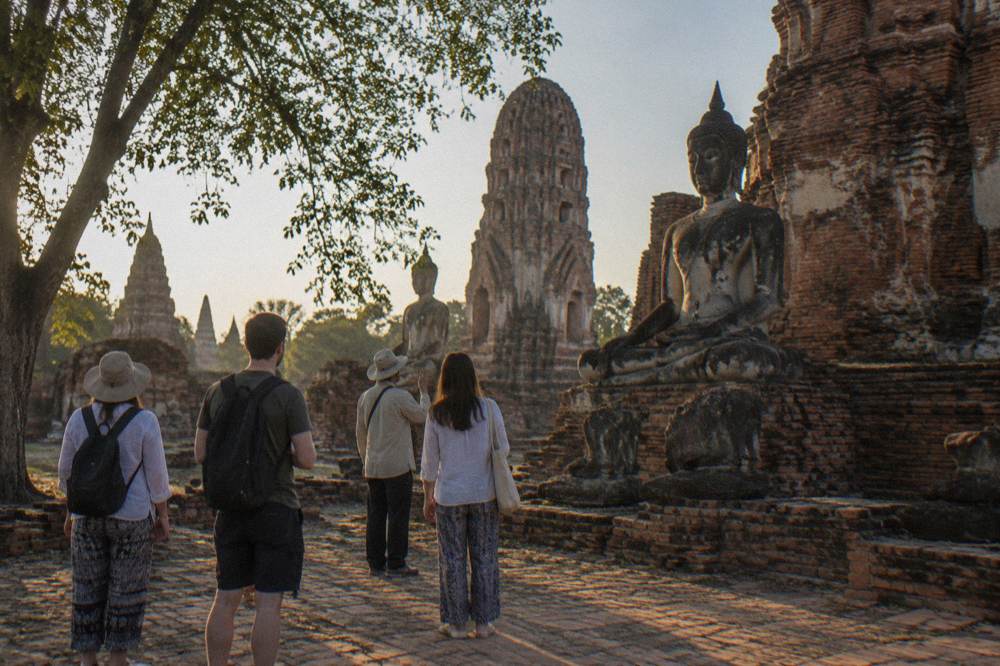
The guided option comes in more shapes than people expect. The UNESCO's Ayutthaya Historical Park full-day tour from Bangkok, run by TripGuru Thailand, is a small-group trip capped at nine travellers, 11 hours 30 minutes door to door with central Bangkok hotel pickup, rating 4.7 from 1,728 reviews, and covering Wat Mahathat, Wat Phra Sri Sanphet, Wat Chaiwatthanaram and Bang Pa-In Palace. At the shorter, larger-group end, the Ayutthaya Temples Tour from Bangkok with Lunch, run by Bigcountry Experience, runs 7 hours 30 minutes with lunch included, rating 4.7 from 867 reviews.
Both of those tours, and the rest of the day-trip roster, list free cancellation, so the commitment is lower than it feels. What the tour buys over the tuk tuk is a guide who can tell you why Wat Phra Sri Sanphet's three chedis matter, what happened to the city in 1767, and where to stand at each site, plus a driver who already knows the pickup logistics back to Bangkok. What it costs you is the schedule: you move when the group moves.
There is a private tier as well for travellers who want the guide without the group. A private guided day tour of four ancient temples, run by Golden Dragon International, rating 4.5 from 68 reviews, includes hotel pickup and a private vehicle, and lets a family or friend group set something closer to their own pace. For anyone weighing that against self-driving, the private tour with driver and guide guide compares the two in detail.
Is The River Ever The Fastest Way Between Temples?
Yes, on the west bank and for Wat Chaiwatthanaram specifically: a longtail boat crosses or circuits the river in under an hour, with shared circuits around 200 to 300 baht per person and private boats roughly 1,000 to 2,000 baht per boat, per hedged 2026 guide figures. The river is a shortcut and a view, not a full transport network.
Most visitors treat the boat as a sightseeing add-on, and the shared sunset circuits earn that reputation, but it also solves one real transport problem. Wat Chaiwatthanaram sits directly across the Chao Phraya from the island, and a boat hop turns the bridge detour into a crossing measured in minutes. A private longtail tour to the historic temples, run by Discover Thailand, rating 4.6 from 121 reviews, runs 50 minutes to 4 hours from a riverside pier with hotel pickup, and strings together Wat Chaiwatthanaram, Wat Phanan Choeng, Wat Kasattrathirat and Wat Phutthaisawan, several of which sit off the island where bikes and tuk tuks take longer to reach.
The river also gives the island its one free transport pleasure: the riverside exterior view of Wat Chaiwatthanaram from the water costs nothing beyond the boat fare, and the reclining Buddha at Wat Lokayasutharam is free to visit. For a fuller picture of what costs nothing on the island, the free and budget things to do guide lists the sites and stalls that charge nothing at all.
How Do Heat And Season Change The Maths?
Heat changes the ranking more than any other variable: from March to May, with highs around 34 to 36 degrees, midday cycling becomes the worst option and shaded tuk tuks or air-conditioned tour vehicles rise to the top. From November to February, with highs around 31 degrees, the bike wins for almost everyone.
The seasonal bands are broad but they matter here more than in most destinations, because every option on this list is outdoors. The cool dry season, November to February, is the bike's home turf: high temperatures around 31 degrees, minimal rain, and mornings that feel made for pedalling. The hot season, March to May, pushes highs to 34 to 36 degrees, and the rainy season, June to October, adds afternoon downpours, with September the wettest month and October carrying flood risk in low-lying riverside areas.
Flood season deserves a line of its own because it hits the transport comparison directly. When the river rises, the low-lying sites, Wat Lokayasutharam among them, are the first to see water, and the west bank approach to Wat Chaiwatthanaram is the ride most likely to be affected. Temples have reported staying open through the 2026 season so far, but a bike route that is trivial in February can involve riding through standing water in October. In that window, the tuk tuk driver's judgement about which approach is passable is worth real money, and the guided tours simply reroute.
Timing within the day matters as much as the month. The park opens at 8am and closes at 6pm, and the light at opening plus the first two hours are the best cycling window in every season. Late afternoon belongs to the west bank: Wat Chaiwatthanaram is the riverside sunset spot, and arriving by bike or tuk tuk for the last hour of light is the single most reliable beautiful hour on the island. The best time to visit guide works through the full seasonal calendar.
What Should Each Type Of Traveller Actually Choose?
Confident, heat-tolerant independent travellers should bike; families, groups and hot-season visitors should charter a tuk tuk; first-time visitors who want history explained, or anyone starting from Bangkok without a car, should take a guided tour. Split the day if you can: bike the morning, tuk tuk or boat the sunset.
The verdict is genuinely by traveller, because the three options fail differently. The bike fails in the midday heat and on the bridge crossings with children; the tuk tuk fails on price for solo travellers and on commentary everywhere; the tour fails on flexibility, since the group's clock becomes yours. Match the failure you can live with.
| Traveller | Best option | Why | Watch out for |
|---|---|---|---|
| Solo backpacker | Bike | Roughly 50 to 100 baht a day, total route freedom | Midday heat; lock the bike at gates |
| Family with kids | Tuk tuk charter | Shade, seats, no pedalling; cost splits well | Agree the itinerary and price first |
| Older visitors | Tuk tuk or private tour | Minimal walking between ruins, door-to-gate comfort | Full-day charters run 800 to 1,500 baht |
| History-focused first timer | Guided day tour | Commentary at each site, logistics handled | Fixed schedule; group pace |
| Photographer | Bike plus boat at sunset | Morning light on the central ruins, west bank at dusk | West bank needs the bridge or a boat hop |
| Bangkok day tripper without a car | Guided tour with pickup | Hotel pickup stated on most roster listings, no transport planning | Longer total day, 6.5 to 11.5 hours |
The split day deserves more attention than it gets. Nothing stops a visitor from hiring a bike for the central cluster in the morning, returning it at midday, and taking a tuk tuk or a sunset boat circuit to Wat Chaiwatthanaram for the last light. That hybrid costs little more than the bike alone, and it routes each part of the day to the vehicle that handles it best. The boat operators at the riverside piers sell shared circuits at roughly 200 to 300 baht per person, per 2026 guides, and the west bank sunset is what they exist to show you.
For the full comparison of guided versus independent visiting, including what tours typically include and what they leave you to buy at the gate, the guided tour or on your own guide is the deeper read. And whatever you choose, this site, Ayutthaya Historical Park Tours, keeps the whole roster of bike, boat, day-trip and private listings in one place, with the live pages carrying the current prices.
Common Questions About Getting Around Ayutthaya
How To Get Around Ayutthaya: Bike, Tuk Tuk Or Tour?
For most visitors the bike wins: hire runs roughly 50 to 100 baht a day and the island is flat and compact. Families and hot-season visitors should charter a tuk tuk, roughly 400 to 600 baht for a half day. Anyone who wants the ruins explained or is starting from Bangkok should take a guided tour with pickup.
How Much Does A Tuk Tuk Cost In Ayutthaya?
2026 guides quote roughly 400 to 600 baht for a half-day charter and 800 to 1,500 baht for a full day, negotiated with the driver before you set off. The price covers the vehicle and driver for the agreed itinerary, not temple entry fees, which are paid separately in cash at each gate.
Is Ayutthaya Easy To Cycle?
Yes. The park is flat and compact, traffic on the island is mostly light, and the main ruins sit within a few kilometres of each other. The bridge crossings to the west bank carry more vehicles and deserve care, and the hot season makes midday riding genuinely hard, so most cyclists work the morning.
Can You Walk Between The Temples?
Between the central ruins, yes: Wat Mahathat, Wat Phra Si Sanphet, Wat Ratchaburana and Wat Phra Ram cluster within easy walking distance of each other. The outliers are different, with Wat Chaiwatthanaram on the west bank about 4 to 5 km from the centre, too far for most people in the heat.
Do You Need A Guide For Ayutthaya?
You do not need one, but the ruins read very differently with one. A guide explains what the three chedis at Wat Phra Sri Sanphet signify, the etiquette at the Buddha head, and the city's history, which most visitors otherwise piece together from signs. Independent travellers with a good guidebook cover the same ground at their own pace.
Do Tours Include The Temple Entry Fees?
The listings on this roster do not state that temple entry is included, so assume you pay at the gates yourself. Foreign visitors pay 80 baht per ticketed monument or 300 baht for the seven-site ticket, cash only, with no official online booking. Some smaller sites, like the reclining Buddha at Wat Lokayasutharam, are free.