Free And Budget Things To Do In Ayutthaya
The park grounds themselves cost nothing. Fees apply only at ticketed monuments, and a surprising amount of Ayutthaya, from the reclining Buddha to the riverside views, is free to walk up to.
Short answer
Park entry is free, foreigners pay 80 baht per ticketed temple or 300 baht for the official 7-site ticket, Wat Lokayasutharam and the riverside exteriors cost nothing, and a full budget day with train fare, street food and one temple entry can run under a few hundred baht.
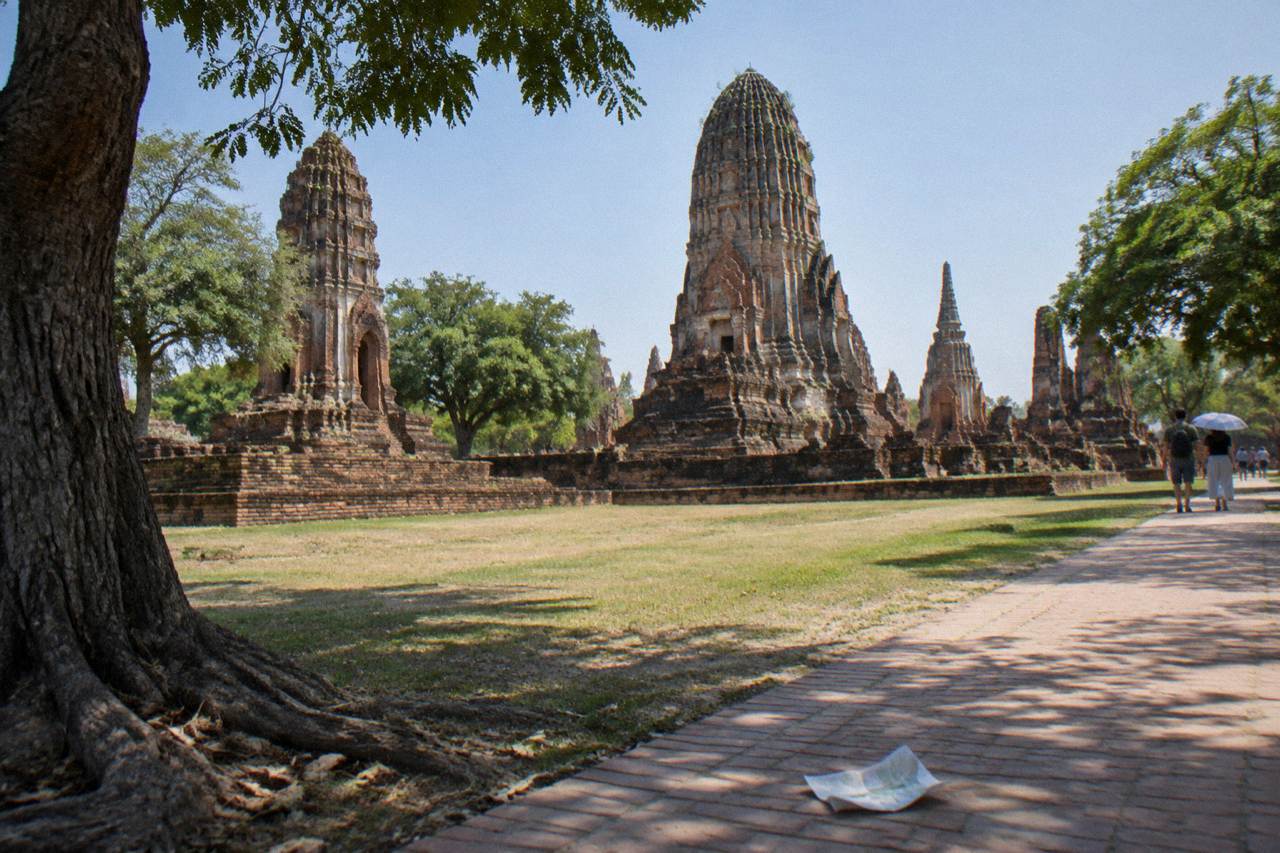
Ayutthaya is one of the rare World Heritage sites where the headline attraction costs nothing to enter. The Historical Park grounds are free to walk and cycle, and the fees apply only when you step inside a ticketed monument, at 80 baht per site for foreign visitors or 300 baht for the official ticket covering seven sites. That structure makes the old capital unusually kind to a tight budget: you can see a great deal, including the giant reclining Buddha and the riverside face of Wat Chaiwatthanaram, without buying a single ticket.
This guide separates what genuinely costs nothing from what carries a fee, prices out a realistic budget day in baht, and names the one pay-what-you-want walking tour that exists here. Where free runs out, it points to the paid options that fill the gap.
What Is Genuinely Free In Ayutthaya?
The park grounds themselves, the riverside exteriors, Wat Lokayasutharam and its giant reclining Buddha, the streets and markets of the island, and the riverside walkways all cost nothing, and no ticket booth stands between you and any of them. Foreign visitors pay only at the ticketed monuments, and even then you choose which ones to enter. A traveller on a zero-baht sightseeing budget still sees the skyline of prangs, the river life and the reclining Buddha.
Start with the distinction most first-time visitors miss: the Historical Park is not a gated attraction. There is no general admission, no perimeter fence with turnstiles and no combined gate fee. The Fine Arts Department charges at the entrance to individual monuments, so the space between them, the lawns, the lanes and the riverbanks, is genuinely public. The official park map page lists the fee structure plainly, and it confirms park entry itself is free.
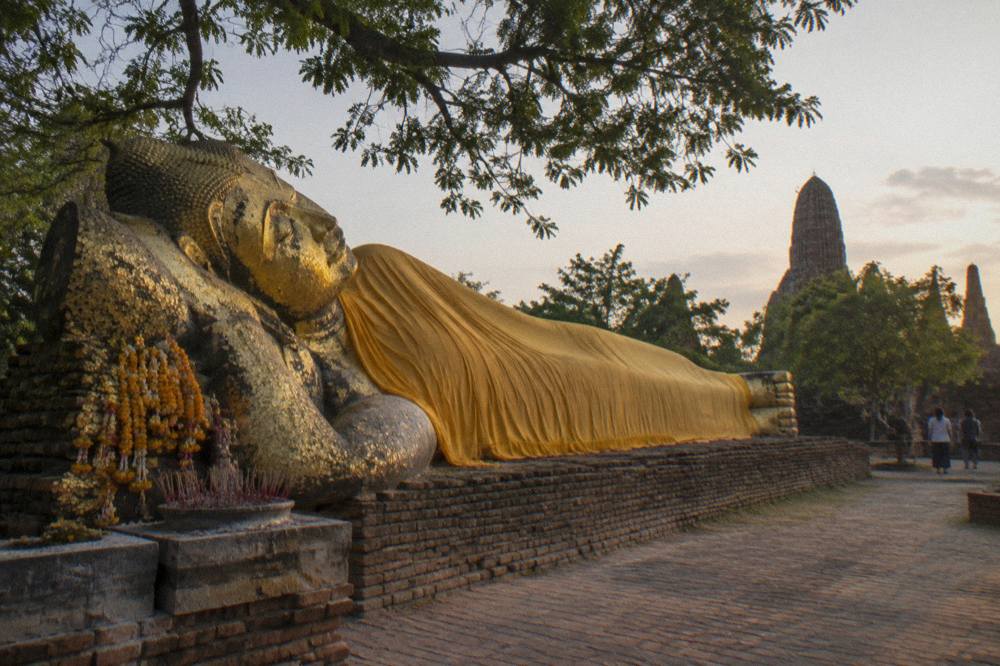
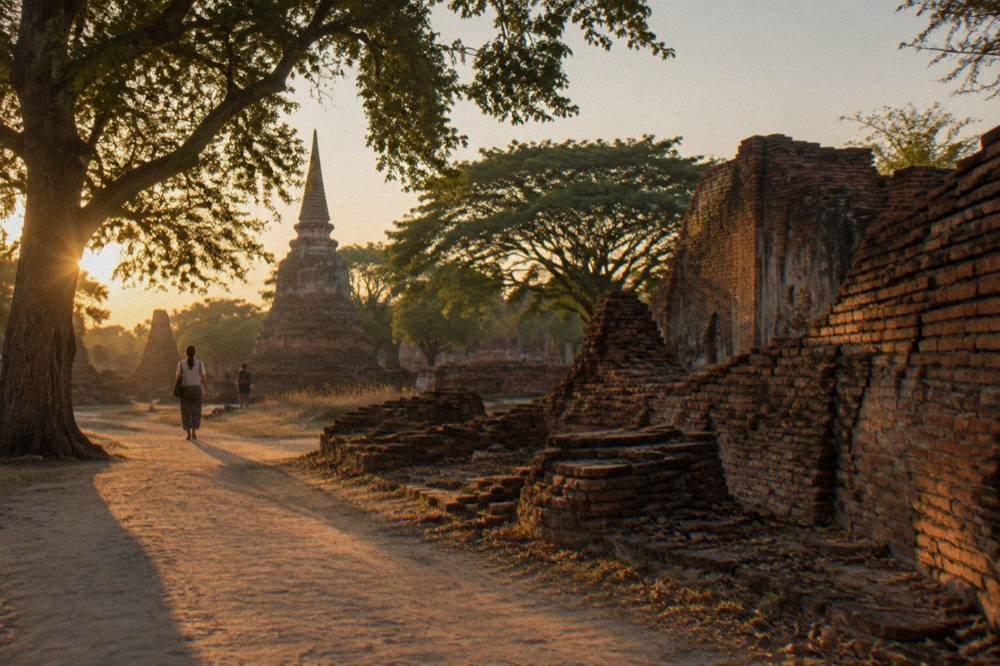
Wat Lokayasutharam is the standout free site. The enormous reclining Buddha, tens of metres long and wrapped in gold leaf, sits in the open air with no ticket booth at all. It is one of the most photographed spots in the province and it costs nothing, which makes it the single best value on the island. The riverside exterior of Wat Chaiwatthanaram is the other: from the west bank of the Chao Phraya you can stand and study the riverside prangs without paying, and many travellers rate that view, especially near sunset, above the interior.
Beyond the monuments, the free layer includes the evening market scene around Chao Phrom Market, the bridges and river walkways, and the information centres. The Ayutthaya Historic City Conservation Information Center is listed as free admission, and the Sala Klang Tourist Center expositions are similarly free. None of these are ruins, but they fill an afternoon cheaply and they explain what you are looking at.
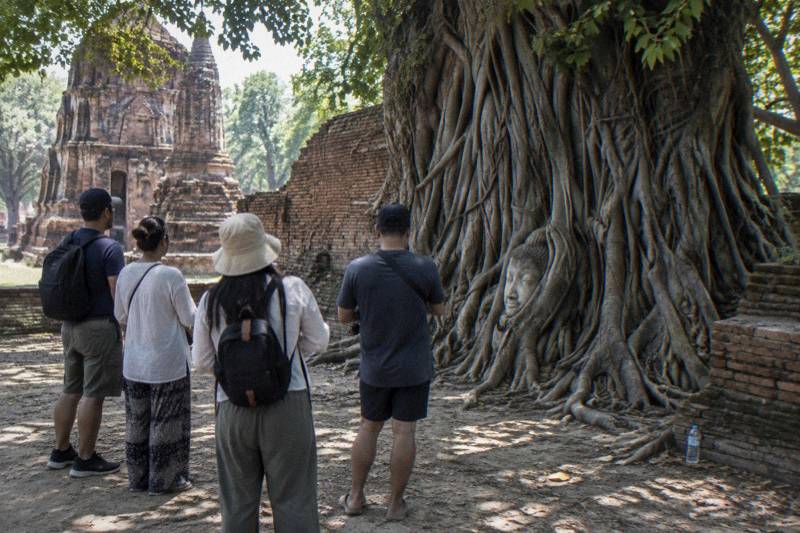
One caution belongs here. Free does not mean unrestricted. Dress modestly at active temple areas, shoulders and knees covered, and at the famous Buddha head in the tree roots at Wat Mahathat, crouch or kneel so your head sits lower than the Buddha's. Those etiquette rules cost nothing and they matter.
Which Temples Charge And Which Do Not?
Foreign visitors pay 80 baht at each ticketed monument, or 300 baht for the official ticket covering seven sites: Wat Phra Sri Sanphet, Wat Phra Ram, Wat Mahathat, Wat Ratchaburana, Wat Chaiwatthanaram, Wat Maheyong and Wat Kudi Dao. Wat Lokayasutharam is free, smaller active temples charge around 20 baht, and tickets are sold in cash at the gates, with no official online booking.
The fee table below is the honest version. Entry-fee figures for Ayutthaya's temple ruins vary across older guide sites, so trust only the official Fine Arts Department rate: foreign visitors pay 80 baht per major site, 300 baht for the seven-site flat-rate ticket. Thai nationals pay 10 baht per site or 40 baht flat. The seven-site ticket is bought in cash at the first included site you visit; the official page does not state a validity period, so plan to use it within your visit rather than assuming it lasts a month.
| Site | Foreign fee | Notes |
|---|---|---|
| Park grounds, lawns, riverbanks | Free | No general admission anywhere |
| Wat Lokayasutharam (reclining Buddha) | Free | Open air, no booth |
| Wat Phra Sri Sanphet | 80 baht | Included in 300 baht 7-site ticket |
| Wat Mahathat (Buddha head) | 80 baht | Included in 7-site ticket |
| Wat Chaiwatthanaram | 80 baht | Included; riverside exterior free |
| Wat Phra Ram, Wat Ratchaburana, Wat Maheyong, Wat Kudi Dao | 80 baht each | All included in 7-site ticket |
| Wat Yai Chai Mongkhon | About 20 baht | Active temple, secondary 2026 guides |
| Chao Sam Phraya National Museum | 150 baht | Foreigner rate |
Do the arithmetic before you buy. If you plan to enter four or more of the seven ticketed sites, the 300 baht ticket beats 80 baht each time. If you only want the two headline ruins, Wat Mahathat and Wat Phra Sri Sanphet, two individual tickets at 80 baht each is cheaper. Most day-trippers enter two or three sites and enjoy the rest from the outside, which is a perfectly good strategy given how much of Ayutthaya's character lives in its skyline.
The museum line deserves a note: foreigners pay 150 baht at the Chao Sam Phraya National Museum, and sources conflict on its opening days, so check locally before you walk there. For a deeper run through the monuments themselves, the temples the Ayutthaya tours visit guide maps which listed tours stop where, which is useful if you would rather buy one ticket structure than five.
If you are weighing a guided day against this self-directed budget route, a small-group temples tour from Bangkok with lunch included bundles the transport, the guiding and a meal into one price, and the trio below shows where that trade-off sits.
How Much Does A Budget Day Actually Cost?
A realistic independent budget day runs roughly 300 to 500 baht per person: about 15 to 20 baht each way on the ordinary train, 50 to 100 baht for a day's bike hire, 80 baht for one temple entry or 300 baht for the seven-site ticket, and 20 baht a bowl for boat noodles, with a 10 to 15 baht ferry crossing if you want the far bank. Nothing in that line item list is exotic. It is the ordinary cost structure of the province, and it is the reason budget travellers rate Ayutthaya above almost every other World Heritage city in the region.
| Budget day line item | Typical cost (baht) |
|---|---|
| Ordinary third-class train, Bangkok to Ayutthaya, one way | About 15 to 20 |
| Bike hire for the day | Roughly 50 to 100 |
| One ticketed temple entry | 80 |
| Seven-site official ticket | 300 |
| Wat Lokayasutharam, park grounds, riverside | Free |
| Boat noodles, per bowl | From about 20 |
| Ferry crossing | About 10 to 15 |
| Tuk-tuk charter, half day | Roughly 400 to 600 |
The biggest lever is the temple ticket decision. Enter two sites individually and your monument spend is 160 baht; commit to the seven-site ticket and it is 300 baht flat. The second lever is transport on the island: a hired bike at roughly 50 to 100 baht a day beats a 400 to 600 baht tuk-tuk charter on price, and the park is flat and compact enough that cycling between ruins is the natural way to see it. The getting-around question, bike versus tuk-tuk versus tour, is covered in full in how to get around Ayutthaya.
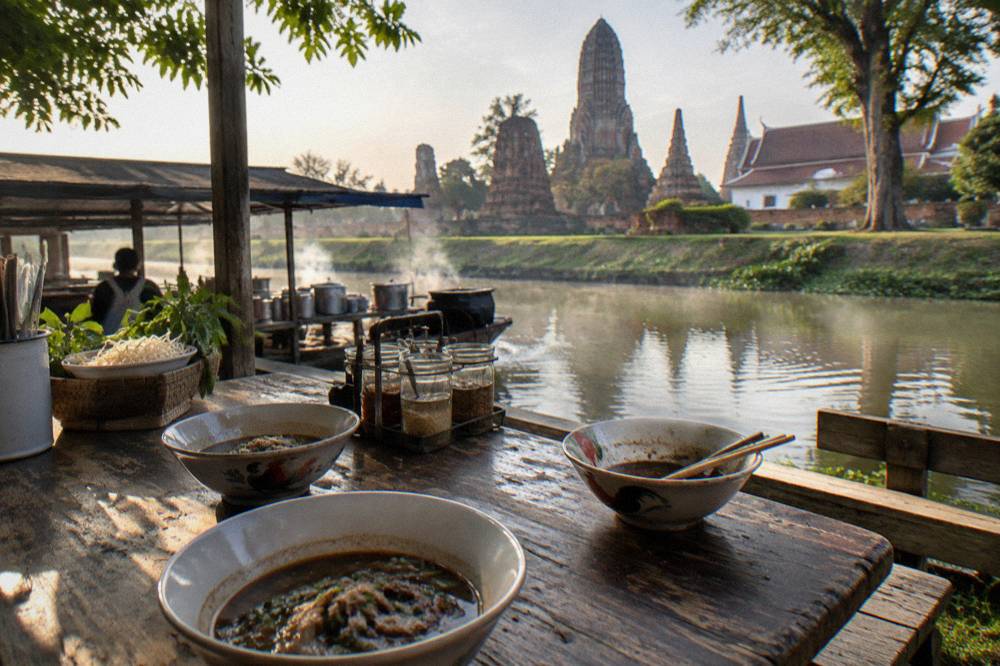
Food keeps the day cheap without effort. Boat noodles are the local signature, served in small canal-side bowls from about 20 baht each, and the custom is to order several rounds. Street stalls around the markets do the rest. A traveller who enters two temples, cycles, eats twice and takes the train both ways can genuinely do the whole day for a few hundred baht.
When the budget version starts to feel like work, the honest upsell is a guided bike product rather than a bigger bus. The small-group hidden-treasure bike tour with pickup and lunch included fits exactly the gap where free exploring runs out of legs.
How Do You Get To Ayutthaya Cheaply?
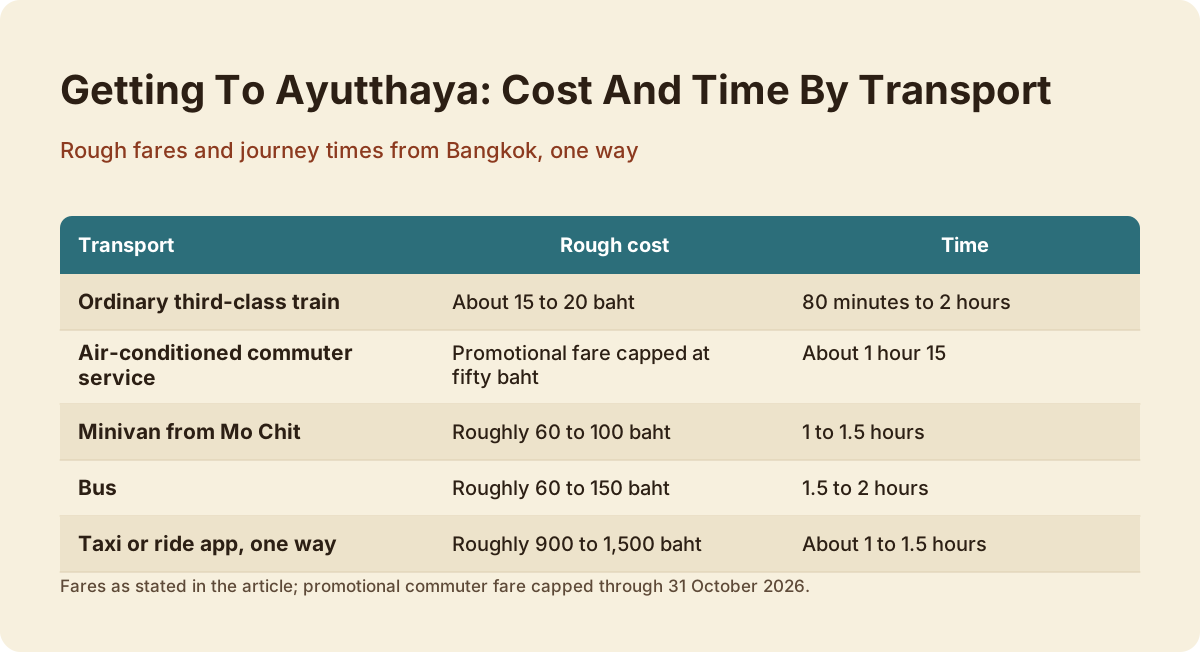
The ordinary third-class train from Bangkok starts at about 15 to 20 baht one way and takes 80 minutes to two hours, the new air-conditioned commuter service launched in August 2026 caps its promotional fare at fifty baht through the end of October, and minivans run roughly 60 to 100 baht and take one to one and a half hours. A taxi or ride app is the expensive option at roughly 900 to 1,500 baht one way.
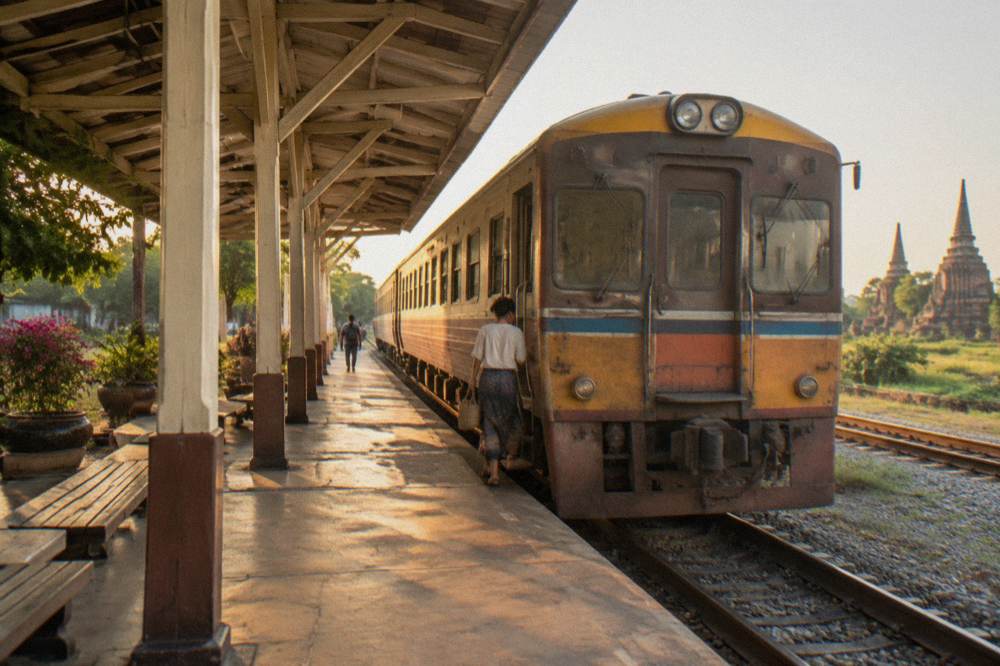
The train is the budget traveller's answer, and it has recently improved. The State Railway's air-conditioned Bangkok Connex service from Krung Thep Aphiwat Central Terminal launched on 1 August 2026, takes about an hour and a quarter, and its promotional fare is capped at fifty baht through 31 October 2026, with counter tickets and unreserved seats. After the promotion the fare is unknown, so treat that price as a window rather than a permanent rate. Around sixteen regular daily trains also serve the route, with the ordinary third-class fare from about 15 to 20 baht, as news coverage of the launch confirms.
| Transport | Rough cost | Time |
|---|---|---|
| Ordinary third-class train | About 15 to 20 baht | 80 minutes to 2 hours |
| Air-conditioned commuter service | Promotional fare capped at fifty baht | About 1 hour 15 |
| Minivan from Mo Chit | Roughly 60 to 100 baht | 1 to 1.5 hours |
| Bus | Roughly 60 to 150 baht | 1.5 to 2 hours |
| Taxi or ride app, one way | Roughly 900 to 1,500 baht | About 1 to 1.5 hours |
Minivans depart frequently from Bangkok's Mo Chit area and drop you near Chao Phrom Market, which is walkable to the island's east side. The full comparison of trains against tours, including what a guided day saves you in planning time, is laid out in Bangkok to Ayutthaya by train or tour.
Is There A Free Walking Tour In Ayutthaya?
Yes, one verified option exists: a pay-what-you-want walking tour called Ayutthaya Walking Tour: Stories Behind the Ruins, run by an independent local guide listed on GuruWalk, rated 5.0 from 5 reviews on that platform. It meets at Ayutthaya Railway Station, crosses by ferry past Chao Phrom Market and ends at Wat Mahathat; the 80 baht temple entry and the 10 to 15 baht ferry are not included.
The pay-what-you-want model means the tour itself has no fixed price: you tip the guide at the end what you feel the walk was worth. It is a real, independent product, listed on GuruWalk and run by a local guide, and it is not a product of this site. The route is a genuinely budget-friendly design, starting where the train deposits you, using the cheap ferry crossing and finishing at the headline ruin, so your only hard costs are the ferry and, if you choose to enter, the 80 baht Wat Mahathat ticket.
See this free tour on GuruWalk
Pair it with the free layer described above and you have a nearly complete budget day: train in, pay-what-you-want walk to orient you, free reclining Buddha and riverside in the afternoon, boat noodles in between. What a walk cannot do is cover the spread-out sites fast. The island is compact but the monuments ring it, and that is where legs give out before interest does.
When Does Free Stop Being Enough?
Free covers the grounds, the exteriors and one or two interiors, but it does not cover the spread of the island, the storytelling behind the ruins or the midday heat. Once you want more sites in less time, the paid products that fit are bike tours with a guide, and the small-group hidden-treasure bike tour with hotel pickup and lunch included is the natural step up from a self-directed budget day.
The honest boundary is physical. A walking day reaches Wat Mahathat, Wat Lokayasutharam and a couple of neighbours; it does not comfortably reach Wat Chaiwatthanaram on the west bank and back. A hired bike fixes the radius but not the interpretation, and in the hot season, when highs run 34 to 36 degrees, a supported ride with water, a guide and a planned route is worth real money. The hidden-treasure bike tour, 5.0 from 150 reviews on its listing, runs four hours in a small group with hotel pickup and lunch both included, which replaces the two line items you would otherwise pay separately.
If pickup in Ayutthaya itself is not needed, the shorter format also exists. The city and historical park bike tour, 4.8 from 188 reviews, runs three to three and a half hours with a private group option, and it suits travellers already based on the island who want the guided loop without the transfer.
The sunset slot is the other upgrade worth naming. The three-hour sunset ride by bike, 4.8 from 37 reviews, times the loop for golden hour, and the riverside face of Wat Chaiwatthanaram at dusk is the view the free riverside walk only gets you halfway to. The dedicated Ayutthaya sunset river cruise guide covers the boat version of that same moment.
What About Cheap Eats And Evening Options?
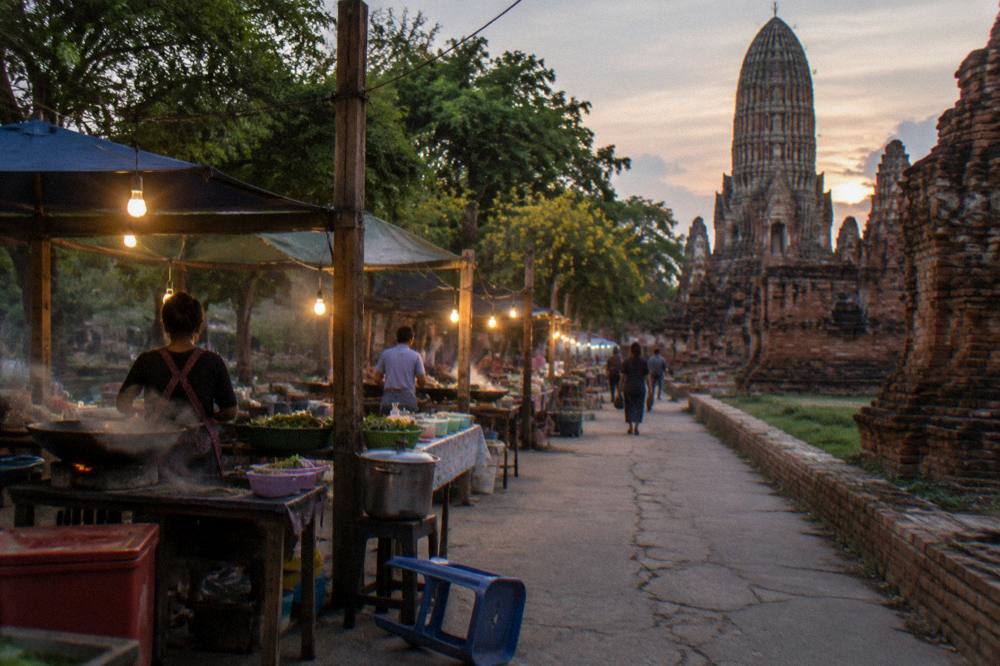
Boat noodles from about 20 baht a bowl are the local budget staple, the canal-side stalls serve them in small rounds, and the market streets around Chao Phrom fill with inexpensive evening food. There is no nightly temple illumination: the ruins light up only during announced events, so the free evening show is the river and the market, not the monuments.
The boat noodle custom deserves its own sentence or two. The bowls are small by design, priced from about 20 baht, and regulars order several, adding chilli and crushed peanuts between rounds. Around the market streets you will find grilled meats, fruit and iced drinks at street prices, and a full evening meal for the price of one Bangkok coffee is normal here. This is the part of a budget day that never feels like economising.
On the question visitors often ask next: do the temples light up at night? Only during announced events or festival periods, not nightly. The Fine Arts Department has run seasonal lighting programmes in recent cool seasons, and those are worth checking announcements for if your dates are flexible, but on an ordinary evening the free show is the riverside at dusk and the market afterwards. The best time to visit Ayutthaya guide explains how the seasons change both the heat and the light you will be working with.
How Do You Combine Free And Paid Without Overspending?
The efficient hybrid is one paid anchor plus the free layer around it: pick either the 300 baht seven-site ticket or a single guided product, then fill the rest of the day with the free reclining Buddha, the riverside exteriors and street food. Travellers who buy both a full guided day and individual temple tickets usually double-pay for the same monuments.
The double-pay trap is worth spelling out. A guided tour from Bangkok typically covers transport, guiding and often lunch, but temple entry is generally bought separately at the gates in cash, so budget for the 80 baht fees on top of any tour price, and check what the listing states about inclusions before assuming. The what Ayutthaya tours include rundown goes through this in detail across the whole roster.
A sensible budget-plus plan for one day looks like this: train in on the cheap fare, morning at two ticketed ruins on individual 80 baht tickets, midday boat noodles, afternoon on a hired bike taking in the free reclining Buddha and the riverside face of Wat Chaiwatthanaram, and either the market evening or a sunset ride if the legs allow. That day costs the price of one mid-range meal in Bangkok and misses very little.
For travellers who want the guided version of that same shape, the full-day small-group tour from Bangkok, 4.7 from 1,728 reviews with a maximum of nine travellers, is the format most budget-conscious visitors eventually settle on, because it converts the whole transport-and-planning problem into a single booking.
Whether you spend almost nothing or add one guided product, the underlying structure of Ayutthaya Historical Park Tours as a destination stays the same: the grounds are free, the monuments are cheap by world standards, and the extras are genuinely optional. That is rare at a World Heritage site of this scale, and it is the reason a budget itinerary here does not feel like a compromise.
If you are still deciding between a fully guided day and the independent route described above, the Ayutthaya guided tour or on your own comparison lays out the trade-offs line by line. The three options below bracket the range, from the bike tour with lunch to the longtail boat.
Common Questions About Free Things To Do In Ayutthaya
Is Ayutthaya Historical Park free to enter?
Yes, the park grounds are free to walk and cycle. Fees apply only at the ticketed monuments, where foreign visitors pay 80 baht per site or 300 baht for the official seven-site ticket.
Which temples in Ayutthaya are free?
Wat Lokayasutharam, home of the giant reclining Buddha, is free, as are the park grounds and the riverside exterior views of Wat Chaiwatthanaram. Smaller active temples such as Wat Yai Chai Mongkhon charge about 20 baht.
Can you buy Ayutthaya temple tickets online?
No. Tickets are sold on site in cash at the gate, and there is no advance online booking through official channels. Bring cash for the 80 baht per-site fees or the 300 baht seven-site ticket.
Is there a free walking tour in Ayutthaya?
One verified pay-what-you-want option exists: Ayutthaya Walking Tour: Stories Behind the Ruins, an independent local guide listed on GuruWalk, meeting at Ayutthaya Railway Station and ending at Wat Mahathat. The temple entry and the ferry crossing are not included.
How much does a budget day in Ayutthaya cost?
Roughly 300 to 500 baht per person: about 15 to 20 baht each way on the ordinary train, 50 to 100 baht for bike hire, 80 baht per temple entry or 300 baht for the seven-site ticket, and boat noodles from about 20 baht a bowl.
Do the Ayutthaya temples light up at night for free?
Not nightly. Evening illumination happens only during announced events or festival periods, so check announcements around your dates. On ordinary evenings the free attractions are the riverside at dusk and the market streets.