Is Ayutthaya Bigger Than Angkor Wat?
An honest scale comparison of Ayutthaya and Angkor, how each site is visited, and which one fits a day trip from Bangkok.
Is Ayutthaya Bigger Than Angkor Wat?
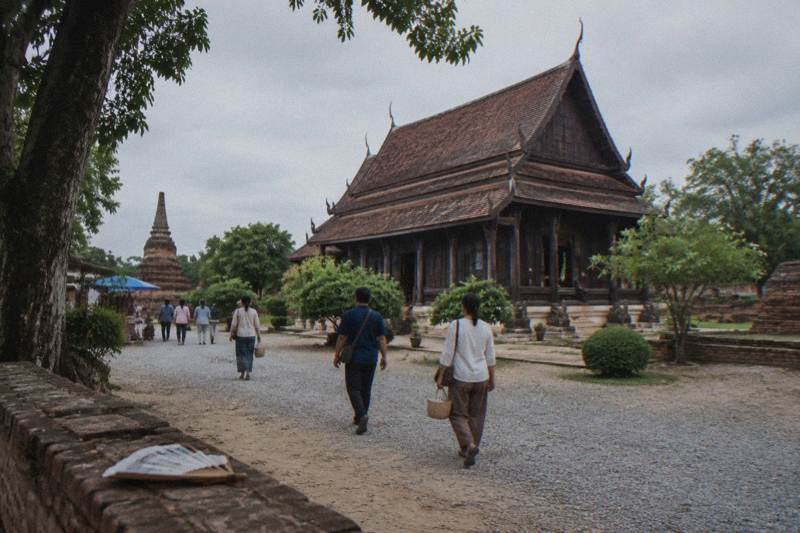
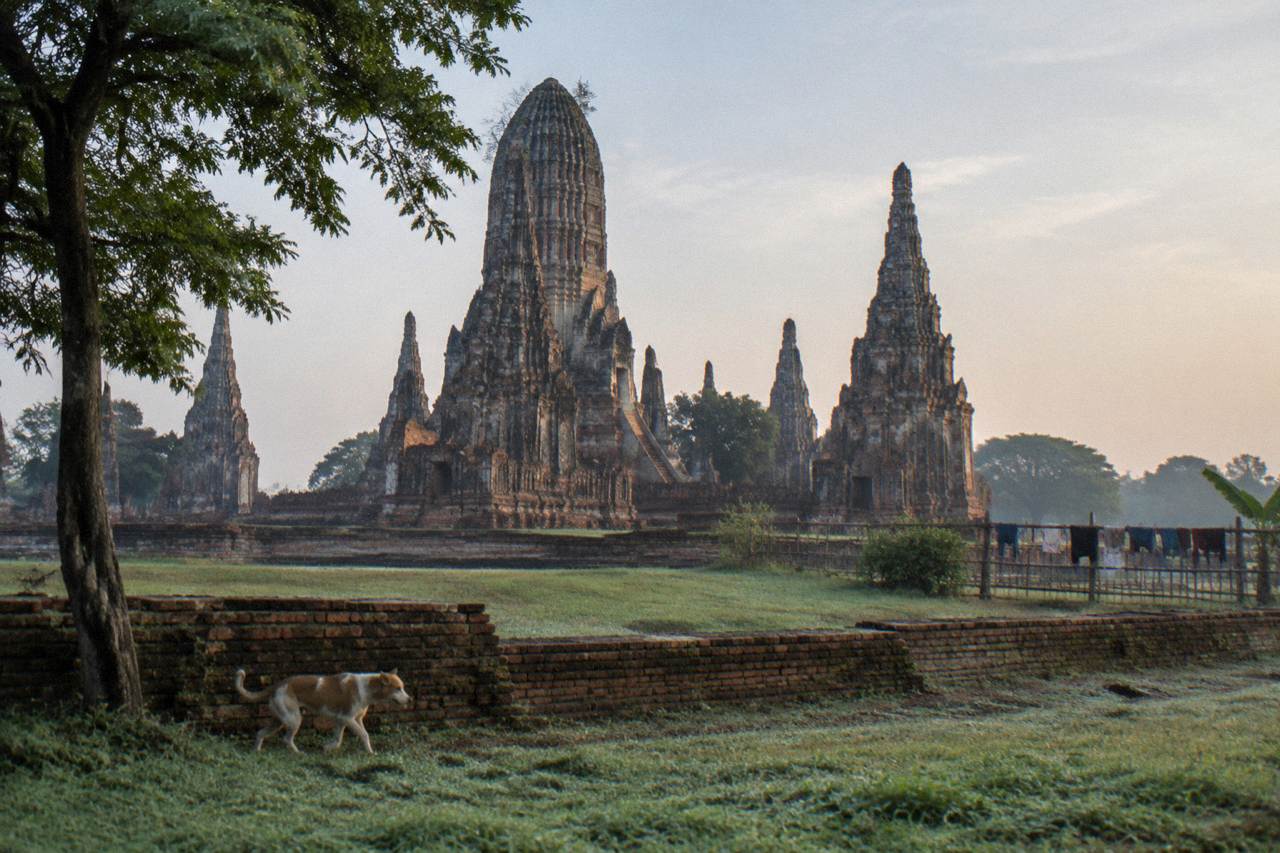
No, and it is not close in the way most people imagine. Angkor is a vast archaeological landscape of temple complexes, reservoirs and forest spread across many square kilometres of Cambodia, while Ayutthaya is a compact river-island city of ruins roughly 76 km north of Bangkok that you can cross by bicycle in under an hour. The two are not directly comparable by a single verified number, because they were built as different things. That compactness is exactly why Ayutthaya works so well as an escape from the capital, and if you're weighing your options, the case for Ayutthaya as the best day trip from Bangkok makes a pretty convincing argument.
That last point matters more than the headline. Angkor was a dispersed royal landscape, a network of monuments and waterworks separated by distances you cover by tuk-tuk, car or bus between stops. Ayutthaya was a dense island capital: a ring of rivers around a flat core of temples, palaces and monasteries packed within cycling distance of one another. When people ask which is bigger, they usually mean "which will take me longer to see", and the answer there is Angkor, by a wide margin, while Ayutthaya rewards a single well-planned day.
No reliable area figure, temple count or visitor number has been published for either site, so none is quoted here. What can be stated firmly comes from the documented record: Ayutthaya was founded in 1351, sacked by the Burmese army in 1767, and inscribed by UNESCO in December 1991. Those dates frame why the two places feel so different today. Angkor's ruins were swallowed by forest for centuries and cleared at monumental scale; Ayutthaya's ruins sit inside a living Thai provincial city, surrounded by roads, guesthouses and noodle shops, with the modern town woven between the monuments.
The practical consequence for a traveller is striking. At Angkor, the classic circuit is a matter of logistics: sunrise at one temple, a hired vehicle between clusters, and days of pacing. At Ayutthaya, the small-group full-day tour from Bangkok covers Wat Mahathat, Wat Phra Sri Sanphet, Wat Chaiwatthanaram and Bang Pa-In Palace in a single 11 hour 30 minute outing, and still gets you back to your Bangkok hotel the same night. A three-hour bike tour can loop the historical park's core. That contrast in visitability, more than any measurement, is what people remember.
There is a budget dimension to the comparison too, and it favours the Thai site for short trips. Getting to Ayutthaya independently costs less than a restaurant meal in the capital: the ordinary third-class train runs from about 15 to 20 baht each way, and even a round trip on the newer air-conditioned service during its promotional window costs less than a hundred baht. Angkor's entry system, by contrast, is a multi-day pass purchase on top of the cost of reaching Siem Reap, a structure that only makes sense once you have committed several days. For a traveller comparing the two on a fixed budget, the Thai side of the ledger is dramatically lighter per hour of ruins seen.
If you are weighing the two destinations against each other, the listings below are the three formats this site rates for a first Ayutthaya visit: the small-group day trip, a private guided option, and a full-day bike tour.
How Do The Two Sites Compare In Scale?
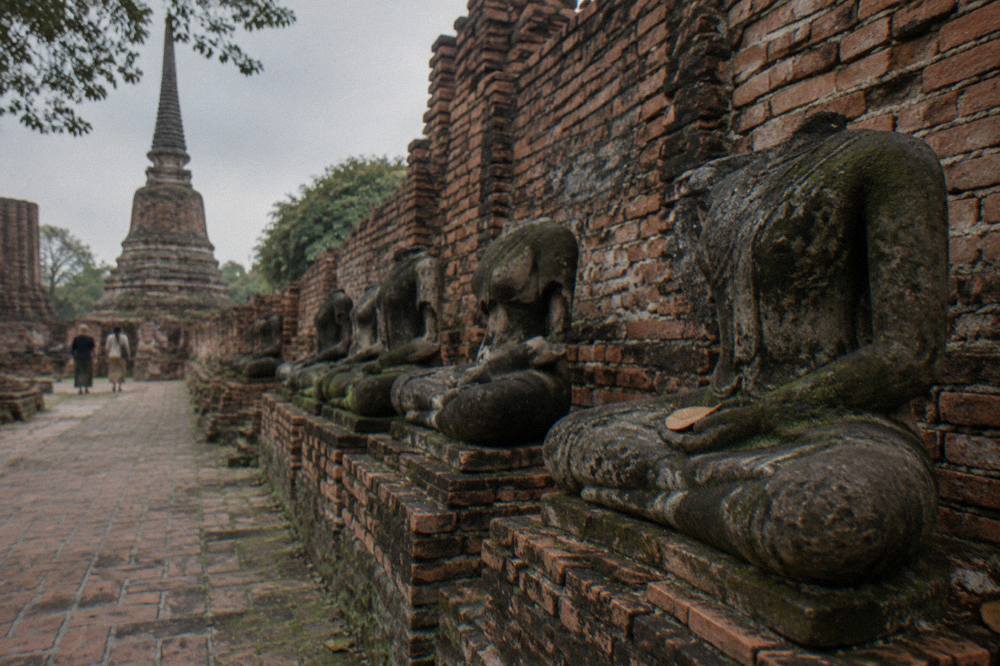
In physical spread, Angkor is far larger: its temple groups are scattered across a wide landscape connected by long roads, while Ayutthaya's principal ruins sit on and around one flat island you can pedal across in well under an hour. In density, Ayutthaya punches hard, because its major monuments cluster within a few minutes of each other rather than kilometres apart.
Scale works in two directions here. Angkor's defining feature is horizontal reach: the famous anchor temple sits within an archaeological zone whose monuments are separated by real driving distances, and the forest between them is part of the experience. Ayutthaya's defining feature is compression. The historical park's island core is flat, compact and bikeable, which is why bicycle touring is the signature way to see it. Bike hire in town runs roughly 50 to 100 baht a day by recent local guides, and the terrain asks nothing of your legs.
| Aspect | Ayutthaya | Angkor |
|---|---|---|
| Overall shape | Compact island capital, ruins clustered together | Vast archaeological landscape, monuments widely dispersed |
| Getting between sites | Bicycle, tuk-tuk or short drives; many stops minutes apart | Hired vehicle between temple groups over longer distances |
| Typical visit length | One full day covers the headline temples | Multi-day circuits are the norm |
| Setting | Living provincial city around the ruins | Forest and villages within a protected zone |
| Signature experience | Wat Mahathat's Buddha head in the tree roots | The forest-strangled anchor temple |
That table is deliberately qualitative, and it stays that way for a reason. Travel content is full of confident area figures for both sites, and no reliable area figures for either site are quoted here. Rather than repeat a number that cannot be stood behind, the comparison sticks to what a visitor can check with their own eyes: the shape of each place, the distances between stops, and the time a realistic itinerary demands.
There is also a fairness point worth making. Calling Angkor "bigger" is true in spread but can mislead a traveller into expecting Ayutthaya to feel small. It does not. The park's headline monuments, Wat Phra Sri Sanphet's three chedis, Wat Chaiwatthanaram's riverside prangs, the reclining Buddha at Wat Lokayasutharam, are imposing buildings in their own right, and the official seven-site ticket exists precisely because the ticketed monuments are numerous enough to reward a bundle. Foreign visitors pay 80 baht per ticketed temple or 300 baht for the seven-site ticket, cash at the gate, with no online booking through official channels.
For most Bangkok-based travellers the practical question is not which site is bigger but which one fits the trip they are actually taking, and the full-day small-group tour answers that for Ayutthaya neatly.
How Does Ayutthaya's History Stack Up Against Angkor's?
Ayutthaya was founded in 1351 and destroyed by the Burmese army in 1767, a span of more than four centuries as one of Asia's major capitals; Angkor's Khmer empire rose and fell centuries earlier, and its ruins were reclaimed by forest. The two cities never coexisted at their peaks, which is why their architecture differs so sharply: Ayutthaya's brick chedis and prangs belong to a later Siamese tradition, not the Khmer sandstone style.
The verified dates this site can stand behind are Ayutthaya's own: founded 1351, sacked 1767, UNESCO inscribed in December 1991 under criterion (iii). No comparable Angkor dates, fees or figures are given here, and no verified figures exist for the Cambodian side, so that half of the comparison stays hedged and, general level. What can be said honestly is structural: Angkor was the earlier phenomenon, and by the time Ayutthaya reached its height as a trading capital drawing merchants from across Asia, the Khmer city had long since faded from its peak.
That chronology explains the different textures of the two sites. Angkor's monuments were built across successive reigns and then abandoned to jungle, so modern visitors encounter towers held by tree roots and moats that have become ponds. Ayutthaya fell in a single catastrophic war in 1767, its monasteries burned and toppled, and the ruins were then left standing inside a continuously inhabited town. The result is a site that reads as a ruined city rather than a lost one, with headless Buddha rows and broken chedis framed by streets and schoolyards.
Both places carry UNESCO World Heritage status, and Ayutthaya's inscription is recorded on the UNESCO list page for the historic city. That shared recognition is the real common ground: two former royal capitals whose abandonment preserved them for later generations. The differences, in era, architecture and setting, are what make the comparison interesting rather than a simple ranking.
For depth on the Thai side, the Buddha head at Wat Mahathat is the emblem of that 1767 destruction, and this site's Wat Mahathat Buddha head guide unpacks how it came to rest in the tree roots and the etiquette expected at the spot. Visitors are asked to crouch or kneel so their head sits lower than the Buddha head, and not to touch the roots, a small ritual that adds to the sense of standing somewhere deliberately preserved.
How Much Time Do You Need At Each Site?
Angkor realistically demands two to three days for its classic circuits, while Ayutthaya can be seen well in one long day, or one relaxed overnight if you want sunset and a river cruise. That time gap, more than any measurement of ground, is the honest answer to the size question for most travellers: Ayutthaya is the site you can add to a Bangkok week without rebuilding your itinerary. If you have a spare half day after those ruins, the guide to whether Lopburi's monkey temples beat the standard add-ons weighs that side trip against the floating market and palace stops already on most tours.
The one-day version of Ayutthaya works because the geometry works. A day trip from Bangkok, roughly 76 km by road, can reach the island by mid-morning, take in the four or five headline temples with a lunch break, and still fit a river or sunset element before returning. The listing-backed options make this concrete: the Ayutthaya Experience with Boat Ride runs 8 hours with hotel pickup in Bangkok included and a 4.9 rating from 861 reviews, pairing the temple circuit with time on the water. The temples tour with lunch runs 7 hours 30 minutes in a group capped at 25, with Wat Lokayasutharam, Wat Phra Sri Sanphet, Wat Mahathat and Wat Chaiwatthanaram named on the listing. Whether that end-of-day river element actually earns its keep is a fair question, and my honest take on the Ayutthaya sunset boat tour covers what the ride adds, what it costs, and the flood-season caveats.
Angkor does not compress the same way. Its anchor temples are separated by road distances that add up across a day, and the standard advice, hedged here because the files verify no specific itinerary figures, is to spread visits across multiple days with a hired driver. Travellers who try to compress Angkor into a single day generally leave with one or two temples properly seen and the rest glimpsed from a window.
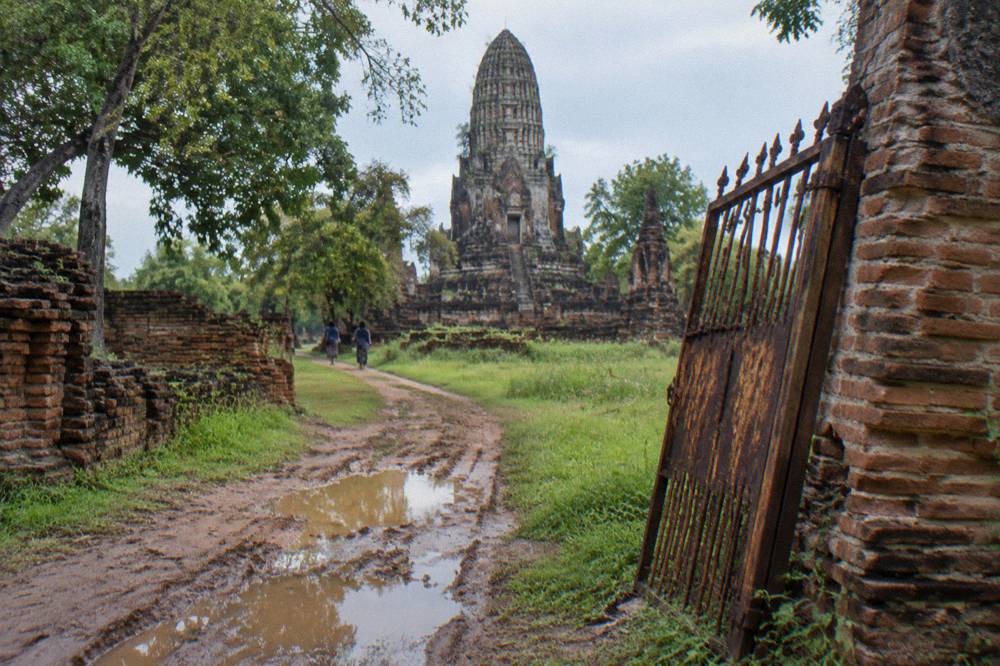
If you are deciding how to structure an Ayutthaya day rather than whether to take one, this site's one-day itinerary guide sequences the island's stops, and the time needed in Ayutthaya post breaks the half-day versus full-day trade-off. The short version: a half day covers Wat Mahathat, Wat Phra Sri Sanphet and either the reclining Buddha or Wat Chaiwatthanaram, while a full day adds the west bank, a boat element and lunch without rushing.
Is Ayutthaya Easier To Reach From A Major City?
Yes, and it is not a subtle difference. Ayutthaya sits about 76 km from Bangkok with trains, minivans, buses and dozens of guided tours running the route daily, including an air-conditioned commuter service that makes the trip in about an hour and fifteen minutes. Angkor requires a dedicated journey to Siem Reap, a commitment of several days in itself, which is why so many travellers see Ayutthaya as an add-on and Angkor as a destination.
The Bangkok connection is Ayutthaya's quiet superpower. The SRT Bangkok Connex air-conditioned service launched on 1 August 2026 from Krung Thep Aphiwat Central Terminal, covers the run in about one hour fifteen minutes, and sells counter tickets with a promotional fare capped at fifty baht through 31 October 2026, with the post-promotion fare not yet published. Alongside it run about sixteen regular daily trains, ordinary third-class fares from about 15 to 20 baht, minivans taking one to one and a half hours, and buses at one and a half to two hours. A taxi or ride app runs roughly 900 to 1,500 baht one-way by recent guide quotes.
None of that exists for Angkor from Bangkok. Reaching Siem Reap is a separate trip by air or overland crossing, and once there the temples are spread across a zone you tour by hired vehicle over days. The asymmetry defines the two sites' roles in a Southeast Asia plan: Ayutthaya is the world-class ruin you can visit between breakfast and midnight in Bangkok, while Angkor is the trip you build a week around.
That reachability is also why the guided day-trip market around Ayutthaya is so developed. The roster on this site alone lists ten separate Bangkok departures, from large-group bus tours to private car options, plus bike and boat formats on the island itself. The temples tour with lunch, for instance, picks up from central Bangkok hotels, includes lunch per the listing, and carries a 4.7 rating from 867 reviews.
Which Site Suits Your Trip Better?
Choose Ayutthaya if your base is Bangkok and you want dense, walkable ruins, a bicycle-friendly island, and a satisfying world-class site inside one day. Choose Angkor if you can commit several days, want the forest-temple spectacle, and accept that the visit is a destination in itself. Bigger, in the end, means different things: Angkor wins on spread, Ayutthaya wins on what you can actually see per hour of your holiday.
A useful way to frame the choice is by what each site asks of you. Angkor asks for time and planning: multi-day circuits, sunrise starts, a driver, and pacing across a wide zone. Ayutthaya asks for a morning. You can leave Bangkok after breakfast on the small-group full-day tour, stand at the Buddha head by midday, watch the prangs of Wat Chaiwatthanaram from the west bank in golden light, and be back in the city for a late dinner. For most travellers on a one or two week Thailand route, that asymmetry decides the question on its own.
| Traveller profile | Better fit | Why |
|---|---|---|
| Bangkok-based, limited days | Ayutthaya | One-day round trip, roughly 76 km, ten tour options from the capital |
| Cyclists and casual riders | Ayutthaya | Flat, compact island; bike hire roughly 50 to 100 baht a day |
| Multi-day temple immersion | Angkor | Spread-out circuits reward two to three days |
| Families with kids | Ayutthaya | Short transfers, free sites like the reclining Buddha, easy pacing |
| Photographers chasing forest ruins | Angkor | The tree-strangled anchor temple has no Ayutthaya equivalent |
There is no wrong answer between them, and no need to rank one above the other. What this site can say with authority is the Ayutthaya side: the park is free to enter at ground level, fees apply only at ticketed monuments, and the headline temples cluster so tightly that a well-chosen tour format, small group, private car or bicycle, covers the essence comfortably in a day. The guided tour or self-guided comparison works through that format decision in detail.
Season matters on the Thai side too. The cool dry stretch from November to February brings daytime highs around 31C and the most comfortable temple weather, while March to May pushes 34 to 36C, hard on anyone cycling between ruins. The rainy months from June to October bring afternoon downpours and, in September and October, a rising river that has occasionally required flood barriers at riverside monuments, though the temples have stayed open. Angkor has its own seasonal rhythms, but the files verify none of them, so the honest advice is simply to check the weather window for whichever country you choose.
If the day-trip format fits your plans, the full-day small-group tour is the listing this site features for a first visit: nine travellers maximum, hotel pickup, the four headline sites, and free cancellation. Check availability on the live listing before you lock your Bangkok dates, since small-group caps fill ahead of peak season.
For everything else on the Thai side of the comparison, from the train-versus-tour decision to what the tours actually include, the guides on Ayutthaya Historical Park Tours cover the island site by site and season by season, all built from the same verified listing data.
Common Questions About Ayutthaya And Angkor Wat Size
Is Ayutthaya Bigger Than Angkor Wat?
No. Angkor is a far more spread-out archaeological landscape whose temple groups are separated by long road distances, while Ayutthaya is a compact river-island park you can cross by bicycle in well under an hour. No area figure is given for either site, so a direct size comparison cannot be settled here, so the comparison stands on shape and visit time rather than a single number.
Can You See Ayutthaya In One Day?
Yes. A full day covers the headline temples, Wat Mahathat, Wat Phra Sri Sanphet, Wat Chaiwatthanaram and the reclining Buddha at Wat Lokayasutharam, with time for lunch and even a river element. Small-group tours from Bangkok run the round trip in about 11 hours 30 minutes including hotel pickup.
Which Site Is Easier From Bangkok?
Ayutthaya, easily. It sits about 76 km north of Bangkok with roughly sixteen daily trains, minivans taking one to one and a half hours, buses, and an air-conditioned commuter service launched 1 August 2026 that covers the run in about one hour fifteen minutes. Angkor requires a separate journey to Siem Reap in Cambodia.
Do You Pay To Enter The Ayutthaya Temples?
The park grounds are free, and fees apply only at ticketed monuments. Foreign visitors pay 80 baht per ticketed temple or 300 baht for the official seven-site ticket, sold in cash at the gates with no online booking through official channels. Smaller active temples such as Wat Yai Chai Mongkhon charge about 20 baht, and Wat Lokayasutharam is free.
Is Ayutthaya A UNESCO World Heritage Site Like Angkor?
Yes. The historic city of Ayutthaya was inscribed by UNESCO in December 1991, and the park's ruins, founded in 1351 and sacked in 1767, are protected under the same World Heritage system as the Cambodian site.
Is Angkor Worth The Extra Time Compared With Ayutthaya?
If your itinerary can absorb several days in Siem Reap, Angkor is one of the world's great archaeological experiences and rewards the commitment. If it cannot, Ayutthaya delivers a dense, atmospheric ruined capital inside a single day from Bangkok, which is exactly the trade-off most travellers are actually choosing between.