Why Is The Buddha Head Missing In Ayutthaya?
The story behind Ayutthaya's famous Buddha head wrapped in tree roots: the 1767 destruction of the city, what verified sources actually say, and how to visit Wat Mahathat respectfully.
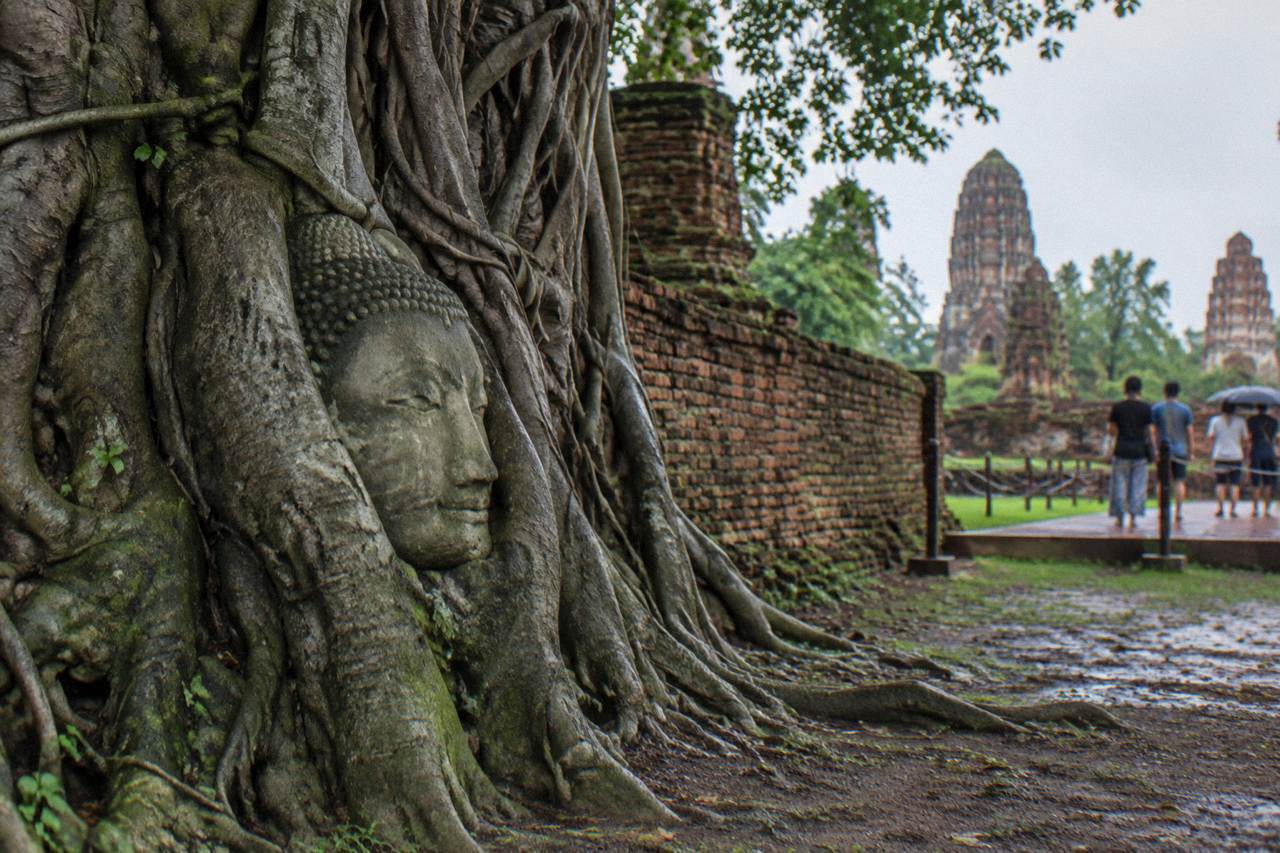
A stone Buddha head, framed by the roots of a tree, is the single most recognizable image of Ayutthaya. It sits at Wat Mahathat, one of the ticketed monuments inside the historical park, and it draws camera crowds every day the site is open. The head is "missing" in the sense that it was separated from its body long ago and never recovered, and the city that made it was razed in 1767 by the Burmese army, an event documented in the historical record rather than in legend. How the head ended up cradled in tree roots is a separate question, and there the verified sources go quiet, so this article sticks to what can be stated as fact and flags what cannot. The famous head is only one piece of a much larger ruined city, and our guide to what makes Ayutthaya such a famous destination covers the rest of the temples, the prangs, and the practicalities of visiting from Bangkok.
Why Is The Buddha Head Missing In Ayutthaya?
The head is missing because the army that sacked Ayutthaya in 1767 destroyed the city and its temples, and the head was severed from its statue in that destruction or in the centuries after it. The city, founded around 1350, fell in 1767 to the Burmese army. The head survived at Wat Mahathat, and tree roots grew around it over time, though exactly how that happened is not recorded in any verified source.
That is the honest, short answer. The longer answer involves a city that was, for centuries, one of the wealthiest in the region, a war that ended it in a single year, and two and a half centuries of abandonment during which the jungle did what jungle does. Ayutthaya was inscribed on the UNESCO World Heritage list in 1991, recognized under criterion (iii) for the cultural tradition it preserves, and today the ruins are managed by the Fine Arts Department, which sets the entry fees and the rules visitors follow.
The tree-root head is the emotional center of that heritage story, which is why nearly every guided day tour from Bangkok puts Wat Mahathat on its itinerary. If you are planning around a visit and want the head seen properly with a guide explaining the history, three formats do it well.
The small-group full-day tour remains the most common way people reach the site: a van from central Bangkok, a guide at each temple, and a fixed route that almost always includes Wat Mahathat, Wat Phra Sri Sanphet and Wat Chaiwatthanaram in one loop. A private guided day tour does the same four-temple circuit with a vehicle and guide to yourselves, and a full-day bike tour covers the same ground at handlebar pace, which suits the flat, compact island the ruins sit on. The choice between them is mostly about pace and budget, not about access, because all three stop within walking distance of the head.
What Happened To Ayutthaya In 1767?
Ayutthaya, founded around 1350 and by some accounts on 4 March 1351 according to a Fine Arts Department calculation, was the capital of the Siamese kingdom for over four centuries. In 1767 a Burmese army sacked the city, destroying its temples and palaces. The city was not rebuilt as a capital, and the ruins were left to decay until modern conservation began.
The scale of that destruction is what makes the tree-root head remarkable rather than just curious. When an army burns a city of temples, most of what it contains is lost: melted bronze, shattered stucco, broken laterite. The heads that survive tend to survive by accident, knocked from their bodies and buried in debris, and the ones rediscovered in later centuries are often found in exactly that state. Wat Mahathat itself was a royal monastery, among the most important in the city, so it took the full force of the destruction and then centuries of neglect before conservation work began.
What can be stated as fact is documented: the city fell in 1767 to the Burmese army, per the standard historical record, and the site was inscribed by UNESCO in 1991. What cannot be stated as fact, and no reliable source settles the precise chain of events that placed this particular head inside the roots of this particular tree. Guides tell versions of the story, and some of those versions are plausible, but no reliable account of the head's fate survives, so none is offered here. General terms are as far as honesty allows: the head was separated from its statue at some point, it came to rest at or near the base of a tree, and the roots grew around it over the years that followed.
The practical takeaway for a visitor is that the head is authentic, the destruction around it is historical, and the tree is simply a tree doing what trees do near buried stone. That combination, a genuine relic and an accidental frame, is why the image travels so well. Our companion guide to the Wat Mahathat Buddha head in the tree goes deeper on the site itself, and if you are weighing whether the ruins justify the trip from the capital, what Ayutthaya is famous for covers the wider heritage picture.
How Did The Buddha Head End Up In The Tree Roots?
No verified source records how the head came to rest in the roots, so the honest answer is that sources differ and the detail is unrecorded. What is documented is the context: the city was destroyed in 1767, the site was long abandoned, and the tree grew around the head over time. Anything more specific is a story rather than a record.
That distinction matters more at Wat Mahathat than at almost any other spot in Thailand, because the head attracts confident explanations the way the roots attract camera lenses. Some accounts say the head was deliberately placed. Some say floodwaters moved it. Some say it simply fell where it now lies and the tree did the rest. Without a verified record, this site will not rank those versions, and a good guide on a licensed tour will usually present the destruction of 1767 as fact and the tree-root placement as an open question, which is the correct posture.
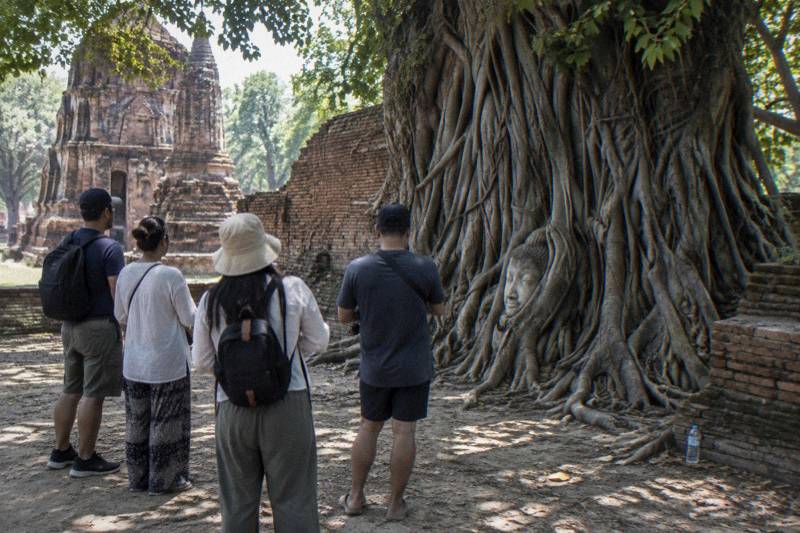
What the visitor actually encounters is well documented. The head sits at ground level, partially enclosed by pale roots, in a cleared corner of the Wat Mahathat compound. Photography is permitted, and the site's etiquette rules, which the Fine Arts Department enforces through on-site signage, ask visitors to crouch or kneel so their head sits lower than the Buddha head, and not to touch the roots. Those rules are covered in full in the section on respectful photography below.
Getting there with a guide rather than alone has one clear advantage on this specific question: a licensed guide can tell you which parts of the story are documented and which are folklore, and the better tours are candid about the difference. The Bangkok Ayutthaya experience with a boat ride, rated 4.9 from 861 reviews over 8 hours with hotel pickup included, is one such option, pairing the temple circuit with a river crossing.
A guided day tour also solves the sequencing problem the head creates. Wat Mahathat is at its most crowded in late morning when the tour buses converge, so an early start from Bangkok, which most small-group tours make possible, puts you in front of the roots before the queue forms. That timing question is covered in detail in the best time of day to visit Ayutthaya, and it applies to the head more than to any other monument in the park.
Where Exactly Is The Head And What Does It Cost To See It?
The head is at Wat Mahathat, inside the Ayutthaya Historical Park, which is open daily from 8:00am to 6:00pm. Foreign visitors pay 80 baht per ticketed temple, or 300 baht for the official 7-site combination ticket. Tickets are sold on site in cash only, with no advance online booking through official channels.
Wat Mahathat is one of the seven monuments covered by the official combination ticket, alongside Wat Phra Si Sanphet, Wat Phra Ram, Wat Ratchaburana, Wat Chaiwatthanaram, Wat Maheyong and Wat Kudi Dao. If you plan to see more than three or four of those, the combination ticket costs less than buying individually, and it is bought in cash at the first ticketed site you enter. The park grounds themselves have no general admission fee; you only pay at the ticketed monuments.
| Item | What Visitors Pay | Notes |
|---|---|---|
| Park grounds | Free | Walking and cycling between sites costs nothing |
| Wat Mahathat entry | 80 baht | Foreign visitors, cash at the gate |
| 7-site combination ticket | 300 baht | Covers Wat Mahathat, Wat Phra Si Sanphet, Wat Phra Ram, Wat Ratchaburana, Wat Chaiwatthanaram, Wat Maheyong, Wat Kudi Dao |
| Park hours | 8:00am to 6:00pm daily | Official Fine Arts Department hours |
| Online booking | Not available | Cash only at gates, per official channels |
The official fees come straight from the Fine Arts Department's own park page, which is the authority that administers the site: the department's Ayutthaya park map and fee page. Some older guide sites list lower figures, and those are outdated against the official page, so treat 80 baht and 300 baht as the numbers to plan around.
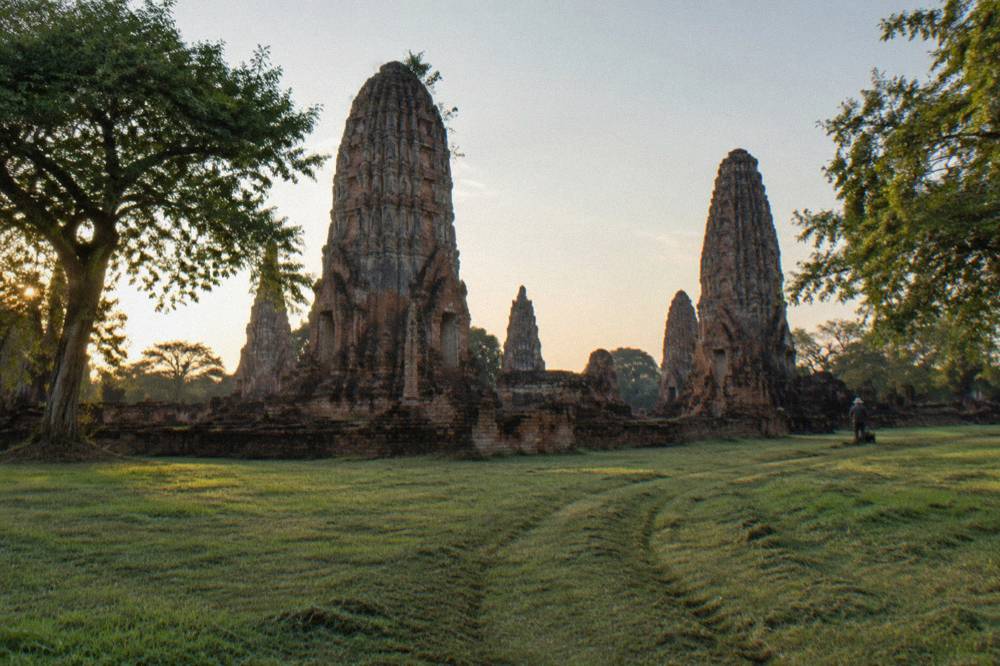
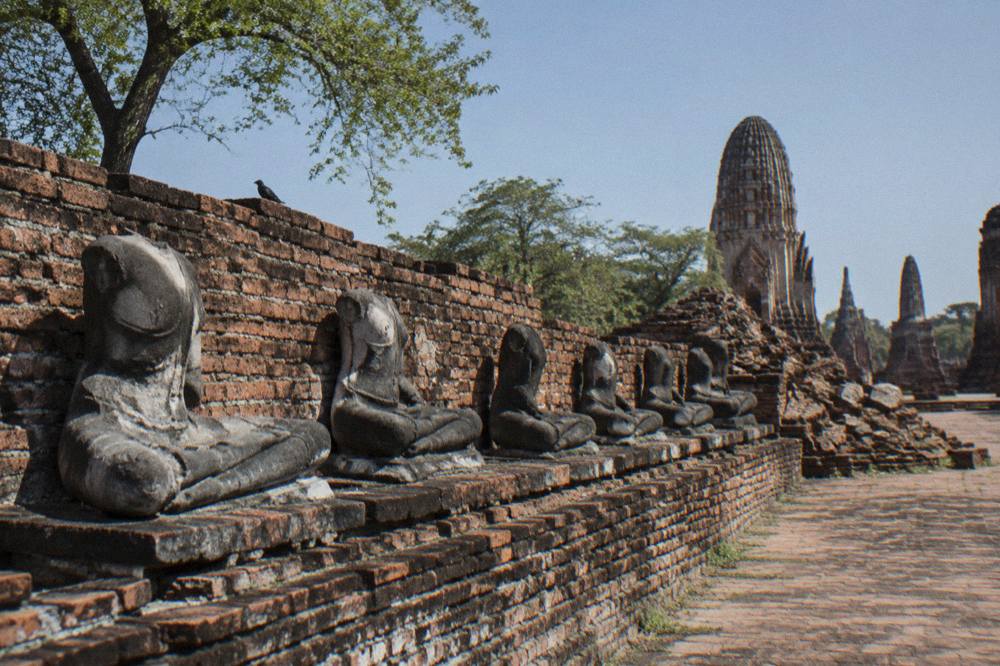
One point of confusion worth settling: the head is not the only thing at Wat Mahathat, and the temple is large enough that a rushed visit means seeing the roots and missing the rest. The compound holds rows of headless Buddhas, the base of a great prang, and the grounds where the royal monastery once stood. Most guided tours budget between 30 and 60 minutes here, which is enough for the head and a loop of the principal ruins, but independent visitors with a bicycle can linger much longer. The full-day UNESCO tour from Bangkok, rated 4.7 from 1,728 reviews over 11 hours 30 minutes in a group capped at 9 travellers, includes Wat Mahathat among its named stops along with Wat Phra Sri Sanphet, Wat Chaiwatthanaram and Bang Pa-In Palace.
How Do You Photograph The Head Respectfully?
Visitors are asked to crouch or kneel when photographing the head, so that their own head sits lower than the Buddha head, and not to touch the roots. Shoulders and knees should be covered at temple sites across the park. The rules are posted at the site and enforced by staff.
The crouch is the detail most first-time visitors miss. The head sits at ground level, and standing over it for a photo places your head above it, which Thai temple etiquette treats as disrespectful. Kneeling or squatting beside the roots is both the polite posture and, as a practical bonus, the composition most photographers want anyway: the head framed by roots at eye level rather than shot from above.
Dress code applies across the park, not only at the head. Shoulders and knees covered is the standard, and while the ruined temples are not active monasteries in the same sense as a working wat, the site is a protected heritage monument and staff do turn away visitors in beachwear. Our guide to what to wear at Ayutthaya's temples covers fabric choices for the heat, which matters: the park is flat and open with little shade, and midday temperatures in the hot season run high.
Beyond the head, the etiquette at Wat Mahathat is the etiquette of any heritage site. Do not climb the brick structures, do not touch the stucco, and keep to the marked paths around the fragile sections. The site has been standing in ruined condition for over two centuries, and the conservation work that keeps it standing is ongoing. The Fine Arts Department manages the park's rules, fees and restoration, and its announcements, not this article, are the source for any temporary restriction.
Which Tours Include Wat Mahathat?
Most guided tours from Bangkok include Wat Mahathat on their itinerary, because the tree-root head is the park's signature sight. On this site's roster, fifteen listings name Wat Mahathat among their stops, spanning small-group day trips, group coach tours, bike tours, boat-based tours and private guided tours.
The roster breaks down like this, and the table below lists only the tours whose listings explicitly name Wat Mahathat:
| Tour | Operator | Rating | Duration | Format |
|---|---|---|---|---|
| Ayutthaya Temples Tour from Bangkok with Lunch | Bigcountry Experience | 4.7 from 867 reviews | 7 hours 30 minutes | Small group, max 25 |
| UNESCO's Ayutthaya Historical Park Full-Day Tour | TripGuru Thailand | 4.7 from 1,728 reviews | 11 hours 30 minutes | Small group, max 9 |
| Ayutthaya Summer Palace and Temples Day Tour | One Asia | 4.9 from 214 reviews | 9 hours | Group, max 100 |
| Ayutthaya UNESCO Temples Group Tour with Lunch | I Asia Thailand | 4.7 from 84 reviews | 6 hours 30 minutes | Large group, max 40 |
| Ayutthaya Highlights Tour with River Cruise | Sunleisure World | 4.3 from 88 reviews | 10 hours | Group, max 30 |
| Bangkok: Ayutthaya Experience with Boat Ride | TRIPZA sightseeing | 4.9 from 861 reviews | 8 hours | Group, private available |
| Ayutthaya & Ayothaya Floating Market Day Trip | Hana Go Pro | 4.7 from 6,382 reviews | 8 hours | Group |
| Ayutthaya, Railway & Floating Markets Full-Day Tour | TripGuru Thailand | 4.8 from 2,319 reviews | 11 hours | Private or small group |
| Ayutthaya Heritage Tour with Sunset Boat Ride | Sun Leisure World | 4.6 from 687 reviews | 6 to 7 hours | Private or small group |
| Ayutthaya Sunset Tour: UNESCO Temples & Sunset Cruise | Sunleisure World | 4.4 from 368 reviews | 8 hours | Group, max 22 |
Two caveats keep that table honest. The railway and floating markets tour is a three-stop combo, so Ayutthaya, and Wat Mahathat with it, is a fraction of that day rather than the whole of it. And the summer palace tour is a large-group coach format with up to 100 travellers, which changes the pace at each stop compared with a group of nine.
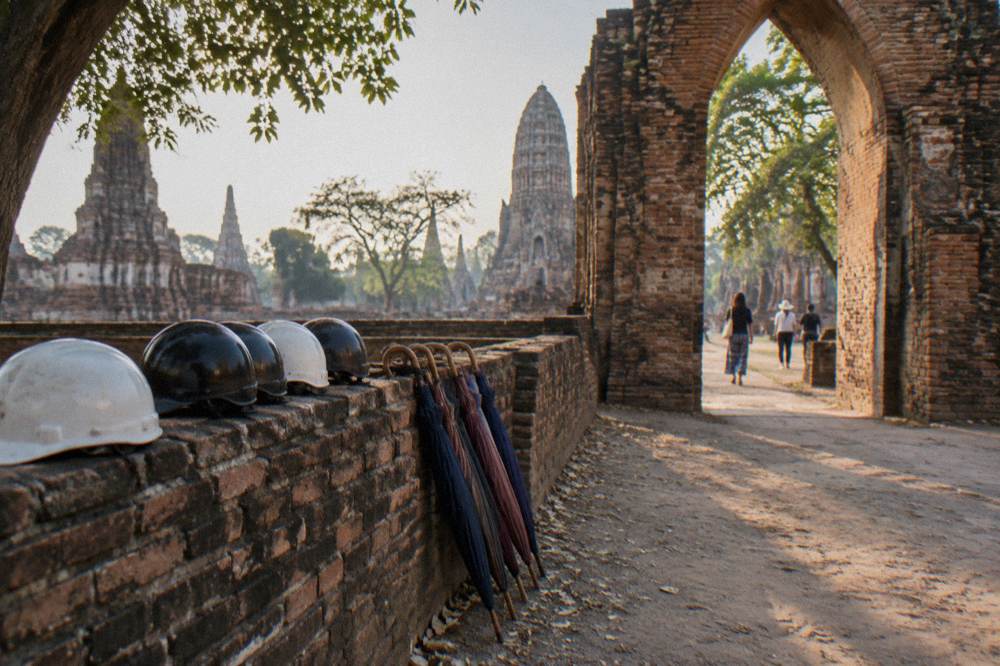
For travelers who want the head without a bus schedule, the bike format is worth a look. The Ayutthaya City and Historical Park bike tour, rated 4.8 from 188 reviews over 3 to 3.5 hours, covers the park's core at cycling pace, and the park's flat, compact geography makes that genuinely easy riding. The bike tours list on this site compares the three cycling options in detail.
The most-visited format remains the standard day trip, and among those the temples tour with lunch is a strong fit for this specific article's subject: it names Wat Mahathat, Wat Phra Sri Sanphet, Wat Chaiwatthanaram and the Reclining Buddha at Wat Lokayasutharam on its itinerary, runs 7 hours 30 minutes, includes lunch, and carries a 4.7 rating from 867 reviews. You can read the full listing on the Ayutthaya Temples Tour page or go straight to the operator's live listing: Check availability.
Is The Head's Site Ever Affected By Flooding?
Ayutthaya sits on a floodplain at the meeting of rivers, and September to October is the period of highest flood risk. In the 2026 season, riverside monuments were protected with temporary barriers, including a 165-metre, 1.9-metre-high barrier at Wat Chaiwatthanaram, and the temples were reported open. Riverside sites can restrict access in flood periods.
That is context, not a warning to stay away. The historical park generally operates year-round, and the flood response in the 2026 season was a protection story rather than a closure story: barriers went up, pumps ran, and the ticketed sites kept receiving visitors. Wat Chaiwatthanaram, on the west bank, is the monument most exposed to river rises, and it remained open while the barrier held the water back, as reported in national news coverage of the flood barrier installation. Wat Mahathat sits on the island itself, at a slight remove from the riverbank.
The practical advice is simple. If your visit falls in the September to October window, check current conditions a few days before you travel, and be aware that a riverside stop on your itinerary, such as a sunset boat departure or the west-bank temples, is the part most likely to be adjusted. The seasonal picture, month by month, is laid out in the best time to visit Ayutthaya for heat and light, and the cool dry season from November to February remains the most comfortable window for a full day of walking the ruins.
The Head, The History, And The Honest Gaps
The tree-root Buddha head is the product of two layered stories: a documented destruction, the Burmese sack of 1767 that ended Ayutthaya's four centuries as a capital, and an unrecorded accident of nature in which tree roots slowly grew around a severed stone head. The history is verifiable, the mechanism is not, and any account that claims certainty about how the head reached the roots is filling a gap in the record rather than reporting one.
Standing in front of the tree-root Buddha head, you are looking at two stories layered on top of each other. One is documented history: a capital founded around 1350, a kingdom of immense wealth, a catastrophic destruction in 1767, and a modern conservation effort that earned UNESCO recognition in 1991. The other is an accident of nature that nobody recorded: a head, a tree, and time. The first story is why the site matters. The second is why people photograph it.
The honest gap between the two is worth keeping in view. Any tour, guide or article that tells you exactly how the head reached the roots, with dates and mechanics, is filling a silence in the record with a story. What is firmly documented is the sack of 1767, the founding date, the UNESCO inscription and the etiquette rules, and on the tree itself they contain only general terms. That restraint is itself part of what makes the head compelling: some questions about the past stay open, and a tree growing around a stone face is one of them.
For most visitors the practical decisions are unchanged by the mystery. Pick a tour format that suits your pace, budget the 80 baht entry in cash, arrive early enough to beat the midday crowds, kneel for the photograph, and cover your shoulders. Whether you book through Ayutthaya Historical Park Tours or travel independently by train, the head will be there, doing what it has done since before anyone thought to write down how it got there.
If you are still choosing a format, these three cover the head from three different angles: a small-group day trip with lunch, a full-day bike tour of the flat island, and a private guided tour of four ancient temples.
Common Questions About The Buddha Head In Ayutthaya
Why Is The Buddha Head Missing In Ayutthaya?
The head was separated from its statue when the Burmese army sacked Ayutthaya in 1767, or at some point in the centuries of abandonment that followed. The city was destroyed in that campaign and never rebuilt as a capital. Exactly when and how the head was severed is not recorded in verified sources, so the general fact of the 1767 destruction is as specific as the honest answer gets.
How did the head end up inside the tree roots?
No verified source records the mechanism, so sources differ and the detail is unrecorded. What is documented is the context: the head came to rest at or near the base of a tree at Wat Mahathat, and the roots grew around it over time. Any account more specific than that is a story rather than a record.
How much does it cost to see the Buddha head?
Wat Mahathat charges foreign visitors 80 baht, paid in cash at the gate. The official 7-site combination ticket costs 300 baht and covers Wat Mahathat along with Wat Phra Si Sanphet, Wat Phra Ram, Wat Ratchaburana, Wat Chaiwatthanaram, Wat Maheyong and Wat Kudi Dao. There is no advance online booking through official channels; tickets are sold on site.
What are the rules for photographing the head?
Visitors are asked to crouch or kneel so their head sits lower than the Buddha head, and not to touch the roots. Shoulders and knees should be covered. The rules are posted at the site and enforced by staff.
Which tours stop at Wat Mahathat?
Most guided tours from Bangkok include Wat Mahathat because the tree-root head is the park's signature sight. On this site's roster, ten listings name it among their stops, including the small-group temples tour with lunch, the full-day UNESCO tour, the boat-ride experience and the three-hour city bike tour. The railway and floating markets tour is a three-stop combo, so Ayutthaya is a fraction of that day.
Is Wat Mahathat affected by flooding?
Wat Mahathat sits on the island rather than the riverbank. In the 2026 flood season, riverside monuments were protected with temporary barriers, including a 165-metre barrier at Wat Chaiwatthanaram, and the temples were reported open. Riverside sites can restrict access during flood periods, so check conditions if visiting between September and October.